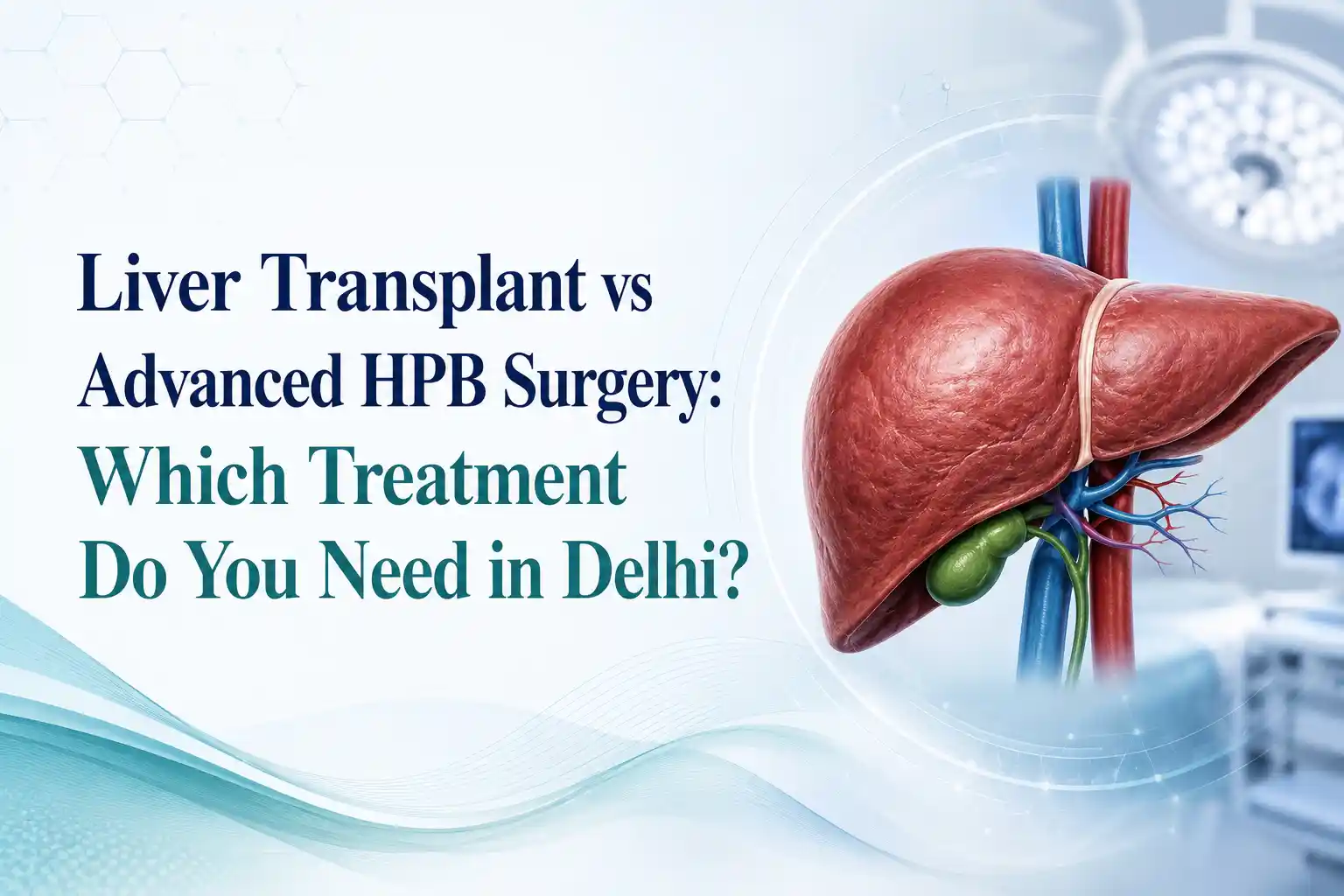
Liver Transplant vs Advanced HPB Surgery: Which Treatment Do You Need in Delhi?
.webp)
Principal Consultant & Unit Head, Liver Transplant & HPB Surgery, Fortis Hospital, Shalimar Bagh, Delhi
When someone is diagnosed with a serious liver, pancreas, bile duct, or gallbladder condition, one of the first questions that comes to mind is, "Do I need a liver transplant or can my condition be treated with advanced HPB surgery?" This confusion is common among patients and families searching for liver transplant in Delhi, HPB surgery in Delhi, or a liver surgeon near me.
Both liver transplant and advanced HPB surgery are highly specialized treatments. However, they are used for different medical situations. A liver transplant is usually required when the liver has failed or is no longer able to perform its normal functions. Advanced HPB surgery, on the other hand, is used to treat complex diseases of the liver, pancreas, bile ducts, and gallbladder while preserving the patient's own organs whenever possible.
At Liver Surgeons, Delhi, patients are evaluated by a specialist team led by Dr. Ashish George for liver transplant, hepatology, liver cancer surgery, pancreatic surgery, bile duct surgery, and advanced HPB procedures in Delhi. The right treatment is selected only after reviewing the patient's diagnosis, liver function, imaging reports, cancer stage, general health, and long-term recovery goals.
What Is a Liver Transplant?
A liver transplant is a major surgery in which a diseased or failing liver is replaced with a healthy liver from a donor. The donor may be a living donor, usually a close family member, or a deceased donor. This treatment is usually considered when the liver has reached a stage where medicines, lifestyle changes, or limited surgery can no longer restore safe liver function.
The liver performs many important functions. It removes toxins, supports digestion, produces proteins, helps with blood clotting, stores energy, and supports immunity. When the liver becomes severely damaged, the whole body is affected. This is why advanced liver failure requires timely evaluation.
A liver transplant may be recommended for:
- End-stage liver cirrhosis
- Acute liver failure
- Certain cases of liver cancer
- Pediatric liver failure
- Metabolic liver diseases
- Repeated ascites or fluid buildup in the abdomen
- Recurrent variceal bleeding
- Hepatic encephalopathy or confusion due to liver failure
- Combined liver and kidney failure in selected patients
Patients searching for liver transplant in Delhi should understand that transplant is not decided only on one report. It requires a complete assessment of liver function, donor suitability, surgical risk, infection status, heart and lung fitness, nutrition, and post-transplant care needs.
What Is Advanced HPB Surgery?
HPB stands for Hepato-Pancreato-Biliary. This specialty deals with complex surgical diseases of the liver, pancreas, bile ducts, and gallbladder. Advanced HPB surgery is often used when the disease is localized, surgically treatable, or related to a structural problem that can be removed, repaired, reconstructed, or bypassed.
Unlike liver transplant, HPB surgery usually aims to preserve the patient's own liver or affected organ as much as possible. It may involve removing a tumor, reconstructing a damaged bile duct, treating pancreatic disease, or managing complications of portal hypertension.
Advanced HPB surgery may include:
- Liver resection
- Robotic liver surgery
- Pancreatic cancer surgery
- Whipple procedure
- Bile duct reconstruction
- Gallbladder cancer surgery
- Cholangiocarcinoma surgery
- Chronic pancreatitis surgery
- Portal hypertension surgery
- Complex liver tumor surgery
- Minimal access liver surgery
Patients with complex liver, pancreas, or bile duct diseases can learn more about advanced hepatopancreatobiliary procedures in Delhi.
Liver Transplant vs Advanced HPB Surgery: Key Difference
Although both treatments are handled by specialist liver and HPB surgeons, their purpose is different.
| Factor | Liver Transplant | Advanced HPB Surgery |
|---|---|---|
| Main purpose | Replace a failing liver | Treat complex disease while preserving organs |
| Main organ involved | Liver | Liver, pancreas, bile duct, gallbladder |
| Donor required | Yes | Usually no |
| Common reasons | Liver failure, cirrhosis, selected liver cancers | Tumors, bile duct injury, pancreatic cancer, gallbladder cancer |
| Recovery | Longer and lifelong follow-up | Depends on procedure |
| Medicines after surgery | Lifelong immunosuppressants | Usually not lifelong |
| Decision depends on | Liver function, MELD score, donor availability | Tumor location, organ function, surgical fitness |
The most important difference is this: liver transplant is usually chosen when the liver as a whole has failed, while HPB surgery is chosen when a specific disease area can be treated surgically.
When Is Liver Transplant the Better Option?
A liver transplant may be the better option when liver damage is widespread and irreversible. For example, a patient with advanced cirrhosis may not be able to safely undergo liver resection because the remaining liver may not function properly after surgery.
A transplant may be considered when a patient has:
- Advanced liver cirrhosis
- Repeated fluid accumulation in the abdomen
- Frequent vomiting of blood due to varices
- Severe jaundice due to liver failure
- Confusion or drowsiness due to hepatic encephalopathy
- Poor blood clotting due to liver disease
- Liver cancer with cirrhosis in selected cases
- Acute liver failure with rapid deterioration
In these cases, removing only a part of the liver may not solve the problem. The patient may need a complete replacement of the damaged liver.
When Is Advanced HPB Surgery the Better Option?
Advanced HPB surgery may be better when the disease is localized and the liver or affected organ still has enough healthy function. For example, a patient with a single liver tumor and good liver function may be treated with liver resection instead of transplant.
HPB surgery may be suitable for:
- Localized liver tumors
- Pancreatic tumors
- Bile duct blockage
- Bile duct injury after gallbladder surgery
- Gallbladder cancer
- Bile duct cancer
- Chronic pancreatitis with severe pain
- Benign liver tumors causing symptoms
- Portal hypertension complications in selected cases
For example, a person with bile duct injury after gallbladder surgery does not need a liver transplant in most cases. They may need expert bile duct reconstruction by an HPB surgeon. Similarly, some patients with pancreatic cancer may require a Whipple procedure rather than transplant.
How Doctors Decide the Right Treatment
The decision between transplant and HPB surgery is never based on symptoms alone. A liver surgeon will review multiple factors before recommending treatment.
Important decision points include:
- Liver function test results
- Bilirubin level
- INR and blood clotting status
- Albumin level
- Platelet count
- MELD score
- Child-Pugh score
- CT scan or MRI findings
- Tumor size and location
- Whether cancer has spread
- Involvement of major blood vessels
- Presence of infection
- Kidney, heart, and lung fitness
- Nutrition and muscle strength
- Donor availability, if transplant is needed
This is why patients should avoid making decisions based only on online information or one scan report. Complex liver and HPB diseases need specialist evaluation.
Why a Combined Liver Transplant and HPB Team Matters
Many patients consult one doctor for liver disease, another for cancer treatment, and another for surgery. This can create confusion. A combined liver transplant and HPB surgery team can evaluate the complete picture.
For example:
- A liver cancer patient may need resection, ablation, or transplant.
- A cirrhosis patient may need medical care first and transplant later.
- A bile duct cancer patient may need drainage before surgery.
- A pancreatic cancer patient may need chemotherapy before surgery.
- A liver tumor near major vessels may need advanced HPB planning.
When a patient is seen by a team that understands both transplant and HPB surgery, the treatment decision becomes more balanced and safer.
Why Delhi Patients Should Seek Early Specialist Care
Patients from Delhi, North Delhi, Shalimar Bagh, Rohini, Pitampura, Punjabi Bagh, Gurugram, Noida, Ghaziabad, and nearby Delhi NCR areas often search for "liver surgeon near me" only after the disease becomes serious. However, early consultation can protect treatment options.
If liver cancer is found early, surgery may be possible. If bile duct obstruction is managed early, infection risk can be reduced. If cirrhosis is evaluated on time, transplant planning can begin before an emergency happens.
Delaying specialist care may lead to:
- Worsening jaundice
- Infection
- Poor nutrition
- Tumor progression
- Reduced surgical options
- Increased ICU risk
- Emergency transplant need
Questions to Ask Your Liver Surgeon
Before deciding treatment, ask:
- Is my liver still functioning well?
- Do I need a transplant or organ-preserving surgery?
- Is the tumor removable?
- Has the disease spread?
- Can robotic or laparoscopic surgery help?
- What are the risks of waiting?
- What tests are still needed?
- How long will recovery take?
- Will I need ICU care?
- Will I need long-term medicines?
These questions help patients and families make informed decisions.
Consult a Liver Transplant Specialist in Delhi
Conclusion
Liver transplant and advanced HPB surgery are both life-saving treatments, but they are used for different conditions. A liver transplant is usually required when the liver has failed or cannot support the body safely. Advanced HPB surgery is used when complex liver, pancreas, bile duct, or gallbladder disease can be surgically treated while preserving organ function.
If you are unsure whether you need transplant, liver resection, robotic HPB surgery, pancreatic surgery, or bile duct reconstruction, the right step is to consult a specialist liver and HPB surgeon in Delhi.
For expert evaluation, consult Dr. Ashish George and the Liver Surgeons team in Delhi. The team offers liver transplant, hepatology care, liver cancer surgery, pancreatic surgery, bile duct surgery, and advanced HPB procedures under a specialist-led treatment pathway.
FAQs
1. Is HPB surgery the same as liver transplant?
No. HPB surgery treats diseases of the liver, pancreas, bile ducts, and gallbladder. Liver transplant replaces a failing liver with a healthy donor liver.
2. Can HPB surgery avoid liver transplant?
In selected cases, yes. If the disease is localized and the liver function is good, HPB surgery may treat the condition without transplant.
3. Who needs liver transplant in Delhi?
Patients with end-stage liver cirrhosis, acute liver failure, selected liver cancers, or severe liver complications may need transplant evaluation.
4. When is liver resection better than transplant?
Liver resection may be better when the tumor is removable and the remaining liver is healthy enough to function safely.
5. Which doctor should I consult for liver, pancreas, or bile duct disease?
You should consult a liver and HPB surgeon, especially if surgery, transplant, reconstruction, or cancer treatment is being considered.