Top 10 Hepatologists in Delhi: Your Guide to Finding the Right Liver Specialist
.webp)
Principal Consultant & Unit Head, Liver Transplant & HPB Surgery, Fortis Hospital, Shalimar Bagh, Delhi
Imagine this. Your doctor just told you that you need to see a hepatologist. Maybe your liver tests came back off. Maybe you have cirrhosis. Maybe your family member needs a transplant. Your mind races with questions. Who do you call? How do you know you're getting the best care? Where do you even start?
This is the moment when it matters most.
You need someone who knows your liver inside and out. Someone with the skill to fix what's wrong. Someone you can trust with your life. But here's what most people don't realize not all hepatologists are the same. Some have done thousands of transplants. Some specialize in rare cases. Some trained in the best hospitals in Europe and America. And some are changing the rules of liver medicine right now.
Delhi has some of the world's best hepatologists. This city handles 40 percent of all liver transplants in India. The success rates here beat global standards. But finding the right doctor? That's where most people get lost.
This guide cuts through the noise. We've researched the top hepatologists in Delhi. We looked past the fancy websites. We found what makes each one different. And we put together everything you need to make the right choice for your health.
What is a hepatologist? A hepatologist is a doctor who specializes in liver disease, hepatitis, cirrhosis, fatty liver, and liver transplants. They have extra training beyond general medicine to handle complex liver problems.
Why Delhi's Hepatologists Are Different
Here's a fact that will surprise you. Liver transplant success rates in India hit 95 percent at the one-year mark. Compare that to the global average of 83 to 88 percent. Why? Delhi's hepatologists have figured something out that the rest of the world is still learning.
The hepatologists here handle the hardest cases. They do blood-type incompatible transplants. They do swap exchanges between four patients at the same time. They save people with acute liver failure in 24 hours. They work with tiny livers in children. They've built systems and teams that just work better.
But what really sets Delhi apart? The doctors here think differently. They combine Western training with Indian innovation. They work in public hospitals where they see thousands of poor patients with liver disease. They run private centers where they do cutting-edge robotic surgery. This mix pushes them to be better every day.
The Top 10 Hepatologists in Delhi: Who They Are and What They Do
1. Dr. Ashish George - The Specialist in Hard Cases
Position: Principal Consultant and Unit Head of Liver Transplant, Fortis Hospital Shalimar Bagh
Dr. Ashish George is the kind of doctor parents ask about when their child gets sick with liver failure. He has done more than 1,000 liver transplants. But what makes him stand out? He takes the cases that scare other doctors.
He does transplants in children with metabolic liver disease. He does simultaneous liver and kidney transplants. He handles acute liver failure when patients have 24 hours to live. He does something called swap transplants where four patients and their donors are matched to help each other. He does blood-type incompatible transplants, where you get a liver from someone who should not work but somehow does
His training is solid. He studied at AIIMS, India's top medical school. He has a master's degree in GI surgery from AIIMS. He trained in liver transplant for one more year after that. Then he trained in minimal access surgery, the laparoscopic techniques that make smaller cuts and faster healing.
What makes him different: Most hepatologists stick to standard cases. Dr. George seeks out the cases that others say "no" to. If your situation is rare or complex, he is worth knowing about.
Years of experience: 15+ years
2. Dr. Subhash Gupta - The Man Who Built the Largest Transplant Center
Position: Chairman, Centre for Liver and Biliary Sciences, Max Super Speciality Hospital Saket
Picture this. One doctor runs a center that does 200 transplants every year. That's one every working day. When you do that many operations, something changes. You get fast. You get smart. You see patterns that other doctors miss.
Dr. Subhash Gupta runs one of the biggest liver transplant centers in the world. He has personally done 3,000 transplants. His center has a 95 percent success rate at one year. That means 95 out of 100 people leave the hospital alive and well. At 10 years, 80 percent of his patients are still alive with a working liver.
He pioneered living donor liver transplants in India. That means he figured out how to take part of a healthy person's liver and put it in a sick person and have both people recover. This sounds crazy. But it works. Both people have a working liver. Donors can live a normal life afterward.
He published 30 papers on how to match donors and receivers better. He trained the teams around him anesthesiologists, ICU doctors, nurses on how to keep transplant patients safe. He moved between three hospitals and built programs at each one. That tells you he knows how to start from nothing.
What makes him different: His volume is insane. His success rates are insane. His research output is insane. If you want to be at a center that does this surgery every single day, he is your person.
Years of experience: 36 years
3. Dr. Shiv Kumar Sarin - The Doctor Who Changed How We Think About Liver Disease
Position: Director and Chancellor, Institute of Liver and Biliary Sciences (ILBS)
This is the guy who literally changed how doctors classify liver disease worldwide.
Before Dr. Sarin, nobody had a good way to describe what happens when your liver suddenly falls apart on top of old liver disease. Now we call it Acute-on-Chronic Liver Failure (ACLF). Doctors everywhere use this term. Dr. Sarin defined it. He published the data. It spread around the world.
He also figured out a new way to classify enlarged esophageal veins. Doctors call it Sarin's Classification. You'll find it in medical textbooks globally.
But here's the bigger picture. Dr. Sarin runs ILBS Asia's biggest liver hospital. It is a government hospital. It is also a deemed university. That means it teaches doctors. His team does 100 liver transplants every year. They have done 1,000 transplants total. Every transplant is tracked. Every outcome is studied. Every failure is learned from.
His research numbers blow you away. He has written 850 papers. Other doctors have cited his work 72,000 times. He won the Shanti Swarup Bhatnagar Prize India's highest science honor. He won a Padma Bhushan—one of India's top civilian awards.
But what might matter most to you? He shaped how Indian doctors train. He helped design the entrance exams for medical school. He advised the government on healthcare policy. He was the head of India's National Academy of Medical Sciences. This kind of influence means he sets the standards that other hospitals follow.
What makes him different: He is the only government hospital leader on this list. He discovers new diseases. He writes the textbooks. He teaches the government what to do. If you want to be at a place where medicine is being invented, this is it.
Years of experience: 40 years
4. Dr. Vivek Vij - The Doctor Who Thinks Like a Problem Solver
Position: Chairman, Liver Transplant and Hepato-Biliary Sciences, Fortis Hospital Okhla/Gurugram
Some hepatologists only do transplants. Dr. Vivek Vij does something different. He combines liver transplant with metabolic surgery. This sounds random. But think about it. A fat person with cirrhosis needs a transplant. After transplant, they gain weight and get fatty liver again. What do you do?
Dr. Vij can solve both problems. He can take out the diseased liver. He can do gastric surgery at the same time to help weight control. This is unusual. Most doctors work in silos. He thinks across specialties.
He worked at Apollo before Fortis. At both places, he built programs from the ground up. He trained teams. He set protocols. He got good results. Now at Fortis, he is chairman of the whole hepatobiliary program.
What makes him different: He thinks beyond the liver. If you have complicated issues beyond just transplant, he solves multiple problems at once.
Years of experience: 24 years
5. Dr. Amit Nath Rastogi - The Doctor Who Brought Robotic Surgery to India
Position: Director, Institute of Liver Transplant and Regenerative Medicine, Medanta-The Medicity Gurgaon
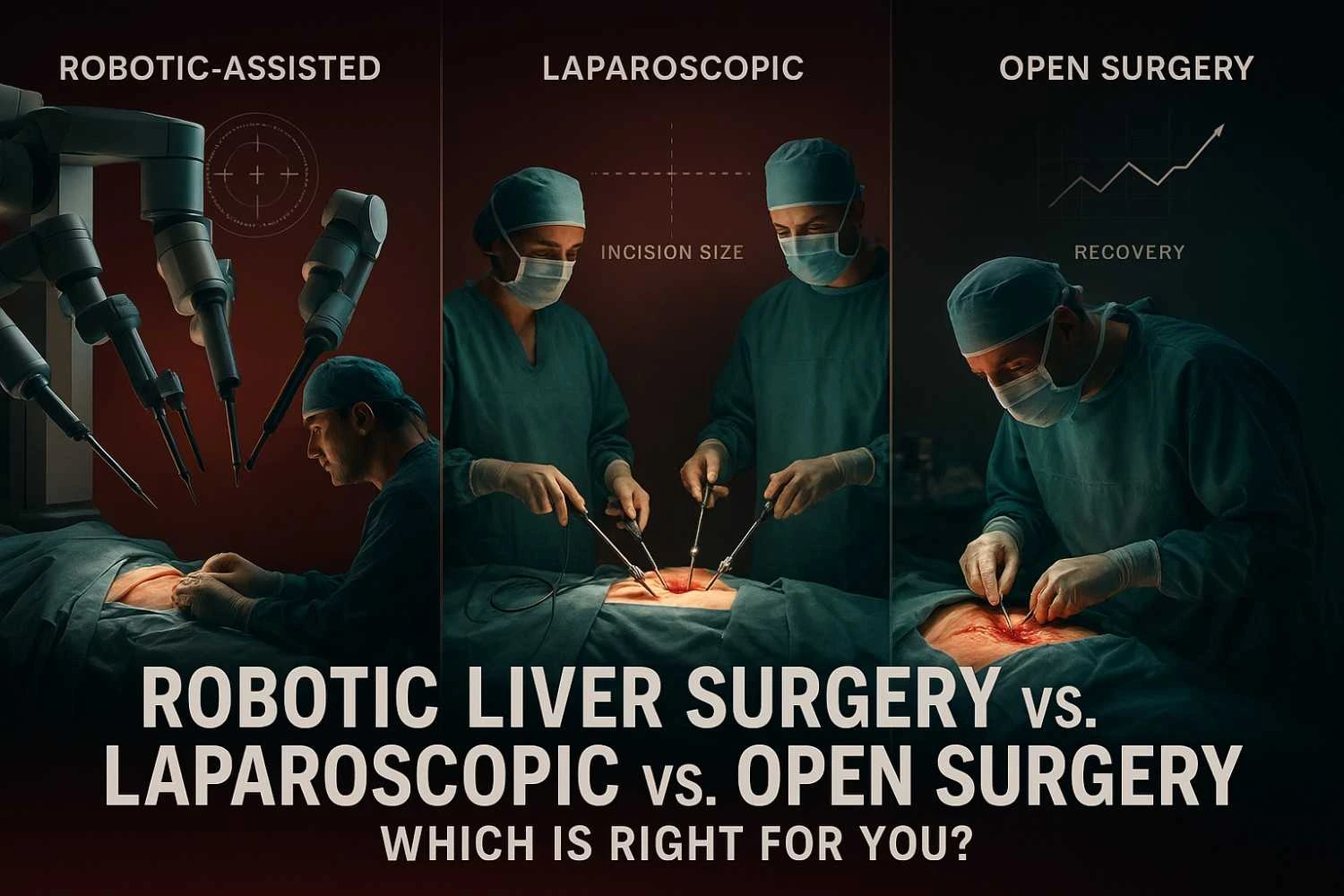
Here's a fact. Most liver surgeries in India happen with a big cut across the belly. This is open surgery. But there is another way. Robotic surgery uses tiny cameras and robot arms. It makes smaller cuts. Blood loss drops. You heal faster. You spend less time in the hospital.
Dr. Amit Rastogi trained in France. Specifically, he trained at IRCAD the world center for robotic liver surgery in Strasbourg. He is one of the few Indian surgeons who learned this from the world's best. He brought it back to Medanta. Now his team does robotic liver transplants.
He runs the biggest transplant center in Medanta. He has done 4,000 transplants. The success rate is 92 percent. That is excellent.
He was the treasurer of the Liver Transplant Society of India. He was one of the founders. This means he helped set the standards for how liver transplants are done across the whole country.
What makes him different: He is the only person on this list trained in robotic liver surgery by the world experts. If you want the latest technology, he has it.
Years of experience: 30 years
6. Dr. Anil Arora - The Expert in Fatty Liver Disease
Position: Chairman, Institute of Liver, Gastroenterology and Pancreaticobiliary Sciences, Sir Ganga Ram Hospital
Here is what people don't talk about enough. Fatty liver is becoming India's next big health crisis. Nobody thinks they have it. Then one day the blood tests show cirrhosis. By then, it is too late.
Dr. Anil Arora studies why fat builds up in the liver. He understands NAFLD that is non-alcoholic fatty liver disease. He gives talks about how to stop it before it becomes cirrhosis. He won the Delhi Rattan Award for best gastroenterologist. He gave big lectures at national conferences.
He trained at AIIMS. He has a degree from Edinburgh. He has a degree from London. That is world-class training. He knows how to diagnose problems early. He knows how to stop them from getting worse.
If your blood tests show fatty liver, but you do not drink alcohol, this is your person. He can explain why it happened and what to do.
What makes him different: Most hepatologists wait until the liver fails. He tries to stop it from failing in the first place.
Years of experience: 35 years
7. Dr. Randhir Sud - The Doctor with a Padma Shri (India's Highest Honor)
Position: Chairman, Institute of Digestive and Hepatobiliary Sciences, Medanta-The Medicity Gurugram
Imagine a doctor so good that India's government gives him one of the highest civilian awards. That is Dr. Randhir Sud. He got the Padma Shri in 2008.
He revolutionized how doctors do endoscopy in India. Endoscopy is when you put a camera down the throat or through the belly to look at organs. He figured out how to fix problems through the camera instead of with big surgery. He trained hundreds of doctors to do this. He literally changed the standard of care across India.
He was a visiting professor at Harvard Medical School. He was a visiting professor at University of Texas. He taught at the 1000 Medicine program. These are top institutions. They only invite the best.
He spent 25 years at Sir Ganga Ram Hospital building their program. Then he moved to Medanta and built their program. Now he is chairman. This tells you he knows how to build something from scratch and make it excellent.
What makes him different: He changed how doctors treat liver disease in India through technology and training. He has national influence on medicine.
Years of experience: 45 years
8. Dr. Ashok Choudhury - The Expert in Keeping Transplant Patients Alive
Position: Additional Professor of Hepatology, ILBS
Here is what most people do not think about. The surgery is only half the battle. After you get a new liver, you are in the ICU. You are on machines. You could get infection. You could get rejection. You could have kidney failure. You could bleed. This is where most people die—not in the operating room, but in the ICU after.
Dr. Ashok Choudhury is obsessed with keeping transplant patients alive in the ICU. He manages the breathing tubes. He manages the dialysis. He handles rejection. He handles complications that make other doctors nervous.
He is at ILBS, where they do 100 transplants a year. He has managed 1,000 transplant patients in the ICU. That is real, hard-won experience.
What makes him different: He thinks like an ICU doctor. Most hepatologists think like surgeons. If you are worried about what happens after surgery, he is your person.
Years of experience: 20 years
9. Dr. Bhushan Bhole - The Doctor with UK Training in Minimally Invasive Surgery
Position: Senior Consultant, GI Surgery and Liver Transplant, PSRI Hospital Delhi
Dr. Bhushan Bhole went to Birmingham, England. He trained in liver transplant. Then he trained in laparoscopic surgery—the kind where you make tiny cuts instead of big ones.
He came back to India and brought those techniques with him. Now he teaches other doctors at the biggest hospitals in Mumbai. He is on the faculty for specialty training. He does living donor and deceased donor transplants. He does cancer surgery on the liver.
He won the Delhi Rattan Award. He is active in surgery societies across India. This tells you he is connected to the network of good doctors.
What makes him different: He brings UK-trained minimally invasive techniques. Most Indian surgeons do open surgery. He offers another option.
Years of experience: 17 years
10. Dr. Manoj Gupta - The Doctor Bringing Robot Surgery to Donor Surgery
Position: Head, Department of Liver Transplant and Surgical Gastroenterology, PSRI Hospital Delhi
Here is the cutting edge. Most liver transplants still use open surgery for the person giving the liver. This means a big cut. More pain. Longer recovery. Donors are healthy people. You want them to recover fast.
Dr. Manoj Gupta has a vision. He wants to do donor liver surgery with robots. That is laparoscopic donor hepatectomy. Almost nobody does this in India. He is trying to make it normal.
He has done 700 transplants. He trained at the best centers—Apollo and Sir Ganga Ram. Now he leads the transplant program at PSRI.
What makes him different: He thinks five years ahead. He is not stuck doing surgery the old way. He wants to make it better for healthy donors.
Years of experience: 15 years
What Most Articles About Hepatologists Miss
Success Rates: The Truth About Delhi's Numbers
Here's what surprises people. Liver transplant success in India beats the world.
| Success Metric | Delhi Centers | Global Average | Delhi Advantage |
|---|---|---|---|
| 1-Year Survival | 95% | 83-88% | 6.88 |
| 5-Year Survival | 85%+ | 68-72% | 12.83 |
| 10-Year Survival | 75%+ | 48-55% | 19.73 |
Why does Delhi win? The doctors here see thousands of liver patients. They have refined their systems. They have excellent ICU care after surgery. They understand how to match donors and receivers better. They use protocols that other hospitals copied.
The Secret Behind Blood-Type Incompatible Transplants
This is wild. If you need a liver and your family member wants to give you part of theirs, but you have different blood types, it should not work. Your body should reject it.
But Delhi's hepatologists figured out how to make it work anyway. They do plasma exchange. They give special antibodies. They use protocols that suppress the immune system just enough.
In 2022 to 2024, Delhi's centers did 123 such exchanges. 91.5 percent were blood-type incompatible. The one-year survival was 86 percent. The graft survival was 90 percent.
This opens the door for people who would have died waiting for a compatible liver.
The Specializations That Change Lives
Different hepatologists are good at different things. Here is what matters if you fit into these categories:
If your child needs a transplant: Dr. Ashish George. He has done 1,000 transplants. Many are in children.
If you are blood-type incompatible with your donor: Dr. Subhash Gupta or Dr. Ashish George. Both run active programs.
If you have fatty liver and want to stop it before it becomes cirrhosis: Dr. Anil Arora. Most other doctors only see you when it is advanced.
If you want robotic surgery: Dr. Amit Rastogi. He is the only one trained in France for robotic hepatobiliary surgery.
If you want advanced laparoscopic techniques: Dr. Bhole or Dr. Manoj Gupta. They trained in the UK and are pushing the boundaries of minimally invasive surgery
If you are worried about what happens after transplant: Dr. Ashok Choudhury. He specializes in post-transplant critical care.
Government Hospital Versus Private Hospital: What You Should Know
This question comes up all the time. Is ILBS (the government hospital) better than Max or Apollo or Medanta (private hospitals)? Here is the honest answer.
| Factor | ILBS (Government) | Private Hospitals | Winner |
|---|---|---|---|
| Success Rate | 95%+ | 95%+ | Tie |
| Cost | ₹25-35 lakhs | ₹40-50 lakhs | ILBS |
| Wait Time | Longer | Shorter | Private |
| Research Output | Published papers | Clinical innovation | ILBS |
| Comfort | Basic but clean | Luxury | Private |
| International Patients | Limited | Full services | Private |
Here is what it comes down to. If money is tight, go to ILBS. You get the same quality for less money. If money is not a problem and you want everything fast and comfortable, go private. The doctors are just as good. The outcomes are the same.
How to Choose Your Hepatologist: Ask These Questions
When you meet with a hepatologist, ask these specific questions. The answers will tell you whether they are right for you.
How many transplants have you done? Good answer: 500 or more. Excellent answer: 1,000 or more. This tells you they have real experience.
What is your one-year survival rate? Good answer: 90 percent or higher. Excellent answer: 95 percent. Lower numbers mean something is wrong.
Do you do robotic surgery? This is optional but nice. It means smaller cuts and faster recovery.
What happens the first week after I leave surgery? Good doctors have a plan. Bad doctors just say “come back if something feels wrong.”
Can I talk to other patients you have treated? Good doctors can connect you with people who have had transplants. This builds trust.
Do you practice at a hospital with a dedicated liver ICU? This matters. Post-transplant complications happen in the ICU. You want specialists, not generalists.
The Bottom Line: What Really Matters
Here is what you need to know. All 10 doctors on this list are excellent. They are not competing with each other. They are all trying to save lives.
What matters is that you pick someone who fits your situation. Are you getting a transplant from a living donor? Go with someone who specializes in that. Do you have fatty liver and want prevention? Find someone who focuses on that. Are you blood-type incompatible? Find someone who has done this before.
The doctors in Delhi are world-class. Your job is to find the one who is right for you.
Next Steps: How to Get Started
If you think you need a hepatologist, here is what to do.
First, ask your regular doctor for a recommendation. They might know who is best for your specific problem.
Second, call the hospital and ask to speak with the department. Tell them what your problem is. They can match you with the right specialist.
Third, many of these doctors offer telemedicine consultations now. You can talk to them from home before you decide to travel to Delhi.
Fourth, do not wait. Liver disease gets worse over time. The earlier you get help, the more options you have.
Are you ready to stop worrying and start getting answers? The right hepatologist is waiting to help you. Take that first step today.
Conclusion: Your Liver Deserves the Best
Your liver is not something you think about until it stops working. Then it becomes everything.
Finding the right hepatologist is not about picking the most famous name. It is about matching your specific problem with a doctor who has solved it hundreds or thousands of times before. Delhi has hepatologists who have done exactly that.
Whether you go to ILBS and save money, or you go private and get luxury amenities, the science is the same. The skill is the same. The outcomes are the same.
What matters is that you start somewhere. You get answers. You get a plan. You get hope.
The hepatologists on this list are all excellent. They all want to help. The question is: which one is right for your story?
Take a deep breath. Make that call. Talk to a doctor. You might be surprised at how quickly things can get better.
Ready to find your hepatologist? Start with a consultation at Liver Surgeons today. Our team can help match you with the right specialist for your needs.