When Should You Consult a Liver Surgeon in Delhi? Warning Signs You Should Not Ignore
.webp)
Principal Consultant & Unit Head, Liver Transplant & HPB Surgery, Fortis Hospital, Shalimar Bagh, Delhi
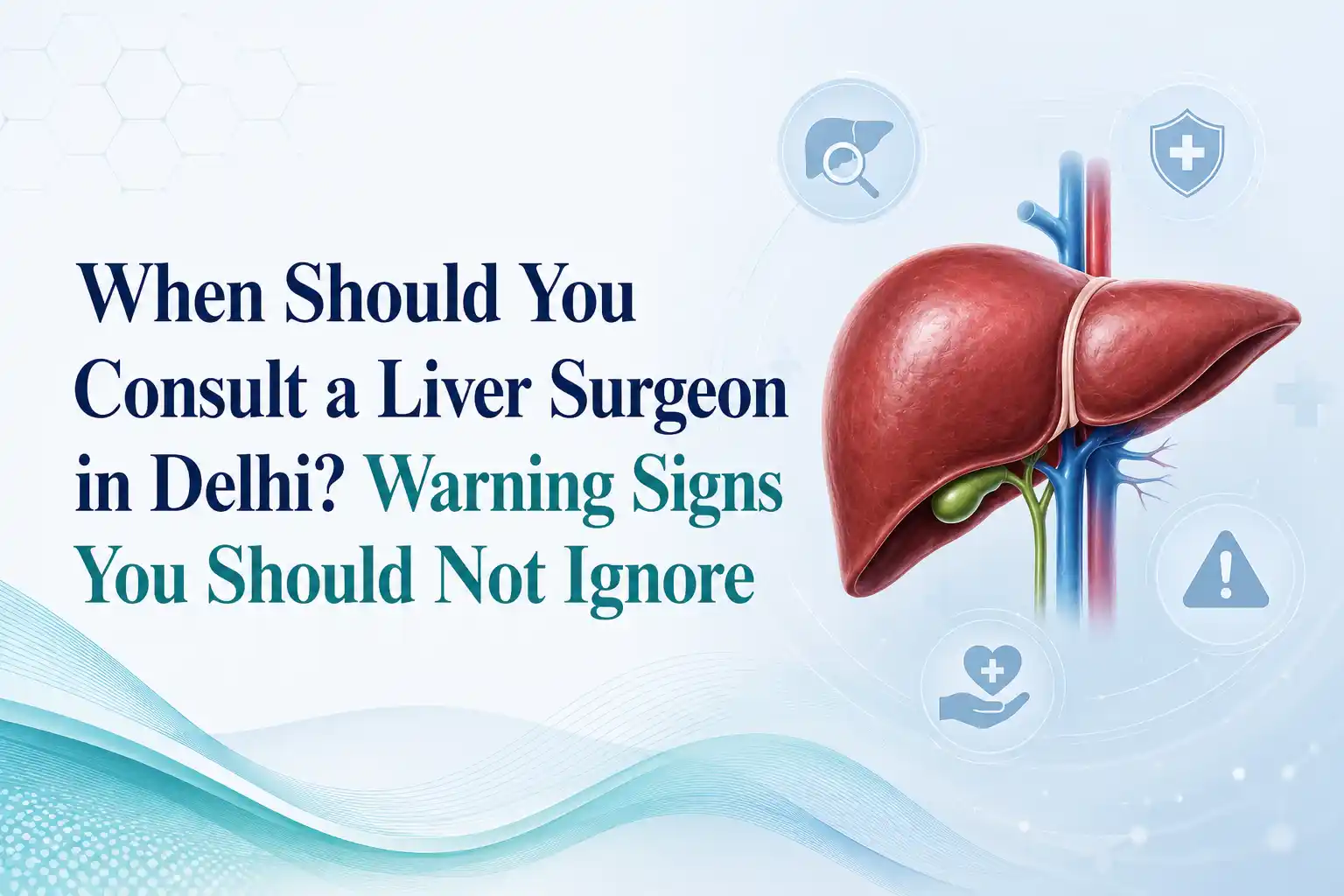
Liver disease can remain silent for a long time. Many people do not feel any major symptoms until the condition becomes advanced. Some patients only discover liver problems during routine blood tests, ultrasound, or health checkups. Others come to know after developing jaundice, swelling in the abdomen, vomiting blood, or sudden weakness. This is why knowing when to consult a liver surgeon in Delhi is extremely important.
A liver surgeon is not consulted only for liver transplant. A specialist liver and HPB surgeon also treats liver tumors, bile duct injuries, pancreatic cancer, gallbladder cancer, bile duct cancer, portal hypertension complications, and advanced HPB conditions. If you are searching for a liver surgeon near me, liver specialist in Delhi, or liver transplant surgeon in Delhi, you may need expert evaluation before the disease progresses further.
At Liver Surgeons, Delhi, patients receive care for liver transplant, liver cancer surgery, hepatology, bile duct surgery, pancreatic surgery, diagnostics, and complex liver, pancreas and bile duct surgery in Delhi.
Why Liver Disease Should Not Be Ignored
The liver is one of the most important organs in the body. It helps digest food, removes toxins, produces proteins, stores energy, fights infection, and supports blood clotting. When liver function starts declining, many body systems are affected.
The problem is that early liver disease may not cause severe pain. A person may feel tired, lose appetite, have mild nausea, or notice vague abdominal discomfort. These symptoms are easy to ignore. But when liver disease becomes advanced, it may cause jaundice, fluid buildup, bleeding, confusion, infection, or liver failure.
Early consultation helps in:
- Diagnosing the disease correctly
- Preventing complications
- Planning treatment before emergency stage
- Checking whether surgery is needed
- Deciding if transplant evaluation is required
- Detecting liver cancer early
- Managing bile duct or pancreatic disease on time
1. Persistent Jaundice
Jaundice is one of the most common reasons patients consult a liver specialist. It causes yellowing of the eyes and skin. It may also cause dark urine, pale stools, itching, tiredness, and poor appetite.
Jaundice can happen due to many reasons, including hepatitis, liver failure, bile duct blockage, gallstones, pancreatic cancer, bile duct cancer, gallbladder cancer, or advanced cirrhosis.
You should consult a liver surgeon urgently if jaundice is:
- Persistent for more than a few days
- Increasing despite treatment
- Associated with fever
- Associated with weight loss
- Linked with severe itching
- Causing pale stools and dark urine
- Seen with abdominal pain
- Found with abnormal liver function tests
If jaundice is caused by bile duct obstruction, the patient may need drainage, stenting, bile duct reconstruction, or surgery. This is where an HPB surgeon's role becomes important.
2. Swelling in the Abdomen or Legs
Swelling in the abdomen may be due to fluid accumulation, known as ascites. This is commonly seen in advanced liver cirrhosis. Leg swelling may also occur when the liver is unable to produce enough proteins or when circulation is affected.
Ascites should not be treated only with repeated water tablets without understanding the cause. It may indicate that the liver disease has reached a serious stage.
A patient with abdominal swelling may need:
- Liver function tests
- Ultrasound
- FibroScan
- Endoscopy
- Ascitic fluid testing
- Infection screening
- Nutrition assessment
- Liver transplant evaluation in advanced cases
Patients with cirrhosis-related swelling can be guided through liver cirrhosis treatment in Delhi.
3. Vomiting Blood or Passing Black Stools
Vomiting blood or passing black stools can be a sign of internal bleeding from enlarged veins in the food pipe or stomach. These veins are called varices. They commonly develop in patients with portal hypertension due to liver cirrhosis.
This is a medical emergency. The patient may need ICU care, blood transfusion, urgent endoscopy, medicines to reduce portal pressure, and liver disease evaluation.
Warning signs include:
- Vomiting fresh blood
- Coffee-colored vomit
- Black tarry stools
- Dizziness
- Low blood pressure
- Weakness
- History of cirrhosis
- Previous variceal bleeding
After emergency control, the liver specialist may evaluate whether the patient needs long-term portal hypertension treatment or liver transplant assessment.
4. Confusion, Drowsiness, or Personality Changes
When the liver cannot remove toxins properly, toxins can affect the brain. This condition is called hepatic encephalopathy. Family members may notice that the patient is confused, sleepy, irritable, forgetful, or speaking unusually.
This can happen in advanced liver disease, especially after infection, constipation, bleeding, dehydration, or kidney problems.
Do not ignore these symptoms. Confusion in a liver patient can become serious quickly and may need hospital care.
5. Liver Tumor or Liver Mass Found on Scan
Many patients are referred to a liver surgeon after an ultrasound, CT scan, or MRI shows a "liver lesion," "liver mass," or "space occupying lesion." Not every liver lesion is cancer, but every suspicious liver mass should be evaluated by a specialist.
A liver surgeon will review:
- Tumor size
- Tumor number
- Tumor location
- Liver function
- Cirrhosis status
- Tumor markers
- CT or MRI quality
- Whether the tumor can be removed
- Whether transplant is better
- Whether ablation or other therapy is suitable
If liver cancer is suspected, patients should consult for liver cancer surgery in Delhi without delay.
6. Unexplained Weight Loss and Poor Appetite
Unexplained weight loss should always be taken seriously. When it is associated with jaundice, abdominal pain, nausea, fever, or abnormal scans, it may point toward liver, pancreas, bile duct, or gallbladder disease.
Possible causes may include:
- Liver cancer
- Pancreatic cancer
- Bile duct cancer
- Gallbladder cancer
- Chronic liver disease
- Chronic pancreatitis
- Severe infection
- Bile duct obstruction
An HPB surgeon can help identify whether the problem is medical, surgical, cancer-related, or transplant-related.
7. Repeated Abnormal Liver Function Tests
Many patients in Delhi discover liver problems during routine health checkups. Common abnormal values include SGOT, SGPT, bilirubin, alkaline phosphatase, GGT, albumin, INR, and platelet count.
You should consult a liver specialist if:
- Liver enzymes remain high repeatedly
- Bilirubin is raised
- INR is abnormal
- Platelets are low
- Albumin is low
- Ultrasound shows cirrhosis
- Fatty liver is associated with fibrosis
- FibroScan shows increased stiffness
- There is unexplained itching or jaundice
A FibroScan test in Delhi may help assess liver stiffness and fibrosis in selected patients.
8. Bile Duct Injury After Gallbladder Surgery
Some patients develop complications after gallbladder surgery. Symptoms may include bile leakage, fever, abdominal pain, jaundice, repeated hospital visits, or infection.
This may happen due to bile duct injury or stricture. These cases should be managed by an HPB surgeon because repeated or poorly timed repairs can make the condition more difficult.
Treatment may involve drainage, ERCP, stenting, delayed reconstruction, or advanced bile duct repair. Patients should seek opinion for bile duct reconstruction and advanced HPB procedures in Delhi.
9. Upper Abdominal Pain With Fever or Jaundice
Pain in the upper abdomen, especially on the right side, may be linked to liver, gallbladder, bile duct, or pancreatic disease. When pain occurs with fever or jaundice, it may indicate infection or obstruction.
Possible causes include:
- Cholangitis
- Gallbladder infection
- Liver abscess
- Bile duct stone
- Pancreatitis
- Bile duct obstruction
- Tumor-related blockage
These conditions may need urgent diagnosis and treatment.
10. Known Cirrhosis or Hepatitis
Patients with known cirrhosis, hepatitis B, hepatitis C, autoimmune liver disease, Wilson's disease, or fatty liver-related fibrosis should not wait for severe symptoms. Regular monitoring is important.
A liver specialist may advise:
- Blood tests
- Ultrasound
- FibroScan
- Endoscopy
- Antiviral treatment
- Nutrition correction
- Liver cancer screening
- Transplant evaluation if disease is advanced
Gastroenterologist or Liver Surgeon: Whom Should You See?
A gastroenterologist or hepatologist manages many liver diseases with medicines and monitoring. A liver surgeon or HPB surgeon is needed when there is a possibility of surgery, transplant, tumor removal, bile duct repair, or complex liver disease.
You should consult a liver surgeon if you have:
- Liver cancer
- Pancreatic cancer
- Bile duct cancer
- Gallbladder cancer
- Advanced cirrhosis
- Bile duct injury
- Liver failure
- Portal hypertension complications
- A recommendation for transplant
- A need for second opinion before major surgery
Conclusion
Liver disease warning signs should never be ignored. Persistent jaundice, abdominal swelling, vomiting blood, confusion, abnormal liver tests, liver mass, bile duct injury, and unexplained weight loss all need specialist attention.
Early evaluation can help prevent complications and preserve treatment options. If you are searching for a liver surgeon near me in Delhi, choose a specialist team experienced in liver transplant, HPB surgery, hepatology, and cancer surgery.
To discuss liver symptoms, abnormal reports, liver tumors, jaundice, cirrhosis, or bile duct problems, consult Dr. Ashish George and the Liver Surgeons team in Delhi for expert evaluation and personalized treatment planning. Book an Appointment with a Liver Specialist
Conclusion
FAQs
1. When should I consult a liver surgeon in Delhi?
You should consult a liver surgeon if you have a liver tumor, cirrhosis complications, liver failure, bile duct injury, pancreatic cancer, gallbladder cancer, or have been advised to have a transplant.
2. Is jaundice always serious?
Not always, but persistent or worsening jaundice should be evaluated quickly, especially if linked with fever, weight loss, itching, pale stools, or abnormal liver reports.
3. Can abnormal liver function tests indicate liver failure?
Abnormal reports may indicate inflammation, obstruction, cirrhosis, or liver dysfunction. Repeated abnormalities need specialist evaluation.
4. Should I take a second opinion before liver surgery?
Yes. Liver, pancreas, and bile duct surgeries are complex, and a second opinion can help confirm the safest treatment path.
5. Where can I consult a liver surgeon near me in Delhi?
You can consult the Liver Surgeons team at Fortis Hospital, Shalimar Bagh, Delhi, for liver transplant, HPB surgery, and hepatology care.