What Causes Liver Cirrhosis?
Cirrhosis is always the end result of prolonged liver damage. Understanding the
underlying cause is critical — because addressing the root cause is the first and most
important step in any treatment plan.
Most Common Causes in India
-
Chronic Hepatitis B and C — Viral infections that cause
ongoing liver inflammation and are among the leading causes of cirrhosis in India.
-
Non-Alcoholic Fatty Liver Disease (NAFLD/MASLD) — Now the
fastest-growing cause of cirrhosis in India, driven by rising rates of obesity and
type 2 diabetes.
-
Alcoholic Liver Disease — Long-term, heavy alcohol
consumption causes progressive liver damage leading to cirrhosis.
-
Autoimmune Hepatitis — The immune system mistakenly attacks
liver cells, causing chronic inflammation and scarring.
-
Primary Biliary Cholangitis (PBC) and Primary Sclerosing Cholangitis
(PSC) — Conditions that damage the bile ducts within and outside
the liver.
-
Genetic Liver Disorders — Including Wilson's disease (copper
accumulation) and haemochromatosis (iron overload).
-
Chronic Biliary Obstruction — Long-standing bile duct
blockages leading to secondary biliary cirrhosis.
Identifying the specific cause in your case directly shapes the treatment approach. For
example, curing hepatitis C with antiviral therapy can halt fibrosis progression
entirely — and in some patients, early fibrosis can even regress.
Symptoms of Liver Cirrhosis
Liver cirrhosis develops over months or years, and symptoms vary significantly depending
on the stage. In its early stage (compensated cirrhosis), the liver
still functions adequately and many patients experience no obvious symptoms at all. As
the disease progresses into decompensated cirrhosis, life-threatening
complications begin to emerge.
Compensated Cirrhosis Symptoms
(Liver still functioning
adequately)
- Persistent fatigue and low energy
- Mild nausea or loss of appetite
- Mild abdominal discomfort (upper right)
- Spider-like blood vessels on the skin
- Mild weight loss
- Redness on the palms of the hands
Decompensated Cirrhosis Symptoms
(Seek specialist care
immediately)
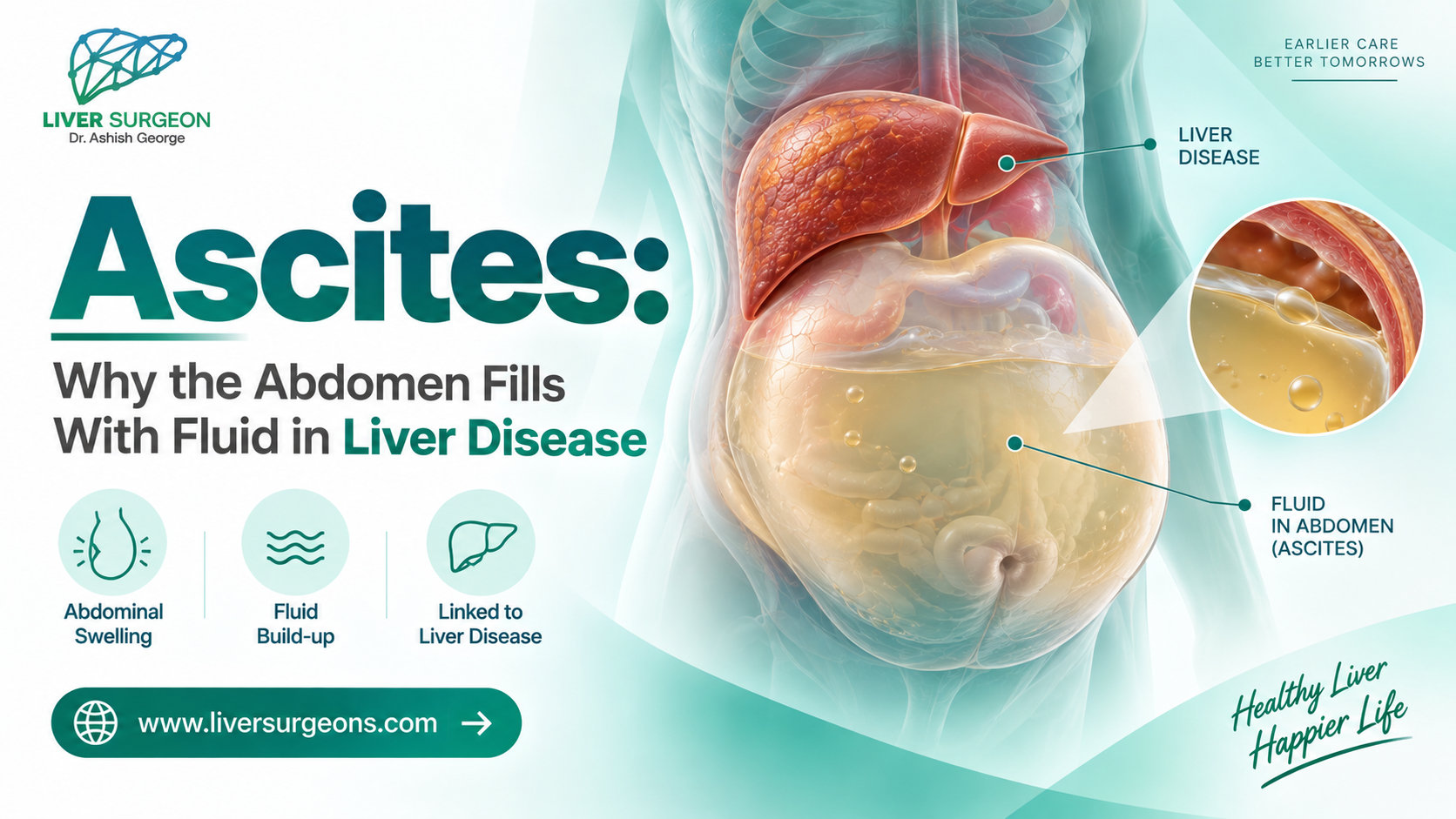
- Ascites — significant abdominal swelling from fluid accumulation
- Jaundice — yellowing of skin and eyes
- Variceal bleeding — vomiting blood or dark stools
- Hepatic encephalopathy — confusion, memory problems, sleep disorders
- Severe muscle wasting (sarcopenia)
- Leg and ankle swelling (oedema)
- Easy bruising or prolonged bleeding
If you are experiencing any of the decompensated symptoms listed above, please
seek specialist liver care without delay. Early intervention at this stage can be
life-saving.
Stages of Liver Cirrhosis & What They Mean for Treatment
Cirrhosis is not a single fixed condition — it progresses through distinct stages, each
requiring a different level of medical care. Dr. Ashish George utilizes advanced
diagnostics such as FibroScan® and the MELD (Model for End-Stage Liver Disease)
scoring system to accurately determine your stage and guide an individualized treatment
approach.
| Stage |
Type |
Key Signs |
Treatment Focus |
| 1 |
Compensated Cirrhosis |
Often none; mild fatigue or bloating |
Lifestyle, antivirals, monitoring |
| 2 |
Early Decompensation |
Mild ascites, early encephalopathy |
Diuretics, albumin, medications |
| 3 |
Advanced Decompensation |
Severe ascites, variceal bleeding, jaundice |
TIPS, intensive management |
| 4 |
End-Stage Liver Disease |
Liver failure, multi-organ dysfunction |
Liver transplant evaluation |
The MELD (Model for End-Stage Liver Disease) score is a critical tool
we use to quantify disease severity and prioritise liver transplant for patients with
advanced cirrhosis. A MELD score of 15 or above typically indicates the need for
transplant evaluation.
How We Diagnose & Stage Cirrhosis
Accurate diagnosis is the foundation of effective liver treatment for cirrhosis. Our
team uses a comprehensive multi-modal approach to confirm your diagnosis, identify the
underlying cause, determine your stage, and detect any active complications.
-
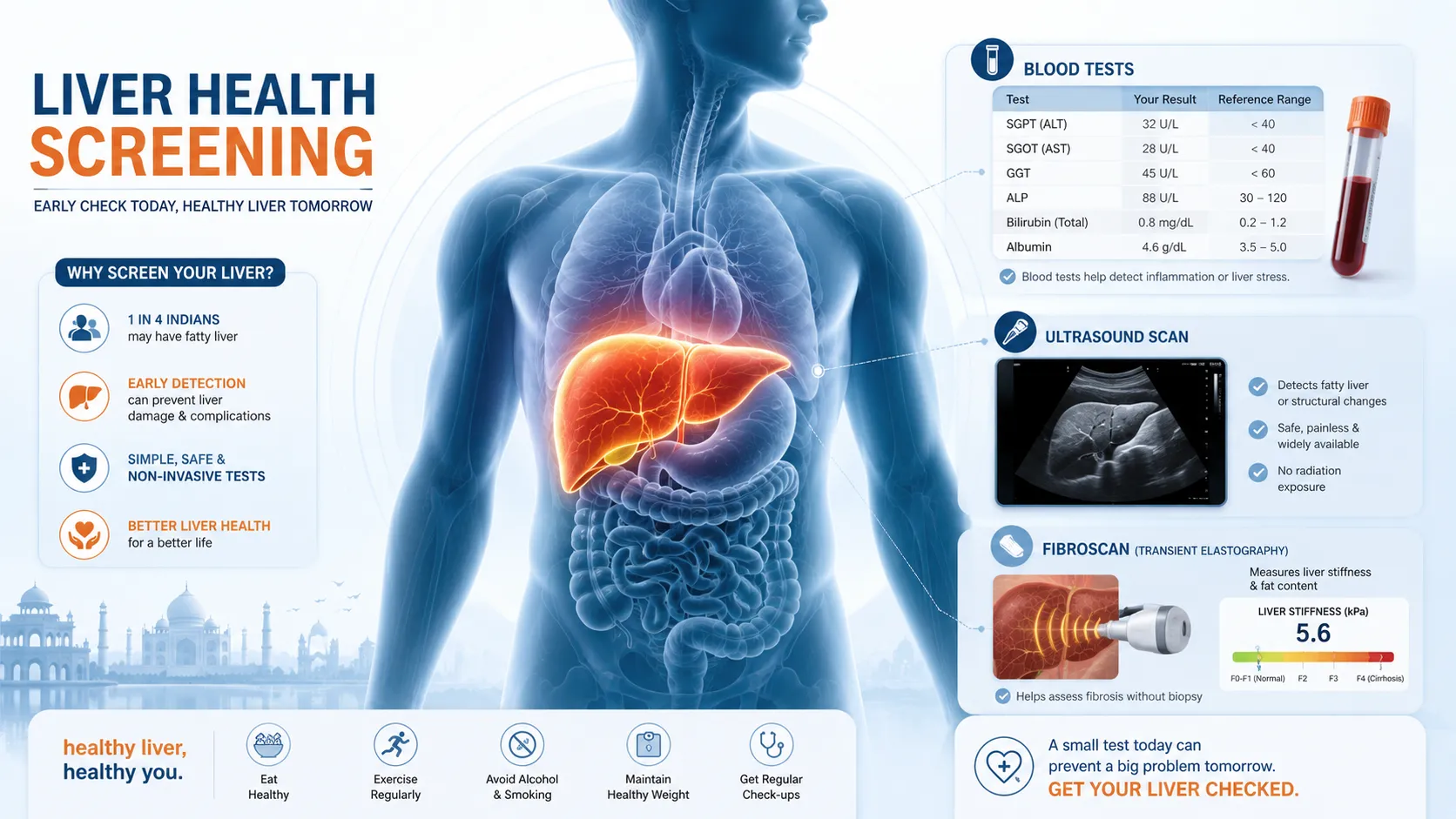
Blood Tests & Liver Function Panel
Liver function tests (LFTs), including ALT, AST, GGT, bilirubin, albumin, and INR,
provide critical information about how well your liver is functioning and the degree
of damage present. A complete blood count (CBC) and kidney function tests are also
performed to assess overall health.
-
FibroScan & Liver Elastography
FibroScan is a specialised, non-invasive ultrasound-based test that measures liver
stiffness — a direct indicator of the degree of fibrosis and cirrhosis. It is
painless, takes only minutes, and avoids the need for a biopsy in many cases. We use
FibroScan routinely for both initial staging and ongoing monitoring of cirrhosis
progression or regression.
-
Abdominal Ultrasound & Doppler
Ultrasound imaging detects changes in liver size and texture, identifies ascites,
and evaluates blood flow through the portal vein. Doppler ultrasound is particularly
useful for assessing portal hypertension and planning TIPS procedures.
-
Upper GI Endoscopy
An endoscopic examination of the oesophagus and stomach to detect and grade
oesophageal varices — dilated veins that develop as a consequence of portal
hypertension and are at risk of life-threatening bleeding.
-
Advanced Imaging (CT / MRI)
CT scans and MRI provide detailed cross-sectional imaging of the liver, allowing
precise assessment of liver architecture, detection of liver tumours (HCC), and
surgical planning for transplantation.
-
Liver Biopsy (When Indicated)
While non-invasive tests have replaced biopsy in many cases, a liver biopsy remains
the gold standard for confirming the cause of cirrhosis and assessing the exact
degree of inflammation and fibrosis — particularly in autoimmune or atypical cases.
Our Liver Treatment for Cirrhosis — A Comprehensive Approach
There is no single treatment for liver cirrhosis — effective management requires a
multi-pronged strategy targeting the underlying cause, slowing disease progression,
treating complications, and, when necessary, preparing the patient for liver
transplantation. Dr. Ashish George and the team at liversurgeons.com
offer the full spectrum of cirrhosis care under one roof.
1. Treating the Underlying Cause
- Hepatitis B & C: Direct-acting antiviral (DAA) medications can
now cure Hepatitis C in over 95% of patients, halting fibrosis progression and, in
some cases, allowing partial reversal.
- Alcoholic Cirrhosis: Complete and permanent alcohol cessation is
non-negotiable. Our team provides structured support, medication management, and
dietary guidance to help patients achieve and maintain abstinence.
- NAFLD/MASLD-related Cirrhosis: Weight loss, dietary modification,
blood sugar control, and treatment of metabolic risk factors can significantly slow
or stabilise disease progression.
- Autoimmune Hepatitis: Immunosuppressive therapy (corticosteroids
and azathioprine) controls immune-mediated liver damage and prevents further
scarring.
2. Complication Management
Managing the complications of cirrhosis is as important as treating the disease itself.
Our comprehensive complications management programme covers every aspect of
decompensated cirrhosis:
| Complication |
Risk Level |
Our Treatment Approach |
| Ascites (Fluid Buildup) |
High |
Spironolactone + furosemide diuretics, albumin infusion, therapeutic
paracentesis |
| Variceal Bleeding |
Critical |
Emergency endoscopic band ligation, sclerotherapy, non-selective
beta-blockers |
| Hepatic Encephalopathy |
High |
Lactulose, rifaximin, ammonia monitoring, EEG assessment for severe
cases |
| Portal Hypertension |
High |
TIPS procedure (80–90% success), dietary sodium restriction, medication
management |
| Spontaneous Bacterial Peritonitis |
High |
Antibiotic therapy, diagnostic paracentesis, prophylactic antibiotics
|
| Hepatorenal Syndrome |
Critical |
Vasoconstrictors, albumin infusion, urgent transplant evaluation |
| Liver Cancer (HCC) |
Moderate–High |
6-monthly ultrasound + AFP screening, tumour ablation, surgical
resection or transplant |
| Sarcopenia (Muscle Loss) |
Moderate |
High-protein diet (1.2–1.5g/kg/day), resistance training, BCAA
supplementation |
3. The TIPS Procedure — A Key Intervention for Advanced
Cirrhosis
Transjugular Intrahepatic Portosystemic Shunt (TIPS) is a minimally invasive procedure
that creates a channel (shunt) within the liver between the portal vein and the hepatic
vein, reducing pressure in the portal venous system.
At liversurgeons.com, Dr. Ashish George performs TIPS using advanced
real-time imaging guidance, achieving an 80–90% success rate in reducing portal
hypertension — significantly reducing the risk of variceal bleeding and refractory
ascites. TIPS is particularly valuable for patients awaiting liver transplantation.
- Who benefits from TIPS? Patients with recurrent variceal bleeding
unresponsive to endoscopic treatment, refractory ascites (ascites not responding to
diuretics), and hepatic hydrothorax.
4. Nutritional & Lifestyle Management
Nutrition plays a critical role in managing cirrhosis and preventing muscle wasting
(sarcopenia), which affects up to 70% of cirrhosis patients and significantly worsens
outcomes.
- High-protein diet: 1.2–1.5g of protein per kilogram of body weight
daily, using plant proteins and lean animal sources
- Low-sodium diet: Restricting salt to less than 2g per day to reduce
fluid retention and ascites
- Small, frequent meals: Preventing the fasting-induced catabolism
that worsens muscle loss
- BCAA supplementation: Branched-chain amino acids help combat
fatigue and muscle wasting
- Supervised resistance training: Preserves and rebuilds muscle mass
even in advanced cirrhosis
- Complete alcohol abstinence: Essential regardless of the original
cause of cirrhosis
5. Liver Transplantation for Advanced Cirrhosis
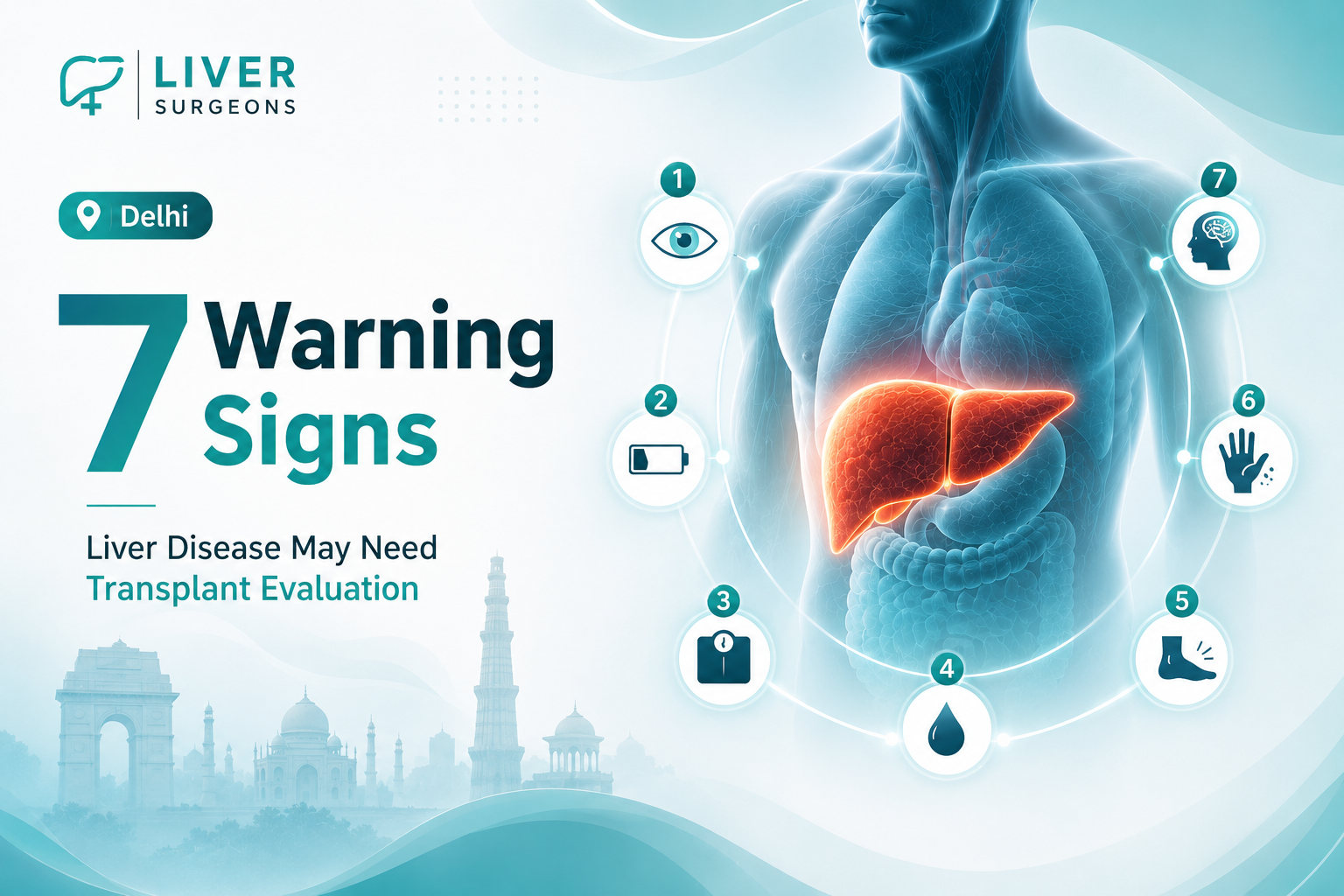
For patients with end-stage liver disease — indicated by a MELD score of 15 or above,
recurrent life-threatening complications, or liver failure — liver transplantation
offers the only definitive cure.
The diseased, scarred liver is replaced with a healthy donor liver, giving patients a
genuine second chance at life.
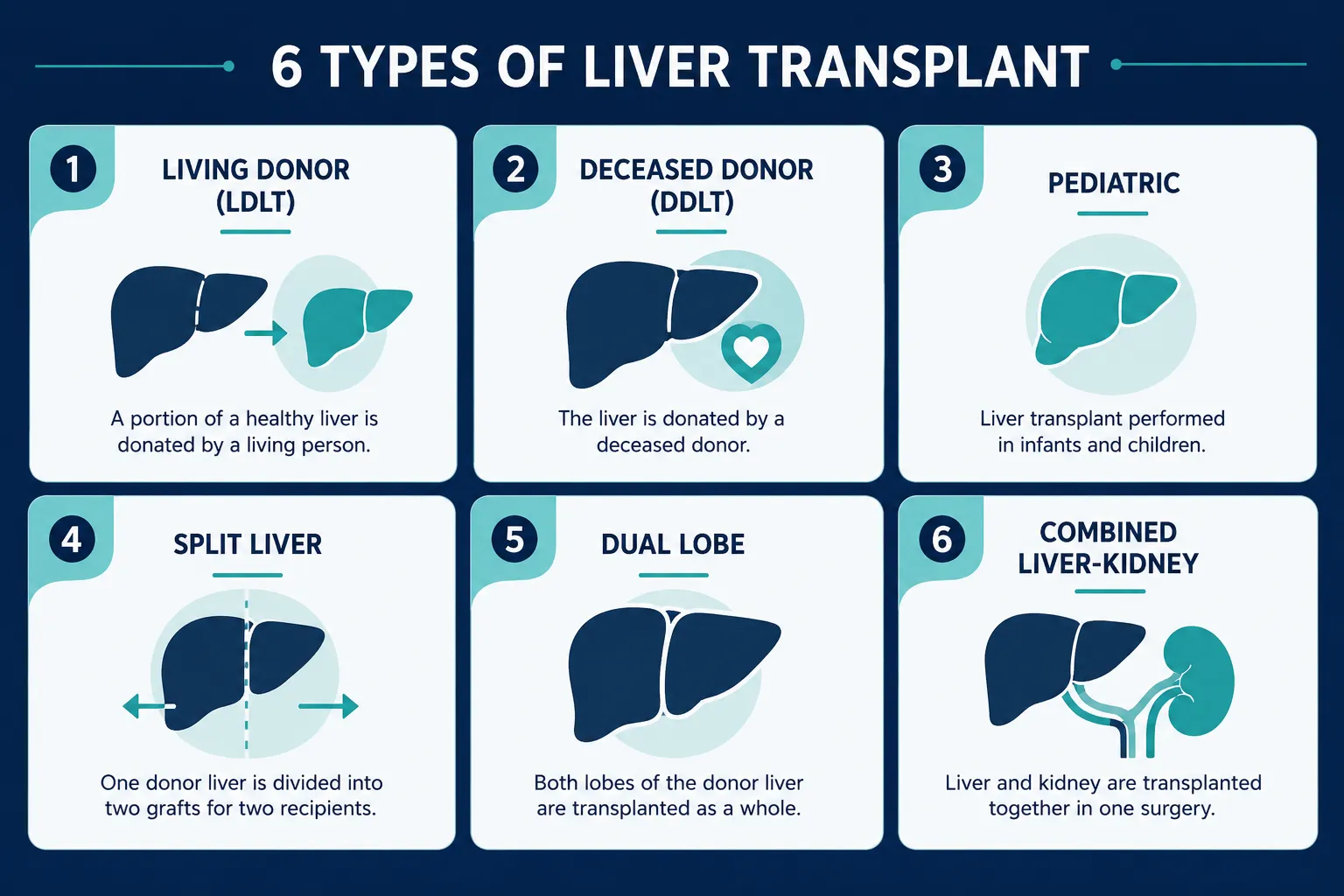
Dr. Ashish George has performed over 1,000 successful liver transplants, achieving a
92–95% success rate across all transplant types — including living donor, deceased
donor, paediatric, and combined liver-kidney transplants. Patients with cirrhosis are
seamlessly transitioned from the medical management programme to transplant evaluation
without needing to change hospitals or care teams.