Liver Transplant vs Advanced HPB Surgery: Which Treatment Do You Need in Delhi?
.webp)
Principal Consultant & Unit Head, Liver Transplant & HPB Surgery, Fortis Hospital, Shalimar Bagh, Delhi
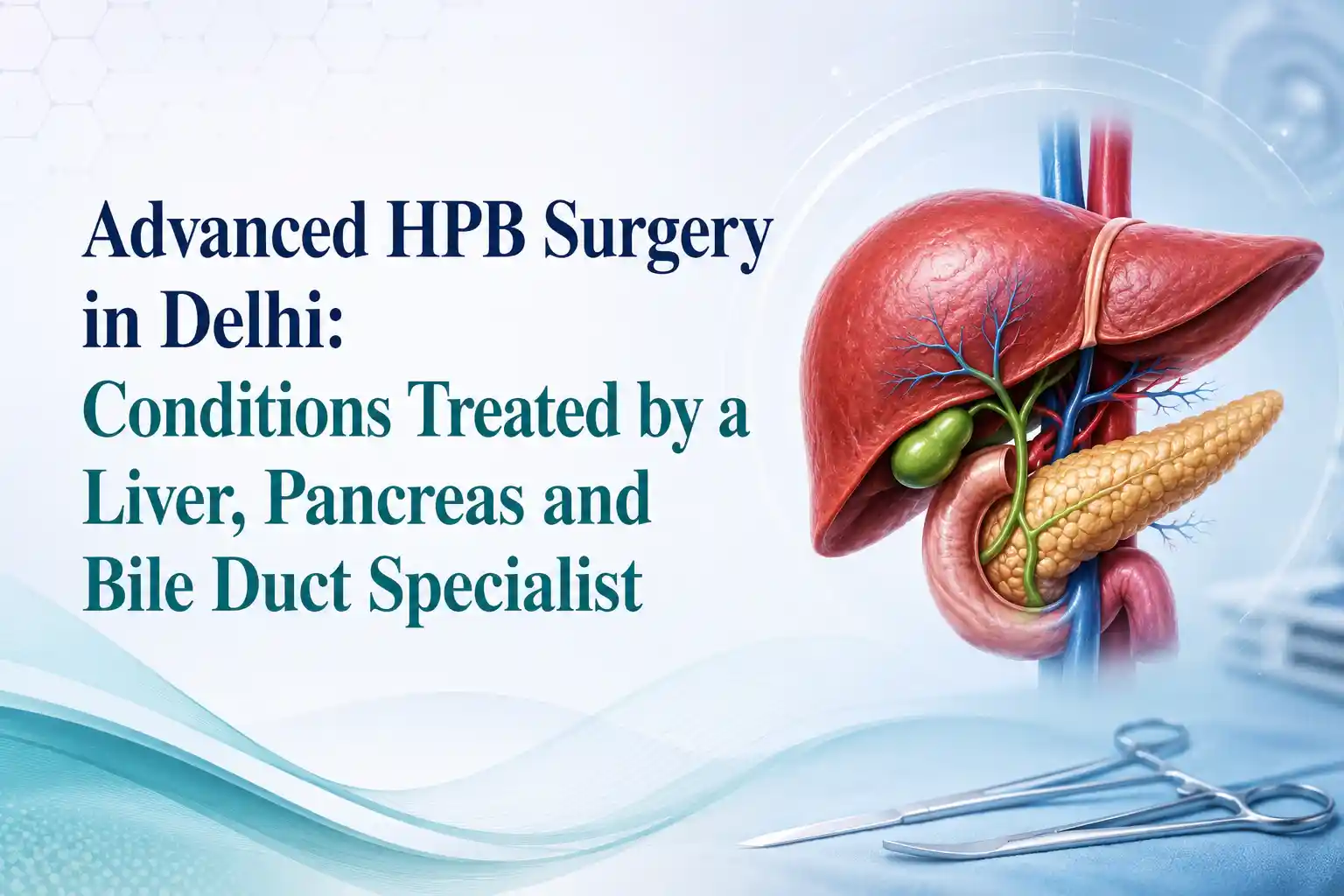
Some abdominal diseases are too complex to be treated with routine medical care or general surgery. These diseases may involve the liver, pancreas, bile ducts, gallbladder, major blood vessels, or digestive system. For such conditions, patients may need specialist care from an HPB surgeon.
If you are searching for advanced HPB surgery in Delhi, HPB surgeon near me, or liver pancreas bile duct specialist in Delhi, it means you or your family member may be dealing with a serious diagnosis such as liver tumor, pancreatic cancer, bile duct cancer, gallbladder cancer, chronic pancreatitis, bile duct injury, or complex jaundice.
HPB stands for Hepato-Pancreato-Biliary. "Hepato" refers to the liver, "pancreato" refers to the pancreas, and "biliary" refers to the bile ducts and gallbladder. These organs work closely together, so disease in one area can affect the others. This is why HPB surgery requires specialized training and experience.
At Liver Surgeons, Delhi, patients can access advanced hepatopancreatobiliary procedures in Delhi, including complex liver resections, robotic HPB surgery, portal hypertension surgery, bile duct reconstruction, chronic pancreatitis surgery, cholangiocarcinoma surgery, and advanced liver tumor surgery.
Why HPB Surgery Is a Specialist Field
HPB organs are located deep inside the abdomen and are closely connected to major blood vessels and ducts. Surgery in this area is technically demanding. A small error can affect bile flow, digestion, bleeding risk, liver function, or pancreatic function.
An HPB surgeon needs expertise in:
- Liver anatomy
- Pancreatic anatomy
- Bile duct reconstruction
- Cancer surgery
- Major blood vessel involvement
- Transplant principles
- Minimally invasive surgery
- Robotic surgery
- ICU and postoperative care
This is why patients with complex HPB diseases should seek specialist evaluation instead of delaying care.
1. Liver Tumors
Liver tumors may be benign or cancerous. Some are found during routine ultrasound, while others are detected after symptoms such as pain, weight loss, jaundice, or abnormal liver function tests.
Liver tumors may include:
- Hepatocellular carcinoma
- Intrahepatic cholangiocarcinoma
- Colorectal liver metastases
- Neuroendocrine liver metastases
- Large benign tumors
- Complex liver cysts
Treatment depends on tumor type, location, number, liver function, and whether the tumor has spread. Some patients may need liver resection. Others may need ablation, chemotherapy, transplant evaluation, or a combination of treatments.
Patients with suspected cancer should review options for liver cancer surgery in Delhi.
2. Liver Cancer With Cirrhosis
Liver cancer in a cirrhotic liver needs very careful planning. If the liver is already weak, removing a part of it may not be safe. In such cases, liver transplant may be considered for selected patients.
The key question is not only "Can the tumor be removed?" The surgeon must also ask, "Will the remaining liver work after surgery?"
Treatment options may include:
- Liver resection
- Liver transplant
- Tumor ablation
- Transarterial therapies
- Systemic therapy
- Supportive liver care
Patients may also need evaluation for liver transplant in Delhi if cirrhosis is advanced.
3. Pancreatic Cancer
Pancreatic cancer is one of the most challenging HPB conditions because the pancreas lies close to the bile duct, intestine, stomach, liver blood vessels, and major arteries.
Symptoms may include:
- Jaundice
- Weight loss
- Loss of appetite
- Upper abdominal pain
- Back pain
- New diabetes
- Pale stools
- Dark urine
Surgical options may include:
- Whipple procedure
- Distal pancreatectomy
- Total pancreatectomy in selected cases
- Bypass surgery for symptom relief
- Robotic pancreatic surgery in selected patients
Patients can consult for pancreatic cancer surgery in Delhi if a pancreatic mass or suspicious scan has been found.
4. Bile Duct Cancer
Bile duct cancer is also called cholangiocarcinoma. It can occur inside the liver, near the liver hilum, or outside the liver. It often causes jaundice because bile flow becomes blocked.
Symptoms may include:
- Yellow eyes
- Dark urine
- Pale stools
- Severe itching
- Fever
- Weight loss
- Poor appetite
- Upper abdominal discomfort
Treatment may include:
- Bile duct resection
- Liver resection
- Bile duct reconstruction
- Lymph node dissection
- Preoperative drainage
- Chemotherapy in selected cases
- Transplant-based protocols in rare selected cases
For specialist evaluation, patients can explore bile duct cancer surgery in Delhi.
5. Gallbladder Cancer
Gallbladder cancer may be detected during evaluation for gallstones or after gallbladder removal surgery. Early symptoms are often vague, which can delay diagnosis.
Possible symptoms include:
- Right upper abdominal pain
- Nausea
- Weight loss
- Jaundice
- Fever
- Loss of appetite
- Lump or heaviness in abdomen
Gallbladder cancer may require more than simple gallbladder removal. Advanced surgery may include liver wedge resection, lymph node removal, bile duct resection, or radical cholecystectomy.
A specialist HPB opinion is important, especially when cancer is found after routine gallbladder surgery.
6. Bile Duct Injury After Gallbladder Surgery
Bile duct injury can happen during gallbladder surgery. It may lead to bile leakage, jaundice, infection, abdominal pain, fever, or repeated hospital admissions.
This condition should be managed by an HPB surgeon because treatment timing is very important. Immediate repair is not always the best approach. Sometimes drainage and stabilization are needed first, followed by planned reconstruction.
Treatment may involve:
- Drain placement
- ERCP and stenting
- Infection control
- Bile duct reconstruction
- Hepaticojejunostomy
- Long-term stricture monitoring
Patients with bile duct injury can benefit from advanced HPB procedures in Delhi.
7. Chronic Pancreatitis
Chronic pancreatitis is long-term inflammation and scarring of the pancreas. It can cause severe pain, weight loss, poor digestion, diabetes, and repeated hospital visits.
Surgery may be considered when:
- Pain is severe and persistent
- Medicines are not helping
- The pancreatic duct is blocked or dilated
- Stones are present in the duct
- There is suspicion of cancer
- Endoscopic treatment has failed
Surgical options may include Frey procedure, drainage procedures, distal pancreatectomy, or other pancreas-preserving procedures.
8. Portal Hypertension
Portal hypertension means increased pressure in the portal vein system. It is commonly caused by cirrhosis and can lead to serious complications.
Complications may include:
- Vomiting blood
- Black stools
- Enlarged spleen
- Low platelet count
- Fluid in abdomen
- Varices
- Recurrent bleeding
Treatment may involve medicines, endoscopy, TIPS, surgery, or liver transplant evaluation. Selected patients may need portal hypertension surgery as part of advanced HPB care.
9. Complex Liver Resections Near Major Blood Vessels
Some liver tumors are difficult to remove because they are close to major blood vessels such as the hepatic veins, portal vein, or inferior vena cava. These cases require advanced planning and highly specialized surgical skill.
In selected rare cases, advanced techniques such as ante-situm or ex-situ liver resection may be considered. These are complex procedures used only in highly selected patients.
Such cases should always be reviewed by an experienced liver and HPB surgeon.
10. Benign but Complex HPB Conditions
Not every HPB surgery is for cancer. Some non-cancerous conditions may also need specialist treatment.
These include:
- Large liver cysts
- Bile duct strictures
- Choledochal cysts
- Pancreatic cysts
- Recurrent cholangitis
- Benign biliary obstruction
- Complicated gallbladder disease
- Liver abscess complications
Even benign diseases can become serious if they block bile flow, cause infection, or damage liver function.
When Should You Consult an HPB Surgeon?
You should consult an HPB surgeon in Delhi if you have:
- Liver tumor
- Pancreatic tumor
- Bile duct blockage
- Gallbladder cancer
- Persistent jaundice
- Bile duct injury
- Chronic pancreatitis pain
- Portal hypertension complications
- Complex CT or MRI findings
- A recommendation for major abdominal surgery
- Need for second opinion
Why Early Referral Matters
In HPB disease, delay can reduce treatment options. A tumor that is removable today may become difficult later. Jaundice can worsen liver function. Infection can increase surgical risk. Poor nutrition can delay recovery.
Early specialist care helps in:
- Accurate diagnosis
- Better surgical planning
- Timely cancer treatment
- Reduced complications
- Better recovery preparation
- Clear decision-making for families
Why Choose Liver Surgeons in Delhi?
Liver Surgeons offer specialized care for liver transplant, HPB surgery, liver cancer surgery, pancreatic surgery, bile duct surgery, robotic HPB surgery, and hepatology. Patients from Delhi, North Delhi, Shalimar Bagh, Rohini, Pitampura, Gurugram, Noida, Ghaziabad, and Delhi NCR can consult for complex liver, pancreas, bile duct, and gallbladder conditions.
The advantage of a specialist team is that patients receive complete evaluation rather than only procedure-based advice.
Consult a Liver, Pancreas and Bile Duct Specialist
Conclusion
Advanced HPB surgery in Delhi is used for complex diseases of the liver, pancreas, bile ducts, and gallbladder. These conditions may include liver tumors, pancreatic cancer, bile duct cancer, gallbladder cancer, bile duct injury, chronic pancreatitis, portal hypertension, and complex benign diseases.
Because HPB diseases are often serious and technically challenging, early consultation with a specialist surgeon is important. The right treatment may involve surgery, robotic surgery, transplant evaluation, drainage, chemotherapy, or non-surgical management.
If you or your family member has a liver, pancreas, bile duct, or gallbladder condition, consult Dr. Ashish George and the Liver Surgeons team in Delhi for expert diagnosis and treatment planning.
FAQs
1. What does an HPB surgeon treat?
An HPB surgeon treats diseases of the liver, pancreas, gallbladder, and bile ducts, including tumors, injuries, strictures, pancreatitis, and complex jaundice.
2. Is HPB surgery only for cancer?
No. HPB surgery also treats benign liver tumors, bile duct injuries, chronic pancreatitis, portal hypertension, and bile duct obstruction.
3. When should I see an HPB surgeon in Delhi?
You should see an HPB surgeon if you have liver tumor, pancreatic tumor, persistent jaundice, bile duct injury, gallbladder cancer, or complex scan findings.
4. Can HPB surgery be robotic?
Yes. Selected liver, pancreas, bile duct, and gallbladder procedures may be performed using robotic or minimally invasive techniques.
5. Is liver transplant part of HPB care?
Liver transplant and HPB surgery are closely related, but they are different treatments. Some patients need transplant, while others need organ-preserving HPB surgery.