Ascites: Why the Abdomen Fills With Fluid in Liver Disease
.webp)
Principal Consultant & Unit Head, Liver Transplant & HPB Surgery, Fortis Hospital, Shalimar Bagh, Delhi
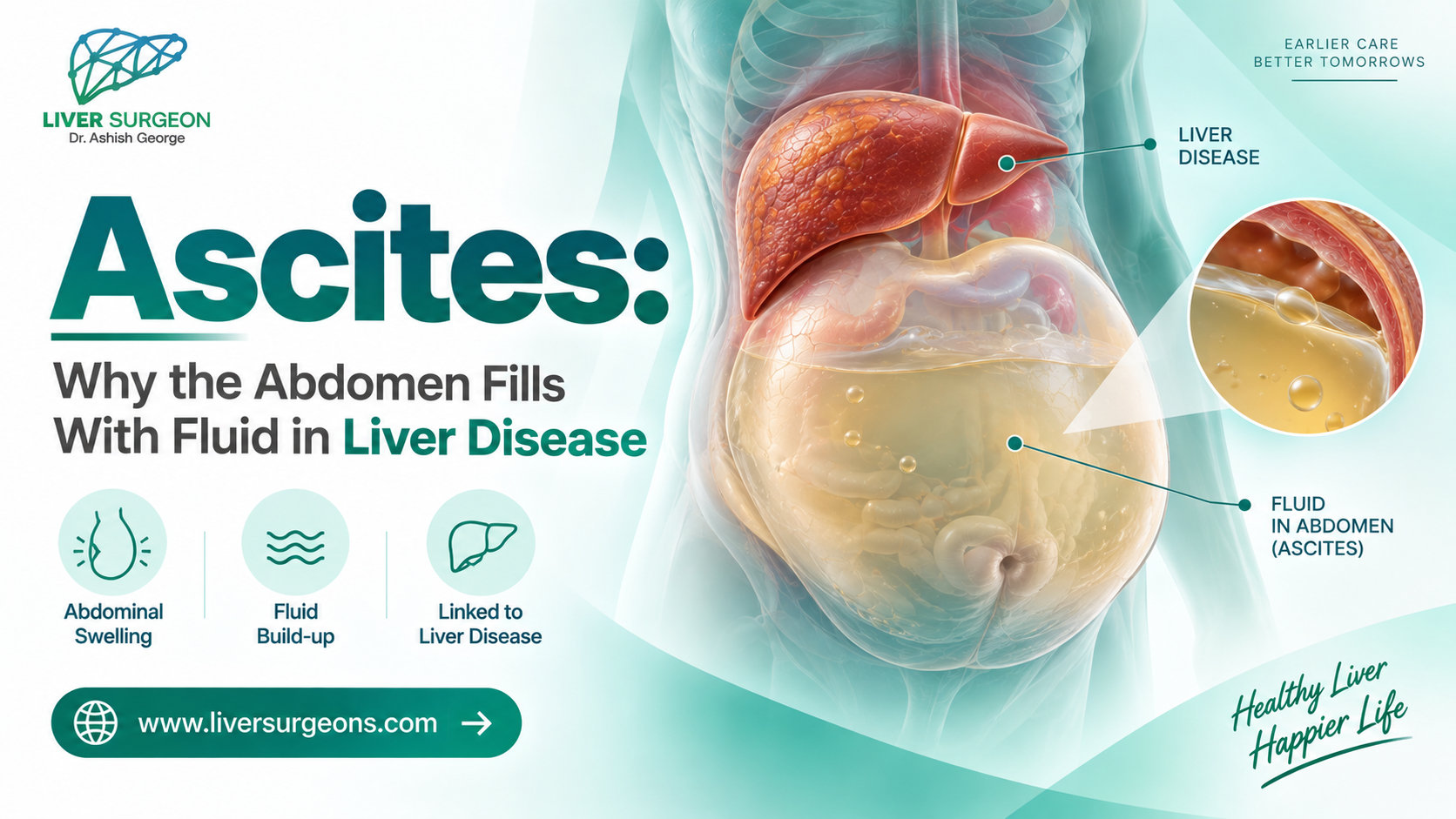
A swelling abdomen in someone with liver disease is rarely just weight gain. Ascites is an important sign that the liver needs urgent specialist attention.
Ascites is the medical word for a build-up of fluid in the abdomen. It is one of the most common and most important signs that liver disease has become advanced. For many patients and families, a slowly swelling abdomen is the first obvious sign that something serious is happening with the liver. This guide explains what causes ascites, its symptoms, how it is treated, and why it is a signal that a liver specialist should be involved quickly.
What Is Ascites?
Ascites is fluid that collects in the space inside the abdomen. A small amount causes few symptoms, but as it builds up the abdomen becomes visibly swollen and tight. While there are other causes, in most cases ascites is a sign of advanced liver disease, particularly cirrhosis.
Why Does the Abdomen Fill With Fluid?
In liver disease, ascites forms from a combination of two problems:
- High pressure in the portal vein (portal hypertension): scarring in a cirrhotic liver raises the pressure in the vein feeding the liver, forcing fluid out into the abdomen. See portal hypertension surgery .
- Low albumin: a damaged liver makes less albumin, the protein that keeps fluid inside blood vessels, so fluid leaks out.
Together these push fluid into the abdominal cavity faster than the body can clear it.
What Causes Ascites?
| Cause | Notes |
|---|---|
| Cirrhosis | By far the most common cause of ascites |
| Advanced liver cancer | Can cause or worsen ascites |
| Heart or kidney disease | Non-liver causes of fluid build-up |
| Infection or cancer in the abdomen | Less common causes |
Symptoms of Ascites
- A swelling, tight, or bloated abdomen
- Rapid weight gain over days or weeks
- Breathlessness when the fluid is large
- Swelling in the legs, loss of appetite, and discomfort
Important: Fever with abdominal pain in someone with ascites can mean the fluid has become infected, a condition called SBP. This is a medical emergency and needs immediate care.
Why Ascites Is an Important Warning Sign
This is the key message. In liver disease, the appearance of ascites usually means the cirrhosis has become decompensated, meaning the liver can no longer keep up.
Decompensation is the stage at which doctors begin to think seriously about liver transplant evaluation . Ascites is not just a symptom to drain; it is a signal that the underlying liver disease needs specialist assessment and a plan for the future.
See our guide to the stages of liver cirrhosis .
How Is Ascites Treated?
- Salt restriction: reducing dietary salt is a cornerstone of controlling fluid.
- Water tablets (diuretics): medicines that help the body remove the excess fluid.
- Draining the fluid (paracentesis): a needle is used to remove large amounts of fluid for relief.
- Treating infection: antibiotics if the fluid is infected.
- Addressing the cause: critically assessing the underlying liver disease, including whether a transplant is needed.
Draining fluid and taking diuretics relieve the symptom, but they do not fix the diseased liver. That is why ascites should always prompt a look at the bigger picture.
Ascites and Liver Care in Delhi
At Liver Surgeons, Dr. Ashish George and the team at Fortis Hospital, Shalimar Bagh, Delhi, treat ascites while also doing what matters most: assessing the underlying liver disease and planning ahead, including liver transplant assessment when the cirrhosis has decompensated.
If you or a family member has a swelling abdomen from liver disease, it is a sign to get specialist review, not just repeated draining. Reports can be reviewed remotely for patients outside Delhi.
Frequently Asked Questions
Is ascites a sign of serious liver disease?
Usually yes. In liver disease, ascites generally means the cirrhosis has become decompensated, an advanced stage. It should prompt specialist assessment, including whether a liver transplant will be needed.
Can ascites be cured?
Ascites itself can be controlled with salt restriction, diuretics and draining, but these do not fix the diseased liver. Lasting improvement depends on treating the underlying cause, which in advanced cirrhosis may mean a transplant.
How is the fluid removed?
Large amounts are removed with a procedure called paracentesis, where a thin needle drains the fluid. Diuretic medicines and a low-salt diet help prevent it building up again.
Is a swollen abdomen always ascites?
No, there are other causes of a swollen abdomen, but in someone with liver disease a swelling abdomen with rapid weight gain is often ascites and should be checked promptly.
When does ascites mean a liver transplant is needed?
Ascites is a marker of decompensated cirrhosis, which is when transplant assessment usually begins. Not everyone with ascites needs a transplant immediately, but it is the point at which the option should be formally assessed using tools like the MELD score.
Conclusion
Ascites is more than a swollen abdomen; it is one of the clearest signs that liver disease has reached an advanced stage and needs specialist attention. Controlling the fluid is important, but the real priority is assessing the underlying liver and planning ahead, including transplant where appropriate.
If you or a family member has fluid build-up from liver disease, book a consultation with Dr. Ashish George at Fortis Hospital, Shalimar Bagh, Delhi .