A Plain-Language Guide to MELD Scores, Eligibility and What Happens Next
.webp)
Principal Consultant & Unit Head, Liver Transplant & HPB Surgery, Fortis Hospital, Shalimar Bagh, Delhi
When a doctor first mentions the words "liver transplant," most families feel a mixture of fear, confusion, and a desperate need for clear answers. What does it actually mean? Does my loved one really need one? How sick do you have to be? What happens next?
These are the questions I hear most often in my clinic at Fortis Hospital, Delhi. Families sit across from me having done hours of frightened research online, only to come away more confused than when they started. My aim in this guide is to give you the honest, plain-language answers that those search results rarely do.
First: What Does a Liver Transplant Actually Do?
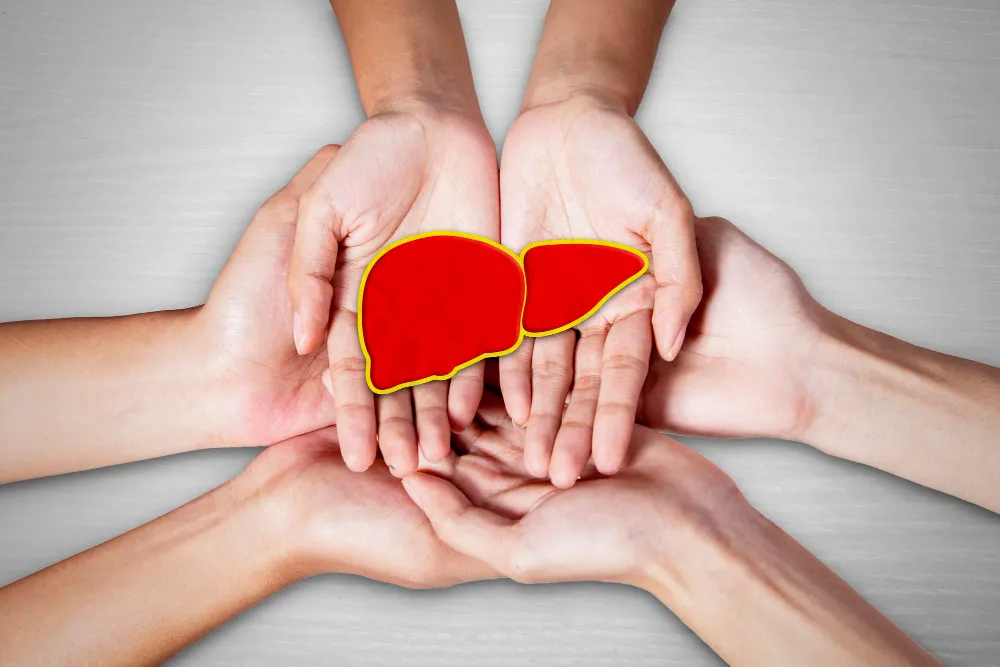
A liver transplant replaces a diseased, failing liver with a healthy one from a donor. The new liver can come from a living donor (typically a family member who donates part of their liver) or from a deceased donor (a brain-dead individual whose family has consented to organ donation).
The liver is the only solid organ in the human body that can regenerate. This means a living donor who gives away roughly 60% of their liver will grow it back to near-normal size within 6 to 8 weeks. The same regeneration happens in the recipient. This remarkable biology is what makes living donor liver transplantation safe and highly effective.
A transplant is not a last resort. For patients with the right conditions, it is the best available treatment, offering a genuine return to normal life.
Who Actually Needs a Liver Transplant?
Not every patient with liver disease needs a transplant. The procedure is recommended when the liver can no longer perform its essential functions adequately, and no other treatment can restore or maintain acceptable liver health. The most common reasons in India include:
Chronic Liver Disease Progressing to Cirrhosis
- Non-alcoholic fatty liver disease (NAFLD/MASLD) reaching end-stage cirrhosis — now the fastest-growing indication in India, driven by rising rates of obesity and type 2 diabetes
- Hepatitis B or C-related cirrhosis — viral infections remain the leading cause of cirrhosis nationally
- Alcoholic cirrhosis — patients must demonstrate a minimum of 6 months of documented abstinence before listing
- Autoimmune hepatitis and primary biliary cholangitis progressing to liver failure
- Genetic liver disorders such as Wilson's disease and haemochromatosis
Acute Liver Failure
Acute liver failure is a sudden, rapid loss of liver function in someone with no prior liver disease. This medical emergency can be caused by drug toxicity (paracetamol overdose is a common cause), acute viral hepatitis, or certain toxic exposures. When acute liver failure is severe, a transplant may be the only life-saving option within days.
India sees an estimated 150,000 to 200,000 cases of acute liver failure annually, with drug-induced causes accounting for approximately 40% of cases. (Indian Journal of Gastroenterology)
Liver Cancer (Hepatocellular Carcinoma)
Liver transplantation is recommended for liver cancer that falls within defined criteria. It uniquely addresses both the cancer and the underlying cirrhotic liver in which it grew, offering the best long-term survival outcomes for eligible patients.
Understanding the MELD Score — The Number That Determines Urgency
The MELD score (Model for End-Stage Liver Disease) is the most important number in the liver transplant process. It is a mathematical score, calculated from three routine blood test results, that quantifies how severely your loved one's liver disease has progressed and how urgently they need a transplant.
How Is It Calculated?
The MELD score is derived from three values: serum creatinine (kidney function), serum bilirubin (liver's ability to process bile pigment), and INR (blood clotting ability). These are combined using a standardised formula to produce a number that ranges from 6 to 40.
Important for families: A MELD score of 15 or above is generally considered the threshold at which the survival benefit of transplantation outweighs the risks of the surgery itself. This is typically when your transplant team will initiate formal listing or donor evaluation.
What Are the Eligibility Criteria — and What Can Rule Someone Out?
Eligibility for liver transplantation is assessed across several dimensions simultaneously. It is not simply a matter of being sick enough.
Medical Criteria for Eligibility
- Confirmed diagnosis of end-stage liver disease, acute liver failure, or liver cancer within defined criteria
- No active, uncontrolled infection at the time of transplant
- No evidence of extrahepatic (outside the liver) cancer spread
- Cardiac and pulmonary function adequate to withstand major surgery
- Kidney function assessed — combined liver-kidney transplant considered if both are failing
Factors That May Delay or Prevent Transplant
- Active alcohol or substance use — minimum 6 months documented abstinence required for alcoholic liver disease
- Active cancer outside the liver — metastatic disease is generally a contraindication
- Severe, uncontrolled cardiac or pulmonary disease that makes surgery too high-risk
- HIV infection — not an absolute contraindication in experienced centres, but assessed carefully
- Inability to comply with lifelong post-transplant medication and follow-up
Living Donor vs Deceased Donor — Which Route Is Right for Your Family?
In India, over 80% of liver transplants are performed using a living donor, most often a close family member. This is largely because deceased donor organ availability through the national NOTTO registry is limited, with waiting times that many patients cannot afford to spend.
India performs approximately 2,500 to 3,000 liver transplants annually, making it one of the highest-volume transplant nations in Asia. (Liver Transplant Society of India)
Living Donor Transplant
A healthy adult family member donates approximately 60% of their liver. Both the donor's remaining liver and the transplanted segment regenerate to functional size within 6 to 8 weeks. The surgery is planned, timed optimally for the recipient, and avoids the uncertainty of waiting for a deceased donor organ.
The donor must be aged 18 to 55, blood group compatible, free of liver disease, and psychologically fit. They undergo a thorough independent evaluation before any surgical decision is made. Donor safety is always the first priority.
Deceased Donor Transplant
Patients are listed on the NOTTO national registry based on MELD score. Higher scores receive priority. Waiting times vary depending on organ availability in the region. For patients whose condition is deteriorating rapidly, a living donor provides far better control over timing.
What Does the Pre-Transplant Evaluation Involve?
Before anyone is listed for transplant, both the patient and any potential living donor undergo a comprehensive multi-disciplinary evaluation. For families preparing for this process, here is what to expect.
For the Patient
- Full blood workup including MELD score calculation, viral hepatitis screen, blood group, and metabolic panel
- Triphasic CT scan or MRI of the abdomen for surgical planning and to exclude extrahepatic disease
- Cardiac assessment including ECG and echocardiogram
- Pulmonary function testing and anaesthesia review
- Nutritional assessment — malnutrition affects outcomes and must be optimised before surgery
- Psychological evaluation and social support assessment
For the Living Donor
- Independent liver specialist consultation — the donor's interests are assessed separately from the recipient team
- Full blood panel, liver function tests, viral screen, and blood group
- CT volumetry — precise 3D measurement of the liver to confirm adequate donor remnant volume
- Cardiac and pulmonary fitness assessment
- Psychological evaluation and confirmation of fully informed, voluntary consent
Frequently Asked Questions
Can an elderly parent donate part of their liver?
The upper age limit for living liver donation is generally 55 years, though this is assessed case by case. Beyond age, overall health, liver health, and surgical fitness matter more than the number itself. A 52-year-old with excellent health may be a better candidate than a 45-year-old with metabolic complications.
How long does the pre-transplant evaluation take?
The full evaluation typically takes 2 to 4 weeks from first consultation to a decision. This includes all investigations for both patient and donor, review by the multi-disciplinary team, and authorisation by the hospital's Transplant Authorisation Committee as required under Indian law.
What if the MELD score changes while waiting?
MELD scores are recalculated at regular intervals during the waiting period. If a patient's score rises significantly, their priority on the deceased donor waiting list increases accordingly. For living donor cases, a rising MELD score often prompts acceleration of the evaluation and surgery timeline.
What is the success rate for liver transplant in India?
At experienced centres such as liversurgeons.com, overall 1-year graft survival rates are 92 to 95%, which is comparable to leading international transplant programmes. Long-term survival continues to improve with advances in immunosuppression and post-transplant care.
Your Family Deserves Clear Answers.
Book a consultation with Dr. Ashish George to understand your loved one's options.
Call: +91 93101 39800 | www.liversurgeons.com
Fortis Hospital, Shalimar Bagh, Delhi | info@liversurgeons.com