Can Delhi Air Pollution Damage Your Liver? What Current Research Shows

Principal Consultant & Unit Head, Liver Transplant & HPB Surgery, Fortis Hospital, Shalimar Bagh, Delhi
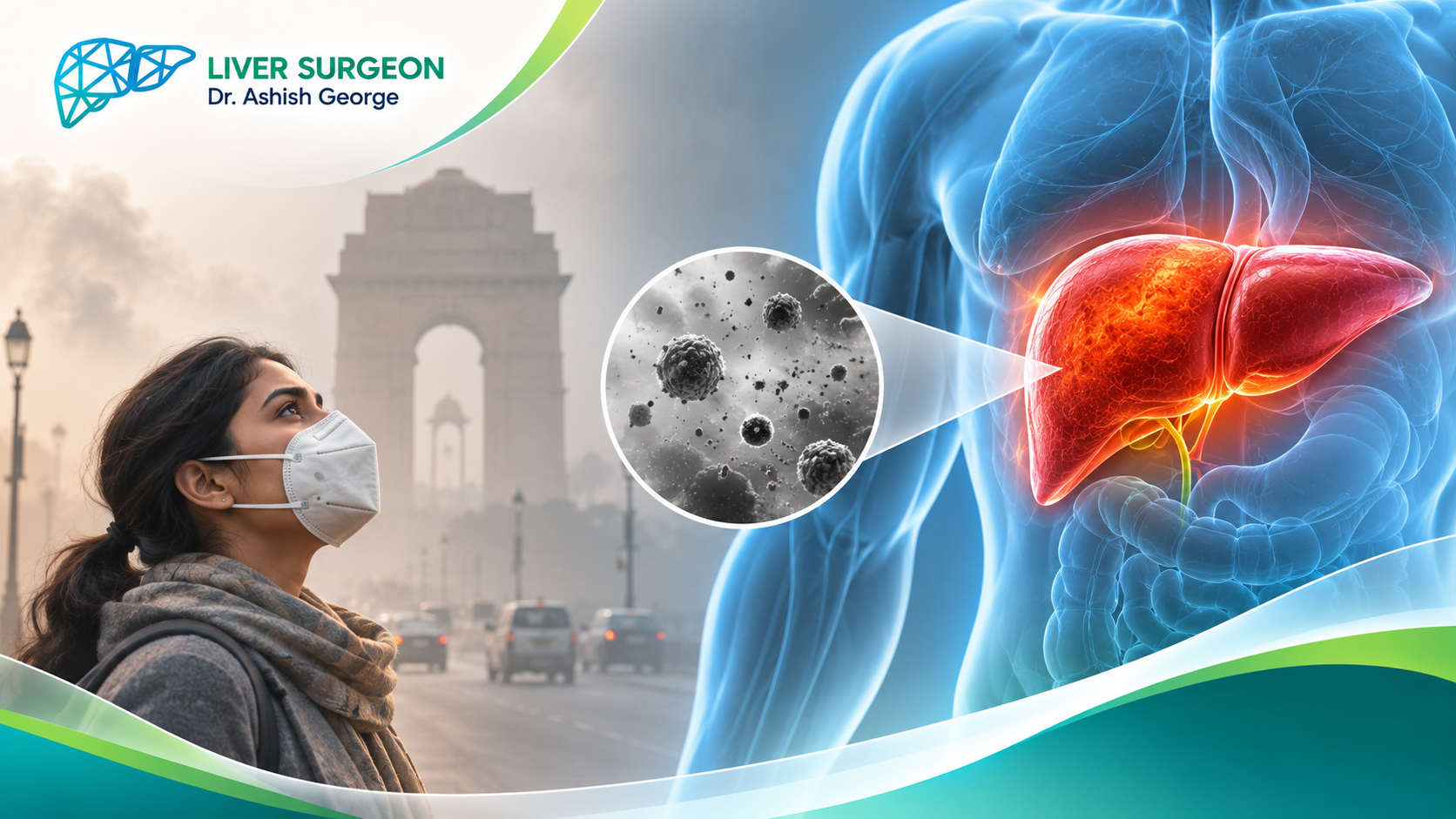
When Delhi’s air quality deteriorates, most people think first about coughing, breathlessness and burning eyes. Those concerns are justified, but research is also examining how long-term exposure to polluted air may affect organs beyond the lungs, including the liver.
The emerging evidence does not mean that a few polluted days will suddenly cause liver disease. It suggests that repeated, long-term exposure to pollutants such as PM2.5 may contribute to inflammation and metabolic stress. Diet, weight, diabetes, alcohol, viral hepatitis and genetics remain major determinants of liver health.
Here is what Delhi residents should understand without panic or exaggeration.
What Is PM2.5?
PM2.5 refers to particulate matter measuring 2.5 micrometres or less in diameter. These particles can be produced by traffic, construction, industrial activity, combustion and seasonal sources of smoke.
Because PM2.5 is extremely small, it can travel deep into the lungs. Some of the inflammatory effects produced by exposure may extend throughout the body. Researchers are investigating whether this systemic response also contributes to metabolic dysfunction and fat accumulation in the liver.
How Could Air Pollution Affect the Liver?
The liver processes nutrients, medicines and many substances carried in the blood. Scientists have proposed several ways in which long-term air-pollution exposure could influence liver health.
Systemic Inflammation
Polluted air may trigger an inflammatory response in the lungs that releases signals into the bloodstream. Persistent, low-grade inflammation is also involved in metabolic dysfunction-associated steatotic liver disease, commonly called fatty liver.
Oxidative Stress
Pollution exposure may increase oxidative stress, an imbalance between damaging molecules and the body’s protective systems. Oxidative stress can affect liver cells and may contribute to inflammation.
Insulin Resistance
Some observational studies associate air pollution with metabolic problems, including insulin resistance. Insulin resistance is a major driver of fatty liver, especially in people with type 2 diabetes, abdominal obesity, high triglycerides or high blood pressure.
Effects on Existing Metabolic Risk
Air pollution is unlikely to be the only explanation for liver disease. Its effect may be more relevant when combined with an unhealthy diet, inactivity, diabetes, obesity or other established risk factors.
What Does the Research Actually Show?
Recent systematic reviews and large observational studies report an association between long-term exposure to PM2.5 and a higher likelihood of fatty liver disease. Association, however, is not the same as proof of direct causation.
Much of the evidence is observational. Pollution exposure can be difficult to measure precisely, and affected populations may differ in diet, income, occupation, physical activity and access to healthcare. Researchers therefore continue to study the relationship.
The practical message is balanced: air pollution may be an additional liver-health risk, but it does not replace the established importance of weight management, diabetes control, avoiding tobacco, limiting or avoiding alcohol and treating hepatitis.
Who Should Be Particularly Careful?
No one benefits from breathing polluted air, but extra attention may be reasonable for people who already have:
- Fatty liver or liver fibrosis
- Type 2 diabetes or prediabetes
- Abdominal obesity
- High blood pressure or abnormal cholesterol
- Chronic hepatitis B or C
- Cirrhosis or another chronic liver condition
- Heart or lung disease
- A liver transplant or medicines that suppress immunity
This does not mean pollution will worsen every liver condition. It means people with existing disease should follow both their liver specialist’s plan and official air-quality health advice.
Can Delhi Pollution Cause High SGPT or ALT?
An abnormal ALT or SGPT result should never automatically be blamed on pollution. Common causes include fatty liver, alcohol, medicines and supplements, viral hepatitis, autoimmune disease and recent strenuous exercise.
Air-pollution research has reported associations with liver-enzyme changes in populations, but an individual abnormal report requires a proper clinical assessment. Repeating tests or ordering an ultrasound, FibroScan or additional blood tests should be based on medical history and examination, not an assumption about AQI.
What Can Delhi Residents Do?
Check the Official AQI
Use the Delhi government or Central Pollution Control Board’s official information rather than relying on viral social-media posts. Follow health advisories when air quality becomes poor or severe.
Reduce Outdoor Exposure During High-Pollution Periods
Avoid strenuous outdoor exercise when official guidance advises against it. If you exercise indoors, make sure the space is reasonably ventilated and protected from outdoor pollution.
Use a Well-Fitting Mask When Appropriate
A properly fitted particulate-filtering mask can reduce inhalation of fine particles when outdoor exposure is unavoidable. Cloth masks do not provide the same particulate filtration.
Improve Indoor Air Practices
Keep doors and windows closed during severe outdoor pollution when safe to do so, avoid indoor smoking and reduce incense or other combustion sources. Appropriate filtration may help, but no device removes every risk.
Control the Risks You Can Change
Maintain a healthy waist measurement, remain physically active when conditions permit, control blood sugar and cholesterol, avoid smoking and discuss alcohol use with your doctor. These measures have clearer evidence for protecting metabolic and liver health.
Do Not Buy a "Liver Detox"
Detox drinks, powders and herbal mixtures do not remove PM2.5 from the liver. Some unregulated products can themselves cause liver injury. Do not start supplements to "clean" the liver without medical advice.
When Should You Get Your Liver Checked?
Consider speaking with a clinician if you have diabetes, obesity, an ultrasound showing fatty liver, persistently abnormal liver enzymes or a family history of advanced liver disease.
Seek urgent medical care for yellow eyes, dark urine, increasing abdominal swelling, vomiting blood, black stools, severe drowsiness or confusion. These symptoms are not typical effects of a polluted day and require prompt assessment for potentially serious liver or other medical conditions.
Frequently Asked Questions
Does one week of severe Delhi pollution cause fatty liver?
There is no evidence that one short episode automatically causes fatty liver. Research mainly concerns repeated or long-term exposure and population-level risk.
Can an air purifier reverse liver damage?
No. Filtration may reduce indoor particulate exposure, but it is not a treatment for fatty liver, fibrosis or cirrhosis.
Should people with fatty liver stop exercising during poor AQI?
Physical activity remains important. During poor-air-quality periods, follow official advice and consider safe indoor activity instead of strenuous outdoor exercise.
Can pollution be the only cause of high SGPT?
It should not be assumed. Abnormal enzymes require evaluation for more common causes such as fatty liver, alcohol, medicines, supplements and viral hepatitis.
Do liver detox drinks protect against air pollution?
No reliable evidence supports detox drinks for this purpose, and some supplements may harm the liver.
Final Takeaway
Research increasingly links long-term air-pollution exposure with metabolic and liver-health risks, but the relationship is complex. Delhi residents should reduce exposure according to official guidance while continuing to focus on proven liver-protection measures: metabolic health, vaccination where appropriate, safe medicine use and timely screening.
If you already have fatty liver, diabetes or abnormal liver tests, do not wait for symptoms. A clinician can determine whether you need blood tests, imaging, fibrosis assessment or specialist review.
Have Fatty Liver or Abnormal Liver Tests?
Have fatty liver, diabetes or persistently abnormal liver tests? Request an assessment with a liver specialist in Delhi.
Related Liver Health Articles
- Liver Function Test (LFT): What High SGPT and SGOT Mean
- Fatty Liver Disease in India: Warning Signs, Causes and How to Reverse It
- Liver Disease Screening: When Should You Get Tested?
- Can Liver Damage Be Reversed?
References for Medical Review
- Delhi Government AQI Health Information: Delhi Government AQI
- PubMed: Association Between Air Pollution and Risk of NAFLD, Updated Meta-Analysis: View Research
- PubMed: Air Pollution Exposure and Prevalence of NAFLD and Related Cirrhosis: View Research
- PubMed: Ambient Air Pollution, Lifestyle and Incident NAFLD: View Research
Medical Disclaimer
This article is educational and does not replace diagnosis or treatment from a qualified clinician. Individual recommendations depend on symptoms, medical history, examination and test results.