Fatty Liver Disease in India: Warning Signs, Causes, and How to Reverse It
.webp)
Principal Consultant & Unit Head, Liver Transplant & HPB Surgery, Fortis Hospital, Shalimar Bagh, Delhi
India is facing a liver health crisis that most people cannot feel. In late July 2026, doctors at AIIMS New Delhi warned that fatty liver disease has become a silent epidemic affecting millions of Indians, many of whom have no idea their liver is under stress. Reviews of Indian studies now suggest that roughly one in three adults has some form of fatty liver, and the number keeps climbing every year.
The good news is that fatty liver, caught early, is one of the most reversible serious conditions in medicine. The liver has a remarkable ability to heal itself. The problem is timing. Left alone for years, fatty liver can quietly progress to inflammation, scarring, and eventually cirrhosis or liver failure, at which point the options narrow sharply. This guide explains what fatty liver disease is, why it is spreading so fast in India, the early signs worth watching, and the practical steps that can turn it around.
What Is Fatty Liver Disease?
Fatty liver disease is a build-up of excess fat inside your liver cells. A healthy liver holds little or no fat. When fat makes up more than about 5 to 10 percent of the liver's weight, doctors call it fatty liver, or hepatic steatosis.
There are two broad types. Non-alcoholic fatty liver disease, now increasingly called metabolic dysfunction-associated steatotic liver disease or MASLD, develops in people who drink little or no alcohol. It is tied closely to weight, diet, diabetes, and metabolic health. Alcoholic fatty liver disease is caused by regular heavy drinking. Both damage the liver in similar ways, and a person can have features of each.
To understand why this matters, it helps to remember what the liver does. It filters toxins from your blood, processes nutrients from everything you eat, stores energy, makes proteins that help your blood clot, and produces bile to digest fat. When fat clogs the liver's cells, all of this work becomes harder, and over time the organ can inflame and scar. Because the liver rarely complains until it is badly strained, the damage can build for years in complete silence.
Doctors often describe fatty liver in grades. Grade 1 means mild fat with little or no damage. Grade 2 is moderate. Grade 3 involves significant fat and a higher risk of inflammation and scarring. When the fat also triggers inflammation, the condition becomes steatohepatitis, known as NASH or MASH, and this is the stage where lasting damage tends to begin. Many people worry that grade 1 fatty liver is a crisis. It is not, but it is a clear early warning, and it is the easiest stage at which to turn things around.
Why Fatty Liver Is Rising So Fast in India
Fatty liver was once thought of as a Western problem linked to obesity. That is no longer true. A large review of Indian studies estimated adult prevalence at around 38.6 percent, close to two in five people. In urban north India, one community study of adults aged 30 to 60 found fatty liver in about 65 percent of city residents.
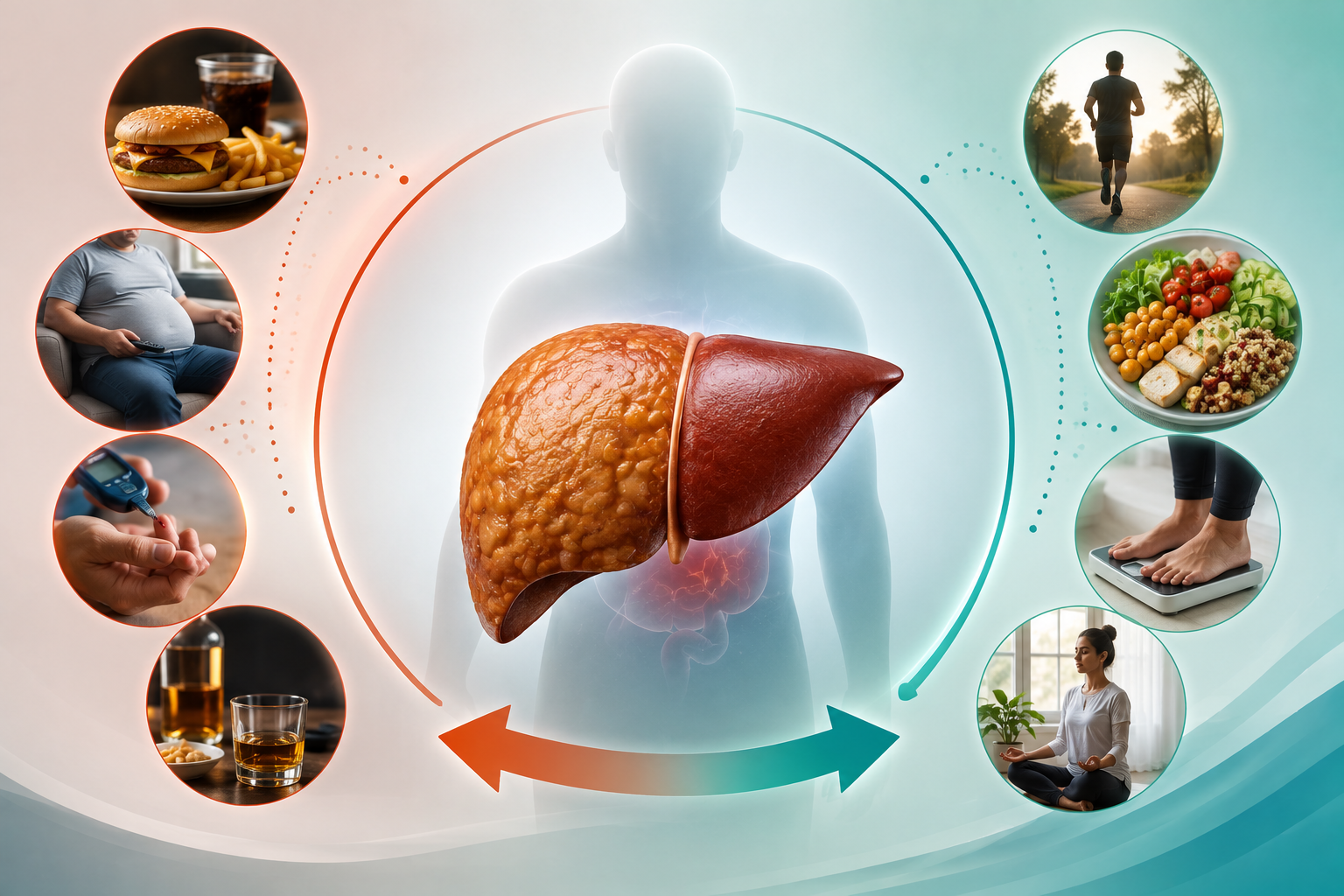
Several forces are driving this. Indian cities have shifted toward desk jobs, long commutes, and screen-heavy evenings, which means far less daily movement. Diets have moved toward refined carbohydrates, sugary drinks, and ultra-processed food. Rates of type 2 diabetes and obesity, both strongly linked to fatty liver, have risen alongside.
Two features make the Indian picture unusual. First, lean fatty liver is common here. Many Indians develop fatty liver at a normal body weight, often because of visceral fat and a genetic tendency to store fat in the liver. A normal number on the weighing scale does not rule it out. Second, environment plays a role. For readers in Delhi and other high-pollution cities, research increasingly links long-term exposure to fine particulate matter with a higher risk of fatty liver.
What worries specialists most is how young the pattern now starts. Fatty liver is showing up in people in their twenties and thirties, and in a significant share of Indian children. Late-night eating, sweetened drinks, packaged snacks, and long sitting hours all push liver fat up early in life, which leaves far more years for the disease to progress if nothing changes. Alcohol adds a separate and serious burden. It remains the single largest cause of liver cirrhosis in India, and when heavy drinking sits on top of an already fatty liver, the two together speed up damage considerably.
Fatty Liver and Diabetes: A Two-Way Street
Fatty liver and type 2 diabetes feed each other, and in India the two travel together constantly. Insulin resistance, the core problem behind type 2 diabetes, pushes the liver to store more fat. A fatty, inflamed liver in turn makes the body even less responsive to insulin, which worsens blood sugar control. This loop is why so many people are diagnosed with both around the same time. The practical takeaway is encouraging rather than discouraging. Because the two conditions share the same roots, the same changes help both at once. Losing weight, moving more, and cutting refined carbohydrates improves blood sugar and reduces liver fat in a single effort. If you have diabetes, treat your liver as part of the same picture, and ask your doctor to check it.
The Warning Signs Most People Miss
The hardest thing about fatty liver is that early on it usually causes no symptoms at all. Most people are diagnosed by accident, during a routine ultrasound or when liver enzymes show up as slightly high on a blood test.
When symptoms do appear, they are easy to dismiss. Common early clues include persistent tiredness, a vague heaviness or discomfort in the upper right side of the abdomen, and difficulty losing weight. As the disease advances, the warning signs grow more serious and can include yellowing of the eyes or skin, swelling in the abdomen or legs, easy bruising, and confusion. These later signs point to significant liver damage and need urgent medical attention.
Because the early stage is so quiet, screening matters. If you have diabetes, are overweight, carry weight around your abdomen, have high cholesterol, or have a family history of liver disease, it is worth asking your doctor about a simple liver check.
How Fatty Liver Is Diagnosed
Diagnosis is straightforward and usually painless. An abdominal ultrasound can show fat in the liver. Blood tests measure liver enzymes and help rule out other causes such as viral hepatitis. Increasingly, doctors use FibroScan, a quick, non-invasive scan that measures both liver fat and stiffness and shows whether scarring has begun. Simple scores such as FIB-4, calculated from routine blood values and age, help estimate the risk of advanced fibrosis. In selected cases, a liver biopsy may still be needed to confirm the exact stage.
Can Fatty Liver Be Reversed?
This is the most important part. In its early stages, fatty liver is often fully reversible, and the liver can return to health once the underlying cause is addressed. The single most effective step is gradual, sustained weight loss. Losing around 7 to 10 percent of body weight has been shown to reduce liver fat and, in many cases, improve inflammation and early scarring.
The practical building blocks are consistent. Move your body most days, mixing brisk walking or cardio with some strength work. Shift your plate toward vegetables, whole grains, legumes, nuts, and lean protein, and cut back sharply on sugar, refined flour, fried food, and sugary drinks. If you drink alcohol, stopping is essential, because even modest amounts add stress to an already fatty liver. If you live with diabetes, high blood pressure, or high cholesterol, keeping them well controlled protects the liver directly. There is no magic pill for fatty liver. A few medications are used in specific cases under specialist guidance, but lifestyle change remains the foundation of every treatment plan.
When Fatty Liver Becomes Serious
Most people with fatty liver will never develop severe disease. But a meaningful minority do, and understanding that path is what makes early action worthwhile.
The progression usually runs in stages. Simple fat can lead to steatohepatitis, where inflammation sets in. Ongoing inflammation causes fibrosis, or scarring. Advanced, widespread scarring becomes cirrhosis, where the liver's structure is permanently damaged. Cirrhosis raises the risk of liver failure and liver cancer. In India, fatty liver has become one of the fastest-growing reasons people eventually need advanced liver care, alongside alcohol and viral hepatitis, which together drive the majority of cirrhosis cases.
Once the liver reaches end-stage disease, lifestyle changes can no longer restore it, and a liver transplant may become the only definitive treatment. This is where a specialist liver unit matters. The Liver Surgeons team, led by Dr. Ashish George at Fortis Hospital, Shalimar Bagh, manages the full spectrum, from early fatty liver and cirrhosis care through to living donor liver transplant for patients whose disease has advanced. Catching fatty liver early is precisely what helps most people avoid ever reaching this point.
Protecting Your Liver, Starting Today
You do not need a dramatic overhaul to protect your liver. Small, steady habits compound. Walk after meals. Swap sugary drinks for water. Build meals around vegetables and protein. Keep alcohol minimal or avoid it entirely. Get your weight, blood sugar, and cholesterol checked once a year, and if any come back high, ask specifically about your liver. For anyone already carrying extra abdominal weight or living with diabetes, a one-time FibroScan can offer real peace of mind.
Common Myths About Fatty Liver
A lot of confusion surrounds this condition, and the myths can be harmful because they encourage people to wait.
- "Only heavy drinkers get fatty liver." Most fatty liver in India today is non-alcoholic, driven by diet and metabolism, not alcohol.
- "I am slim, so my liver is fine." Lean fatty liver is common in Indians. A normal weight does not guarantee a healthy liver.
- "There are no symptoms, so it is not serious." The silence is exactly the danger. Early fatty liver rarely causes symptoms, yet it is the best time to act.
- "A supplement or detox will fix it." No pill, tea, or detox reverses fatty liver. Sustained lifestyle change is what works, and some unproven supplements can even harm the liver.
When to See a Liver Specialist
See a doctor promptly if you notice yellowing of the skin or eyes, abdominal swelling, ongoing pain in the upper right abdomen, or unexplained fatigue that does not improve. If a scan or blood test has already flagged fatty liver, a liver specialist can stage the disease accurately and build a plan suited to you. Early expert input is often the difference between a liver that recovers and one that slowly declines.
If you or a family member has been told about fatty liver, cirrhosis, or the possibility of a transplant, our team is here to help. Book a consultation with Dr. Ashish George to understand where you stand and what to do next.
Frequently Asked Questions
Is fatty liver dangerous?
In its early grade it is usually not dangerous and is reversible. It becomes dangerous only when it is ignored for years and progresses to inflammation, scarring, or cirrhosis. That is why early detection matters so much.
Can fatty liver be cured completely?
Early fatty liver can often be reversed completely through weight loss, diet, exercise, and controlling conditions like diabetes. Once significant scarring or cirrhosis develops, the damage is harder to undo, though further progression can still be slowed.
How long does it take to reverse fatty liver?
Many people see meaningful improvement in liver fat within a few months of consistent lifestyle change, though the exact timeline depends on the starting grade and how steadily the changes are maintained.
Does fatty liver only affect people who are overweight?
No. Lean fatty liver is common in India, where people at a normal weight can still develop it, often due to visceral fat, diet, and genetics. A normal body weight does not rule it out.
What is the best diet for fatty liver in India?
Focus on vegetables, dals and legumes, whole grains, nuts, and lean protein, and cut down on white rice, refined flour, fried food, sweets, and sugary drinks. There is no single fixed diet, but reducing refined carbohydrates and sugar makes the biggest difference for most people.
Is grade 1 fatty liver something to worry about?
Grade 1 is the mildest stage and is not an emergency, but it is a clear signal to change course. It responds very well to lifestyle changes, so it is the ideal point to reverse the condition before any lasting damage develops.