Anti Rejection Medicines After Liver Transplant: How Long Do You Need Them?
Understand lifelong immunosuppression, anti-rejection medicines, medicine monitoring and long-term graft protection after liver transplant.
Read More
A living donor liver transplant (LDLT) is a procedure in which a portion of a healthy person's liver is surgically removed and transplanted into a patient whose own liver has failed or is failing. Because the liver is the only organ in the body that can regenerate regrowing to near-normal size within 6–8 weeks a living donor liver transplant is safe for the donor and life-saving for the recipient. In short, that is what a living donor liver transplant is: a healthy relative gives part of their liver, and both livers grow back.
So, can a liver transplant be done from a live donor? Yes and in India it is now the most common route to transplant. A living donor liver transplant in India accounts for the large majority of all liver transplants performed, because deceased donor organs allocated through the national NOTTO registry are in short supply. For many patients a living donor is not just the preferred option; it is the only timely one.
At Liver Surgeons in Delhi, Dr. Ashish George has performed hundreds of living donor liver transplants with outstanding outcomes for both donors and recipients. Our programme serves as a comprehensive guide for donors and recipients, with donor safety above all else, surgical excellence, and lifelong care for both parties. When a suitable relative is not available, we also evaluate patients for a deceased donor liver transplant allocated through NOTTO.





Life-saving transplants through ethical living donation with 95% success rates
Here is how a liver transplant is done from a live donor. Surgeons remove a portion of the donor's liver usually the right lobe, about 60–65% and, in an adjacent theatre, remove the recipient's diseased liver and implant the donated segment, connecting it to the recipient's blood vessels and bile duct. The two operations run in parallel. Within 6–8 weeks both the donor's remaining liver and the recipient's new liver segment regrow to full functional size. That regeneration is what makes a living donor liver transplant possible.
The world's first living donor liver transplant was performed in 1989. In the decades since, it has become a mature, standardised procedure carried out routinely at high-volume centres including ours in Delhi NCR.
Both procedures save lives; the right choice depends on your condition and whether a suitable relative can donate.
In India, living donor transplants make up the large majority of all liver transplants performed which is why deep experience in LDLT matters so much when you choose a transplant centre. For a single donated organ shared between two recipients, we also perform split liver transplantation, and for larger recipients a dual-lobe liver transplant using grafts from two donors.
Donating part of your liver is an act of love and courage. Donor safety is our absolute first priority we will not proceed with a donor who does not meet our donor eligibility checklist, whatever the urgency.
| ✔ Eligible | ✖ Not eligible | |
|---|---|---|
| Age | 18–55 years | Under 18 or over 55 (case by case) |
| Relationship | First/second-degree blood relative or spouse | Unrelated donors (barred in most cases under Indian law) |
| Blood group | Compatible or ABO-incompatible with a special protocol | Incompatible without desensitisation |
| BMI | 18–30 (healthy weight range) | Over 30 higher surgical risk |
| Liver health | No fatty liver, fibrosis or liver disease on imaging | Fatty liver, existing liver disease or abnormal LFTs |
| General health | No uncontrolled diabetes, heart disease or active cancer | Serious systemic illness raising surgical risk |
| Mental health | Psychologically assessed, willing, fully informed consent | Coercion or inability to give informed consent |
Under the Transplantation of Human Organs and Tissues Act (THOTA) 1994, liver donation in India is permitted only from close relatives (spouse, parents, siblings, children, grandparents) or with special committee approval from someone with a documented close emotional relationship to the recipient.
Even when a potential donor does not initially meet every requirement, our team explores every option including ABO-incompatible transplants with desensitisation and dual-lobe donation from two relatives to find a safe solution.
The living donor liver transplant recipient criteria we assess include:
Every potential donor undergoes a comprehensive, independent, multi-disciplinary evaluation. The donor's interests are protected separately from the recipient's care team. Assessments include:
The full donor evaluation takes a minimum of 2–3 weeks. If a donor is found medically or psychologically unfit at any stage, the assessment stops and alternatives are explored.
The living donor liver transplant procedure involves two simultaneous operations: one for the donor and one for the recipient, performed by Dr. Ashish George and the team in adjacent, state-of-the-art theatres.
After surgery, recipients begin immunosuppressive therapy to prevent rejection, supported by close follow-up. Children needing a transplant are cared for through our paediatric liver transplant programme, and patients with combined liver and kidney failure may be evaluated for a combined liver and kidney transplant.
A living donor liver transplant is a major operation, and being clear about the risks is part of informed consent. In experienced, high-volume centres these risks are low and carefully managed.
For the donor: bleeding, infection, bile leak, or a longer-than-expected recovery. Serious complications are uncommon, and long-term studies show donors return to the same life expectancy and quality of life as the general population.
For the recipient: rejection, infection, bile-duct or vascular problems, and side effects of immunosuppression; most of which are treatable when caught early through structured monitoring.
Choosing a team that performs a high volume of living donor liver transplants is the single biggest factor in keeping these risks low.
In experienced centres, the live donor liver transplant survival rate is excellent. Our one-year success rate for living donor liver transplant is above 95%, and most recipients return to normal life within 3 to 6 months. The success rate of a living donor liver transplant depends on the recipient's condition, graft quality and the surgical team's experience, which is why centre selection matters.
Recipient and donor initial consultation with Dr. Ashish George
Donor evaluation: the full multi-disciplinary workup above
Recipient pre-transplant evaluation: MELD score, cardiac/pulmonary fitness, blood group, surgical planning
Authorisation by the hospital's Transplant Authorisation Committee (TAC); our team handles all documentation
Surgery day: donor and recipient operations in adjacent theatres
Donor recovery: usually discharged in 7–10 days, full activity in 4–6 weeks
Recipient recovery: Liver ICU, discharge in 14–21 days, lifelong follow-up
When you compare hospitals and doctors for a living donor liver transplant in Delhi, look past marketing labels and weigh what actually drives outcomes: annual transplant volume, the surgeon's specific LDLT experience, a dedicated donor-safety pathway, 24/7 ICU capability, and transparent, NOTTO- and THOTA-compliant ethics. Among living donor liver transplant hospitals in Delhi and across India, these are the markers that separate a good programme from an average one.
Dr. Ashish George's living donor liver transplant programme in Delhi NCR is built around exactly these standards, a high-volume LDLT practice, an independent donor-safety process, and complete pre- and post-transplant care. If you are weighing living donor liver transplant hospitals in India, we are glad to give you an honest second opinion.
Book a consultationExpert guidance on living donor liver transplant, donor eligibility, donor safety, transplant surgery, recovery, success rates and long-term care for donors, recipients and their families.
Understand lifelong immunosuppression, anti-rejection medicines, medicine monitoring and long-term graft protection after liver transplant.
Read More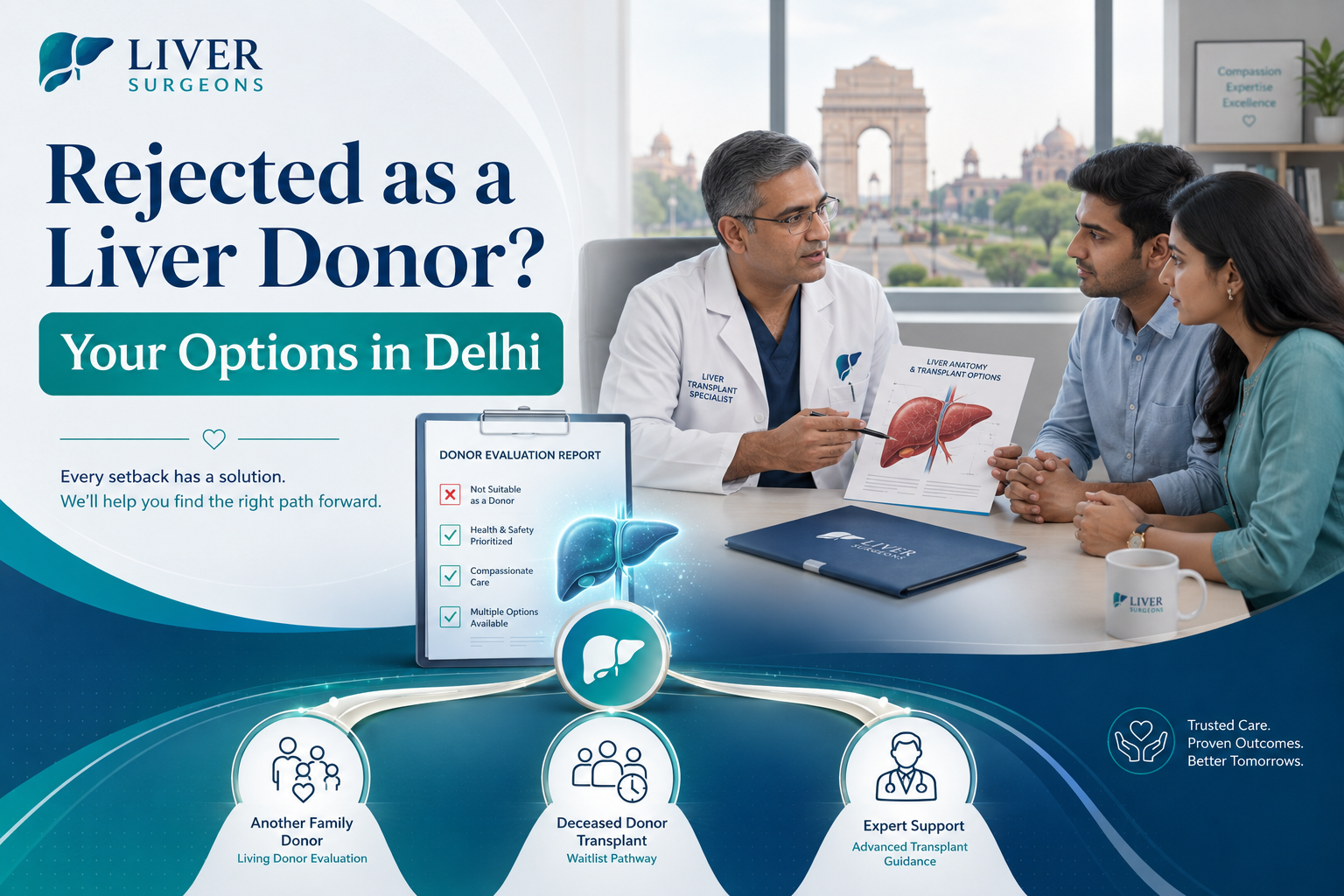
Learn why potential living liver donors may be rejected, which problems may be reversible and what alternative transplant options families can consider.
Read More
Understand when liver transplantation is needed and when complex liver, pancreas, bile duct or gallbladder disease may be treated with advanced HPB surgery.
Read More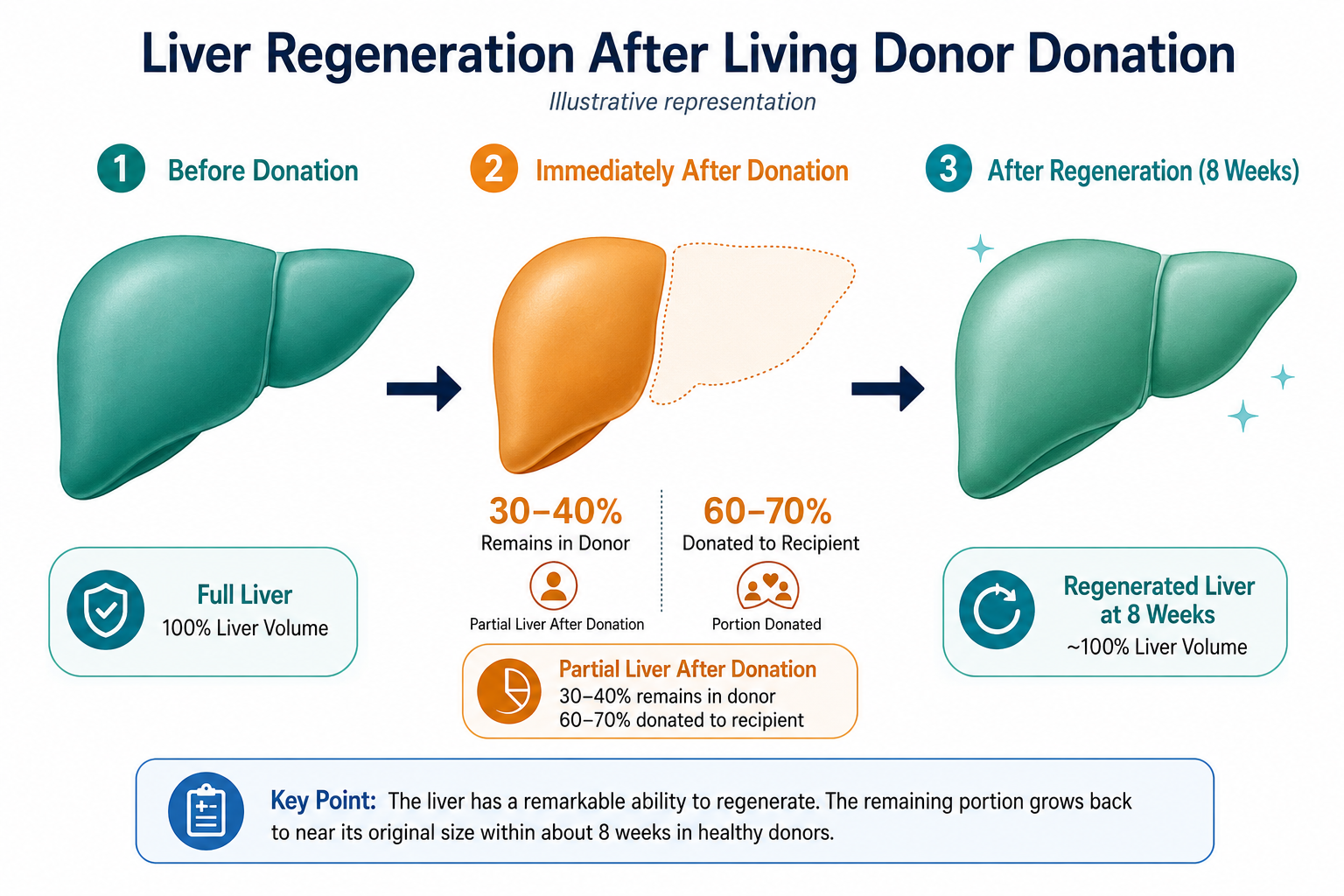
A practical guide to donor eligibility, donor evaluation, surgery, risks, recovery and what families should understand before choosing living donor transplantation.
Read More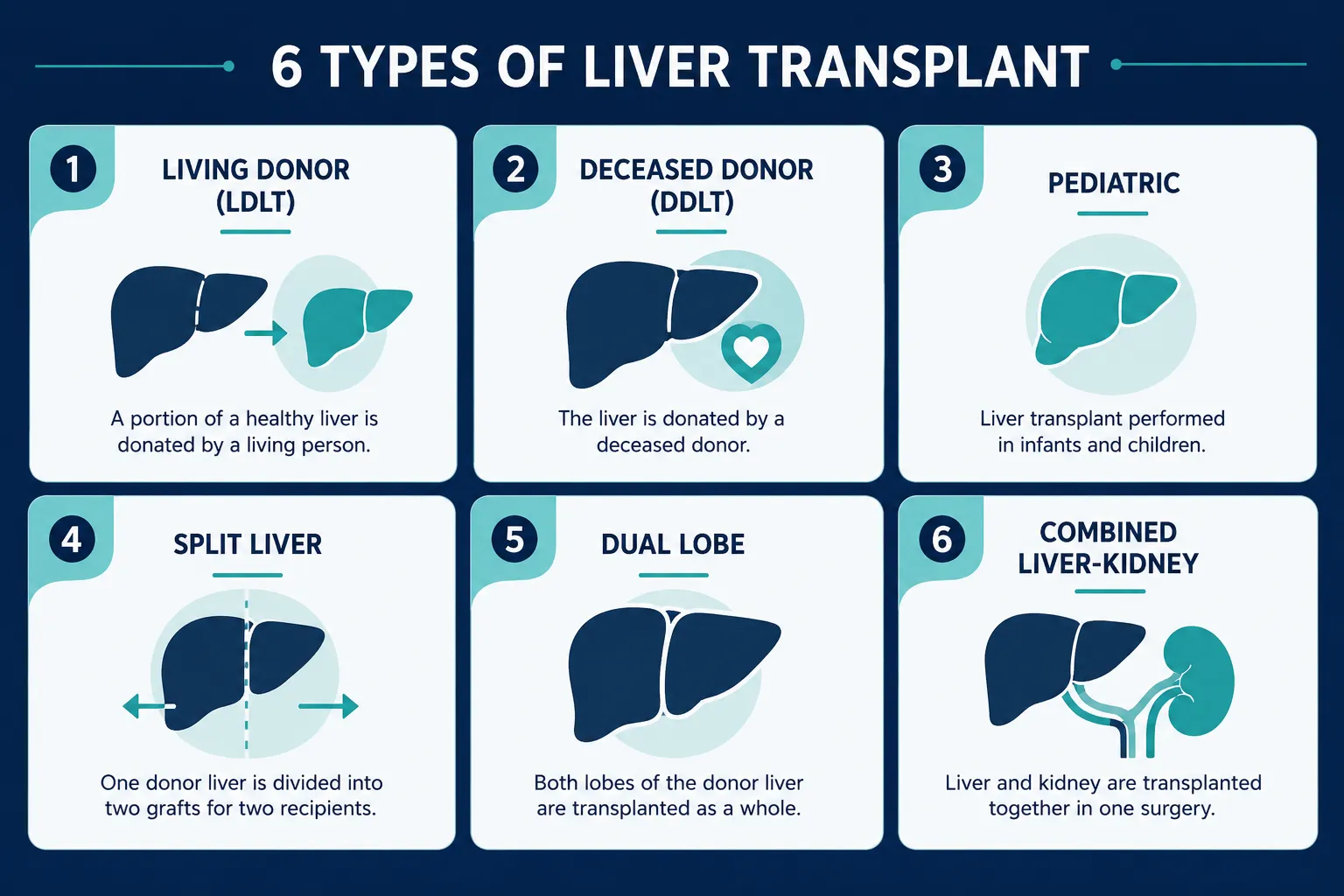
A complete guide to transplant indications, donor types, hospital selection, surgery, immunosuppression, recovery and long-term follow-up.
Read More
Understand patient survival, graft survival, short-term recovery and the factors that influence liver transplant outcomes in India.
Read More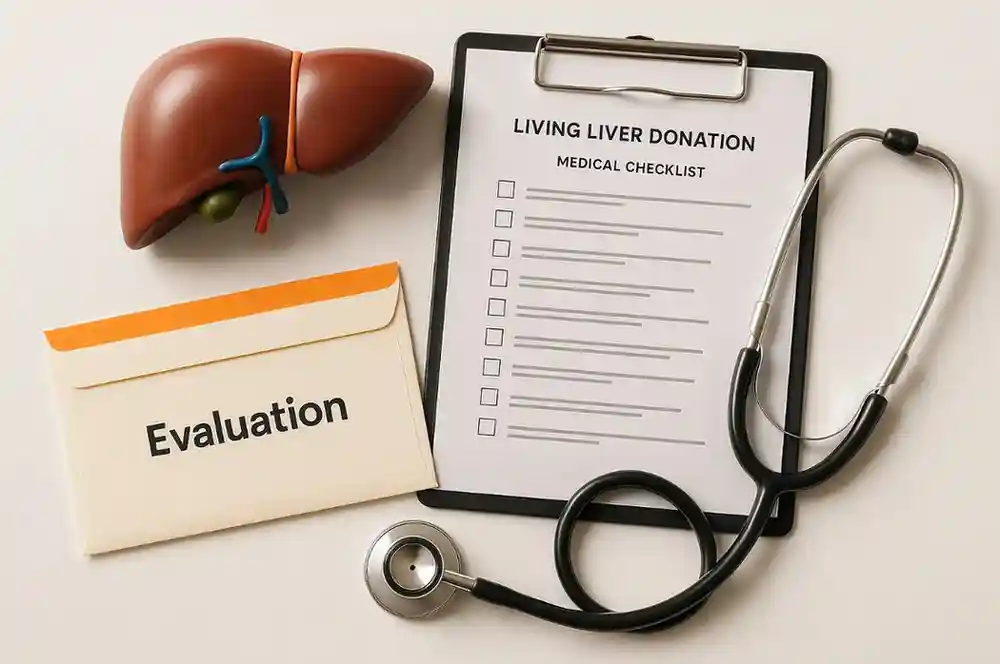
Review living liver donor requirements including age, health, blood-group compatibility, liver quality, imaging, psychological readiness and donor evaluation.
Read More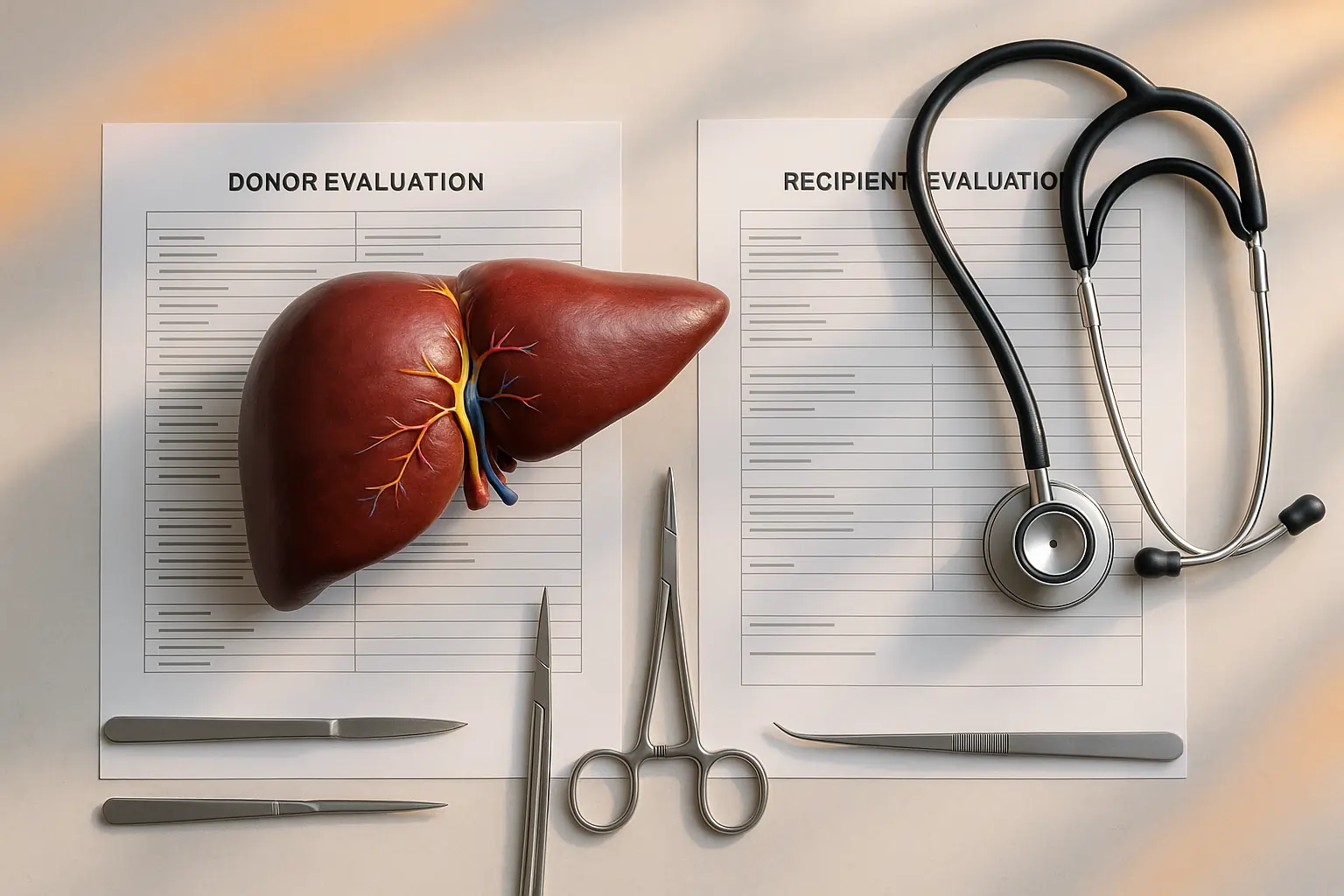
Follow the complete living donor transplant journey from donor and recipient evaluation through surgery, risks, recovery, immunosuppression and long-term life after transplant.
Read More