Life After Gallbladder Removal: Diet, Recovery and Possible Side Effects

Principal Consultant & Unit Head, Liver Transplant & HPB Surgery, Fortis Hospital, Shalimar Bagh, Delhi
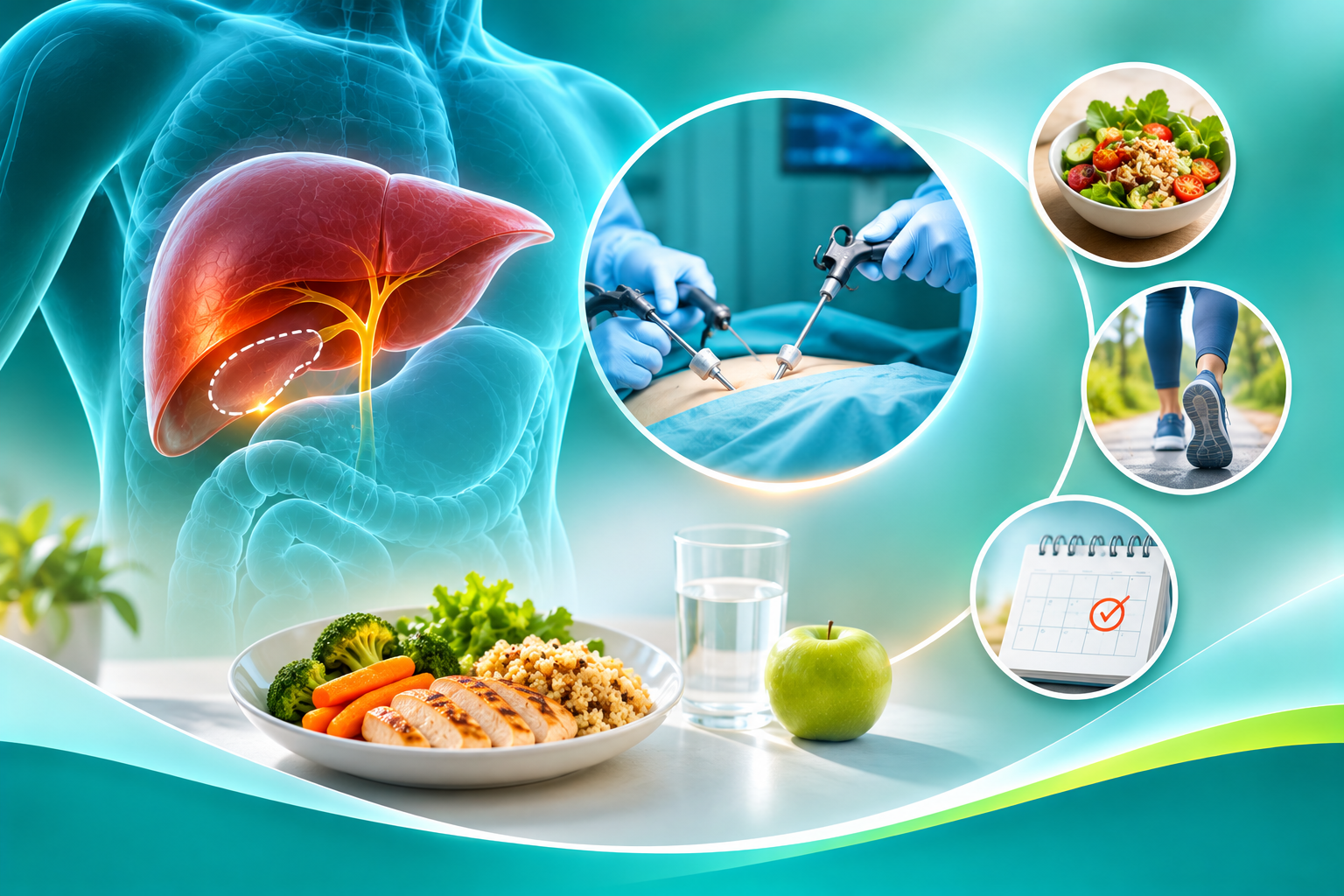
Most people return to a normal diet and active life after gallbladder removal. The liver continues to produce bile, but instead of being stored in the gallbladder, bile flows directly into the intestine.
Temporary bloating, loose stools or difficulty tolerating very fatty meals can occur during recovery. These usually improve as the digestive system adjusts.
What Changes After the Gallbladder Is Removed?
The gallbladder stores and concentrates bile between meals. After cholecystectomy, the liver still makes bile and the bile ducts carry it directly to the small intestine.
The gallbladder is helpful, but it is not essential. Its removal does not stop digestion or prevent the body from absorbing nutrients normally in most people.
What Should You Eat During the First Few Days?
Start with small, simple meals that are comfortable to digest. Appetite may be reduced after anaesthesia, and pain medicines can sometimes cause nausea or constipation.
Suitable early options include:
- Khichdi, dalia or soft rice
- Dal, curd or light soup if tolerated
- Roti with lightly cooked vegetables
- Bananas, apples or other easy-to-digest fruit
- Adequate water and non-sugary fluids
- Lean protein in small portions
There is usually no need for prolonged fasting or an extreme fat-free diet.
Diet During the First Two to Four Weeks
Increase meal size gradually. Many people find that smaller meals are easier initially because a large fatty meal requires more bile at one time.
Limit foods that trigger discomfort, such as:
- Deep-fried food
- Very oily gravies
- Large amounts of ghee, butter or cream
- Heavy takeaway meals
- Very spicy food if it causes reflux or loose stools
- Excess alcohol
Reintroduce foods one at a time. A food diary can help identify individual triggers.
Is a Permanent Low-Fat Diet Necessary?
Most people do not need a special lifelong diet after gallbladder removal. A normal balanced diet containing vegetables, fruit, whole grains, pulses, healthy fats and adequate protein is appropriate.
The goal is not zero fat. Healthy fats remain important for nutrition. The practical approach is to avoid very large, greasy meals during early recovery and then broaden the diet according to tolerance.
Common Temporary Side Effects
Loose Stools or Urgency
Bile enters the intestine more continuously after surgery. Some patients notice loose stools or urgency, particularly after fatty meals. This often improves within weeks.
Bloating and Gas
Temporary bloating may relate to the operation, reduced activity, constipation or dietary changes. Walking and gradually returning to normal meals usually help.
Indigestion or Nausea
Small meals and avoiding heavy food may help during the early period. Persistent vomiting or worsening pain is not part of normal recovery.
Constipation
Pain medicines, anaesthesia and reduced movement can cause constipation. Fluids, fibre and gentle walking may help, but follow the surgical team's instructions.
How Long Does Recovery Take?
Recovery depends on whether surgery was laparoscopic or open and whether it was planned or performed during an emergency.
| Recovery point | Typical laparoscopic recovery |
|---|---|
| Hospital discharge | Same day or after one night in many uncomplicated cases |
| Gentle walking | Usually from the day of surgery |
| Desk work | Often within 1 to 2 weeks |
| Driving | When comfortable, off sedating pain medicines and able to brake safely |
| Heavy lifting | Only after clearance from the surgical team |
| Full recovery | Commonly within a few weeks, longer after open or complicated surgery |
These are general estimates. Follow the instructions given at discharge.
Wound and Activity Care
- Keep the wounds clean and follow dressing instructions
- Take prescribed medicines as directed
- Walk several times a day, increasing distance gradually
- Avoid strenuous exercise and heavy lifting until cleared
- Do not drive while taking sedating pain medicines
- Attend follow-up if advised
When Are Symptoms Not Normal?
Contact the surgical team promptly for:
- Fever or chills
- Increasing abdominal pain rather than gradual improvement
- Persistent vomiting
- Redness, swelling, pus or bleeding from a wound
- Yellow eyes or skin
- Dark urine or pale stools
- A swollen abdomen
- Breathlessness, chest pain or calf swelling
Jaundice, fever and significant pain can indicate a retained bile-duct stone, infection, bile leak or another complication that needs assessment.
What Is Post-Cholecystectomy Syndrome?
This term describes persistent digestive or pain symptoms after gallbladder removal. It does not identify one single disease. Possible causes include reflux, irritable bowel syndrome, a retained bile-duct stone, bile-duct narrowing, pancreatitis or a problem unrelated to the original gallstones.
Persistent symptoms should be investigated rather than assumed to be normal. Blood tests and ultrasound, MRCP, endoscopy or other tests may be required.
If there is concern about a bile-duct complication, read what to do after a bile-duct injury during gallbladder surgery .
Can You Gain Weight After Gallbladder Removal?
Gallbladder removal itself does not automatically cause weight gain. Weight may increase if a patient returns to large portions, fried food and low activity after symptoms resolve. A balanced diet and gradual return to exercise help maintain a healthy weight.
Life After Gallbladder Surgery in Delhi
Most patients having uncomplicated laparoscopic surgery in Delhi can recover at home with clear instructions for food, wound care and emergency symptoms. Patients who had severe inflammation, pancreatitis, jaundice, open surgery or bile-duct exploration may need a more individual recovery plan.
Dr Ashish George and the HPB team at Fortis Hospital, Shalimar Bagh provide assessment for persistent pain, jaundice, bile leaks, retained stones and other complex symptoms following gallbladder surgery.
Conclusion
Life after gallbladder removal is normal for most patients. A simple diet and smaller meals may be more comfortable during the first few days, but a permanent restrictive diet is rarely required.
Temporary loose stools, bloating and food sensitivity can occur. Fever, jaundice, worsening pain and persistent vomiting require medical review.
Consult an HPB Surgeon in Delhi
If you have persistent pain, jaundice, vomiting, a suspected bile leak or other symptoms after gallbladder surgery, arrange a specialist review with Dr Ashish George at Fortis Hospital, Shalimar Bagh, Delhi.
Frequently Asked Questions
Can I Eat Normal Food After Gallbladder Removal?
Yes. Most people gradually return to a normal balanced diet. Small meals and less oily food may be easier at first.
Can I Eat Eggs, Milk or Curd?
These foods can usually be reintroduced according to tolerance. Choose modest portions initially if rich foods cause discomfort.
How Long Does Diarrhoea Last?
It is often temporary. Persistent or severe diarrhoea should be discussed with a doctor because treatment may help and other causes may need exclusion.
Can Gallstones Return Without a Gallbladder?
Stones cannot form in a gallbladder that has been removed, but stones can rarely remain or form in the bile ducts.
When Can I Exercise After Surgery?
Gentle walking begins early. Ask the surgical team before resuming gym exercise, abdominal training or heavy lifting.
About the Author
Dr Ashish George is a liver transplant and HPB surgeon in Delhi with experience in laparoscopic, robotic and complex gallbladder and bile-duct surgery.
Medical Sources for Reviewer