Bile Duct Injury After Gallbladder Surgery: What to Do Next

Principal Consultant & Unit Head, Liver Transplant & HPB Surgery, Fortis Hospital, Shalimar Bagh, Delhi
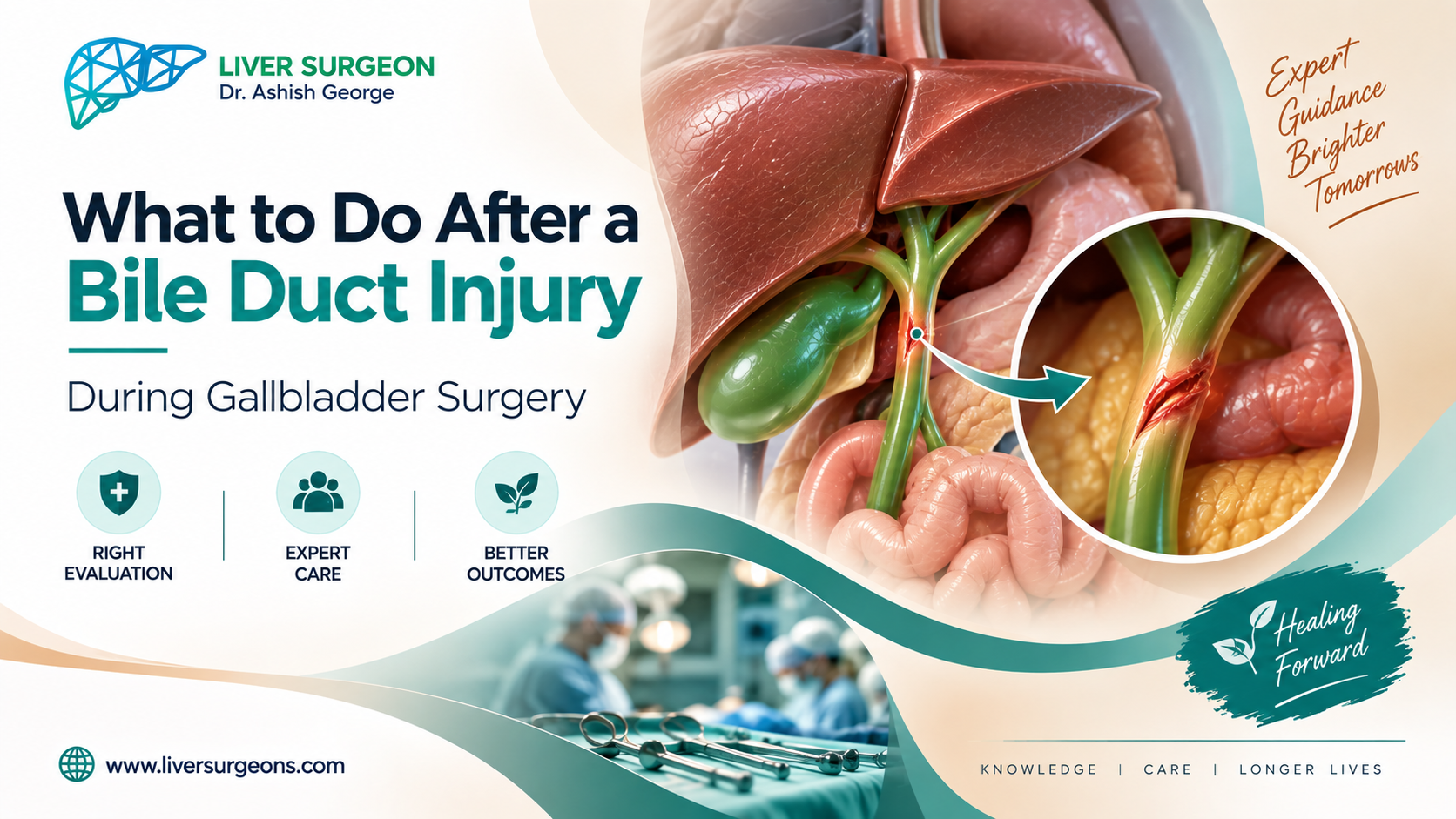
Gallbladder removal (cholecystectomy) is one of the most common operations in the world, and it is usually very safe. But in a small number of cases, around one in every 200 to 300 operations, the bile duct is injured during surgery. If this has happened to you or a family member, it is natural to feel shocked and worried. The most important thing to know is that a bile duct injury during gallbladder surgery is treatable, and that what you do next has a huge effect on the outcome. This guide explains the warning signs, the immediate steps to take, and why getting to the right specialist quickly matters more than anything else.
What Is a Bile Duct Injury?
The bile duct is the tube that carries bile from the liver to the intestine. During gallbladder surgery it sits very close to the structures being removed, and it can be cut, clipped, burned, or narrowed by accident. When this happens, bile either leaks into the abdomen or cannot drain properly, which causes jaundice, infection, and, if untreated, long-term liver damage. A proper repair restores normal bile drainage and protects the liver.
Warning Signs of a Bile Duct Injury After Gallbladder Surgery
Sometimes the injury is recognised during the operation. Often it shows up in the days or weeks afterwards. See a doctor urgently if, after a gallbladder removal, you have:
- Yellowing of the eyes or skin (jaundice)
- Bile or large amounts of fluid leaking from a drain or the wound
- Persistent or worsening pain in the upper right abdomen
- Fever, chills, or feeling increasingly unwell
- Dark urine, pale stools, nausea, or loss of appetite
Important: These signs should never be dismissed as normal recovery. If you notice any of them after a gallbladder operation, seek specialist review without delay.
What to Do Immediately: The Right First Steps
If a bile duct injury is suspected or confirmed, these are the steps that protect you:
- Get to a specialist HPB centre. This is the single most important step, explained below.
- Do not rush into a repair at a general hospital. An unplanned repair by a surgeon who is not a bile duct specialist is the most common reason repairs fail.
- Allow proper imaging. An MRCP scan and other tests map exactly where and how bad the injury is, which is essential before any repair.
- Control infection and leak first. If there is a leak or infection, this is drained and settled before a definitive repair, not rushed.
- Keep all your records. Operation notes and scans from the original surgery help the specialist plan the repair.
Why You Need a Specialist, Not the Original Surgeon
This is the most important message of this guide. A bile duct injury should be repaired by a specialist hepatobiliary (HPB) surgeon at a centre that does this regularly, not by the surgeon who caused it or a general surgeon.
The reason is simple and well established: the best chance of a successful repair is the first properly planned one at a specialist centre. Repairs attempted immediately by a non-specialist, often with the intention of fixing the problem quickly, frequently fail and create a more complex injury that is harder to put right later.
A specialist HPB surgeon has the training, the imaging, and the reconstructive techniques to do it correctly the first time. See our bile duct injury and reconstruction page for how these repairs are done.
The Timing of Repair: Why It Matters
When to operate is one of the most important decisions, and getting it wrong is a common mistake.
| Situation | Approach | Why |
|---|---|---|
| Injury seen during surgery, specialist available | Immediate repair by an HPB specialist | Good results when a specialist does it there and then |
| Injury found after surgery, no infection | Planned repair, usually after 6 to 8 weeks | Lets inflammation settle so the repair holds; the standard safe approach |
| Leak or infection present | Drain and stabilise first, repair later | Repairing an infected, inflamed area fails; control first |
In most cases where the injury is found after the original operation, a planned, delayed repair by a specialist gives the best long-term result. Rushing to re-operate into an inflamed, infected area is one of the main reasons repairs fail.
How Is the Injury Repaired?
The definitive repair for most significant bile duct injuries is a Roux-en-Y hepaticojejunostomy, where the healthy bile duct is joined to a loop of small intestine to restore bile drainage. Minor leaks from small ducts can sometimes be managed with an endoscopic stent (ERCP). The right approach depends on the type and level of the injury, which is why accurate imaging and an experienced surgeon matter.
Full detail is on our bile duct injury and reconstruction page .
What If a Repair Has Already Been Tried and Failed?
If you have already had a repair that has narrowed again or failed, do not lose hope. Failed repairs can usually be fixed with specialist redo surgery.
We cover this fully in our guide on why failed bile duct repairs happen and how to fix them .
Bile Duct Injury Treatment in Delhi
At Liver Surgeons, Dr. Ashish George treats bile duct injuries at Fortis Hospital, Shalimar Bagh, Delhi, as part of a dedicated bile duct reconstruction programme .
This includes urgent assessment, control of leaks and infection, accurate imaging, and definitive repair with the right timing and technique to give the best chance of a lasting result. If you or a family member has a bile duct injury or a suspected bile leak after gallbladder surgery, early specialist review is urgent. For patients outside Delhi, records and scans can be reviewed remotely for fast advice.
Frequently Asked Questions
How do I know if my bile duct was injured during gallbladder surgery?
Warning signs include jaundice, bile or fluid leaking from a drain or wound, persistent upper abdominal pain, fever, and dark urine with pale stools after a gallbladder operation. Any of these needs urgent specialist review.
What should I do first if a bile duct injury is suspected?
Get to a specialist HPB centre. Do not let a repair be rushed at a general hospital. Allow proper imaging, let any leak or infection be controlled first, and keep all your operation records. The first properly planned repair at a specialist centre has the best chance of success.
Can a bile duct injury be fixed?
Yes. Most bile duct injuries are repaired successfully, usually with a Roux-en-Y hepaticojejunostomy, when done by an experienced HPB surgeon at the right time. Minor leaks can sometimes be managed with a stent.
Should the surgeon who caused the injury repair it?
Generally no. A bile duct injury should be repaired by a specialist HPB surgeon at a centre that does these regularly. Repairs attempted by non-specialists are the most common reason repairs later fail.
How soon should a bile duct injury be repaired?
It depends. If found during surgery with a specialist available, immediate repair is good. If found afterwards, a planned repair after about 6 to 8 weeks usually gives the best result, after any leak or infection has settled.
Conclusion
A bile duct injury during gallbladder surgery is distressing, but it is treatable, and the outcome depends heavily on what happens next. The two things that matter most are getting to a specialist HPB surgeon quickly, and not allowing a rushed repair at a non-specialist centre. If this has happened to you or a loved one, contact Dr. Ashish George's team at Fortis Hospital, Shalimar Bagh, Delhi , for urgent specialist assessment.