What Happens If You Miss an Immunosuppressant Dose After Liver Transplant?
.webp)
Principal Consultant & Unit Head, Liver Transplant & HPB Surgery, Fortis Hospital, Shalimar Bagh, Delhi
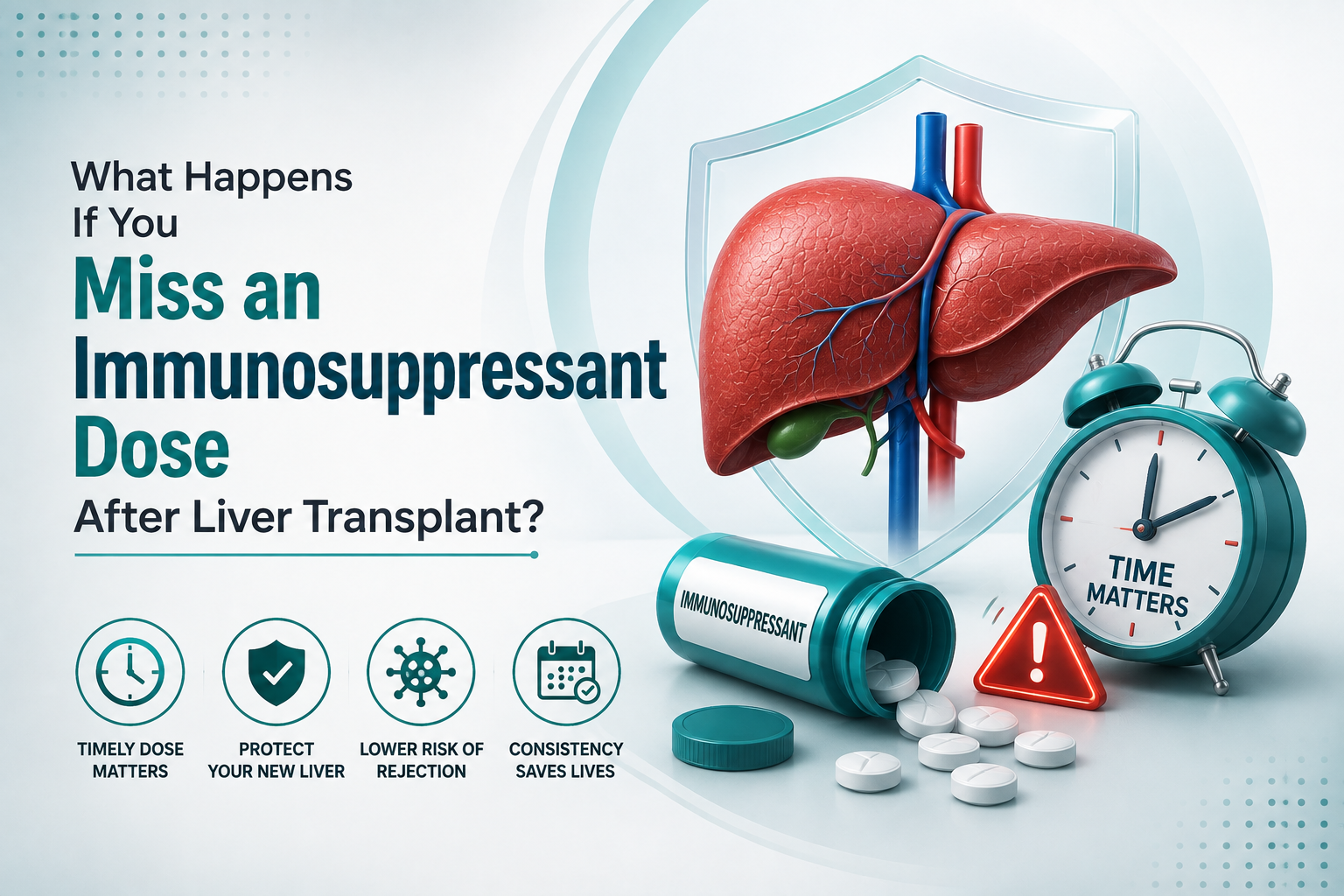
After a liver transplant, taking immunosuppressive medicines correctly is one of the most important parts of protecting the transplanted liver.
These medicines help control the immune system so that it does not attack the new liver. Even when you feel completely well, your immune system can still recognise the transplanted liver as foreign.
This is why missing an immunosuppressant dose after liver transplant should never simply be ignored.
However, missing one dose does not automatically mean that liver rejection will occur. What matters is which medicine was missed, how much time has passed, whether more than one dose has been missed, your current drug levels and your individual transplant history.
The safest approach is to follow the missed dose instructions given by your transplant team or contact them for advice rather than changing the medication schedule yourself.
Patients receiving immunosuppressive therapy after liver transplant in Delhi should understand why timing matters and what to do if a dose is accidentally forgotten.
Why Are Immunosuppressants Important After Liver Transplant?
Your immune system is designed to identify and attack substances that it considers foreign.
A transplanted liver comes from another person. Although extensive donor and recipient matching is performed, the immune system can still recognise the new liver as different from the body's own tissues.
Immunosuppressive medicines reduce this immune response. Their main purpose is to reduce the risk of liver transplant rejection while allowing enough immune activity to protect the patient from infections.
Common immunosuppressive medicines used after liver transplantation may include:
- ●Tacrolimus
- ●Ciclosporin
- ●Mycophenolate mofetil
- ●Corticosteroids such as prednisolone
- ●Other medicines depending on the patient's individual transplant protocol
Some patients need more than one medicine because different drugs affect different parts of the immune response. The combination and dose may change over time.
What Happens If You Miss One Immunosuppressant Dose?
Missing one dose does not necessarily mean that the transplanted liver will suddenly fail.
However, it can cause the concentration of the medicine in your blood to fall below the range your transplant team is trying to maintain. When immunosuppressant levels become too low, immune activity against the transplanted liver can increase. This may increase the risk of rejection.
The effect of a missed dose depends on several factors, including:
- ●Which immunosuppressant you take
- ●Your prescribed dose
- ●How long ago the dose was missed
- ●Whether you have missed previous doses
- ●How recently your transplant was performed
- ●Your previous history of rejection
- ●Your latest drug levels and liver function results
- ●Whether vomiting, diarrhoea or another illness is affecting medication absorption
Because these factors vary considerably between patients, there is no single missed dose instruction that is appropriate for every transplant recipient.
Should You Take a Missed Immunosuppressant Dose Immediately?
Do not make assumptions. Different medicines have different dosing schedules and different instructions for missed doses.
If you realise that you have missed a dose, follow the specific instructions provided by your liver transplant team. If those instructions are unclear or unavailable, contact the transplant team, transplant coordinator or treating doctor.
You should be ready to tell them:
- ●The name of the medicine
- ●The prescribed dose
- ●The normal time you take it
- ●When you realised the dose had been missed
- ●When your next dose is due
- ●Whether any other doses have recently been missed
- ●Whether you have vomiting, diarrhoea, fever or other symptoms
This information helps the clinical team decide the safest next step.
Should You Double the Next Dose?
Generally, you should not double an immunosuppressant dose unless your transplant team specifically tells you to do so.
Taking extra medicine may cause the drug level to become too high. This can increase the risk of adverse effects.
For example, excessive tacrolimus exposure can affect kidney function and may contribute to problems including tremor and raised blood glucose.
Both low and high immunosuppression levels can cause problems. Low levels can increase rejection risk, while excessive levels increase the risk of medication related side effects. This is why transplant medicines require careful dose management and regular blood testing.
Why Is Tacrolimus Timing So Important?
Tacrolimus is commonly used as part of immunosuppressive treatment following liver transplantation.
Doctors often monitor the amount of tacrolimus in the blood because the effective range can be relatively narrow. Too little tacrolimus may leave the transplanted liver inadequately protected from immune attack. Too much tacrolimus can increase the risk of toxicity and side effects.
For this reason, tacrolimus is generally taken according to a consistent schedule. Patients should not independently change the dose or timing.
Your transplant team may perform regular blood tests as part of post transplant monitoring to assess medication levels alongside liver and kidney function.
Can Missing Immunosuppressants Cause Liver Rejection?
Missing immunosuppressive medicines can increase the risk of rejection because it may allow immune activity against the transplanted organ to increase.
However, a missed dose does not mean rejection will definitely occur. Risk becomes more concerning when doses are missed repeatedly, medicines are intentionally stopped or drug concentrations remain too low for an extended period.
This is one reason medication adherence remains important even years after transplantation. Patients should never stop immunosuppressive medicines simply because they feel healthy.
If you want to understand the warning signs, read our guide on liver transplant rejection signs, tests and treatment.
Can You Feel When Immunosuppressant Levels Are Too Low?
Usually not. A reduction in medication levels may not cause any immediate symptoms. Similarly, early liver rejection can sometimes occur without obvious symptoms.
Changes may first be detected during routine liver function tests or drug level monitoring. This is why patients should not use how they feel as a guide to whether their transplant medicines are still necessary.
What Symptoms Should You Watch for After Missing a Dose?
Missing a dose does not mean symptoms will develop. However, contact your transplant team if you develop concerning changes such as:
- ●Fever
- ●Yellowing of the eyes or skin
- ●New abdominal discomfort
- ●Persistent vomiting
- ●Persistent diarrhoea
- ●Dark urine
- ●Unusual fatigue
- ●Loss of appetite
- ●New swelling
- ●Difficulty taking or keeping medicines down
These symptoms do not automatically indicate rejection. Infection, bile duct problems, medication effects and other transplant complications can produce similar symptoms. Medical assessment is therefore needed to establish the cause.
What If You Vomit After Taking Tacrolimus or Another Immunosuppressant?
Vomiting creates a different problem from simply forgetting a medicine. It may be unclear how much of the medication has been absorbed.
Do not automatically repeat the dose. Contact your transplant team for specific advice, particularly if vomiting continues or you are unable to keep your transplant medicines down.
What If You Have Diarrhoea?
Diarrhoea after liver transplantation should also be taken seriously. It can be caused by infections, medicines or other gastrointestinal problems.
Diarrhoea may also affect immunosuppressant drug levels. Contact your transplant team if diarrhoea is persistent, severe or accompanied by fever, vomiting, dehydration or other symptoms.
Is Missing Several Doses More Serious?
Yes. Repeatedly missing doses is more concerning than a single accidental missed dose.
Sustained periods of inadequate immunosuppression may increase the risk that the immune system begins attacking the transplanted liver.
If you have missed multiple doses, contact your transplant team promptly rather than simply restarting your usual schedule without discussing the situation.
What Tests Might Be Needed After Missed Doses?
Not every missed dose requires additional investigations. Your transplant team will decide according to your circumstances.
Liver Function Tests
Blood tests can assess liver enzymes, bilirubin and other markers of liver function.
Tacrolimus or Ciclosporin Drug Levels
Drug levels may be measured when the transplant team needs to determine whether immunosuppressant exposure is appropriate.
Kidney Function Tests
Tacrolimus and ciclosporin can affect kidney function, so creatinine and other kidney measurements may be monitored.
Additional Investigations
If liver tests become abnormal, doctors may consider imaging or other investigations. In selected cases where rejection is suspected, a liver biopsy may be required.
Read more about what patients can expect during post transplant care.
What If You Accidentally Take an Extra Dose?
Taking an extra immunosuppressant dose also requires attention. Do not try to compensate by skipping later medicines without advice.
Contact your transplant team and tell them:
- ●Which medication was taken
- ●The normal dose
- ●How much was accidentally taken
- ●What time it was taken
- ●Whether you have any symptoms
Why You Should Not Adjust Immunosuppressants Yourself
Immunosuppressive treatment requires a balance. Too little immune suppression may increase rejection risk. Too much may increase the risk of infection, kidney problems and other medication related complications.
Your transplant team may adjust your medicines based on:
- ●Time since transplant
- ●Blood drug levels
- ●Liver function
- ●Kidney function
- ●Previous rejection episodes
- ●Infection history
- ●Other medications
- ●Side effects
- ●Overall medical condition
Drug Interactions Can Also Affect Immunosuppressant Levels
Missing doses is not the only reason immunosuppressant levels may change. Some prescription medicines, over the counter medicines, herbal products, supplements and foods can alter the way transplant medicines are absorbed or metabolised.
Before starting any new medication or supplement, tell the healthcare professional that you are a liver transplant recipient and check with your transplant team.
How Can You Avoid Missing Immunosuppressant Doses?
Use Phone Alarms
Set recurring alarms for each dosing time. Keep the alarm active until the medicine has actually been taken.
Use a Medication Organiser
A weekly pill organiser may make it easier to see whether a scheduled dose has been taken. Only use one if your transplant team considers it suitable for your medication regimen.
Link Medicines to a Daily Routine
Taking medicines at consistent times linked to established habits can help. Some patients associate medicines with breakfast and evening routines, according to their prescribed schedule.
Keep an Updated Medication List
Maintain a current list showing:
- ●Medicine name
- ●Strength
- ●Dose
- ●Timing
- ●Important instructions
Plan Before Travelling
Carry enough medication for the trip plus an appropriate reserve. Keep transplant medicines in hand luggage during air travel rather than checked baggage.
Discuss time zone changes with the transplant team before international travel because they may affect dosing times.
Keep Medicines Accessible
Avoid reaching the end of a prescription before arranging the next supply. A shortage should not become a reason for missing treatment.
What If You Frequently Forget Your Medicines?
Tell your transplant team. The team may be able to help identify why doses are being missed.
Common reasons include:
- ●Complicated medication schedules
- ●Work or travel routines
- ●Side effects
- ●Financial or supply issues
- ●Sleep schedules
- ●Forgetfulness
- ●Difficulty understanding the prescription
- ●Difficulty swallowing medicines
Addressing the cause is safer than waiting until repeated missed doses create a clinical problem.
Do You Need Immunosuppressants for Life After Liver Transplant?
Most liver transplant recipients require long term immunosuppressive therapy.
The number of medicines and doses often decreases as the patient progresses after transplantation, but medication should never be reduced or stopped without transplant specialist supervision.
Patients can learn more about ongoing medication management through our dedicated page on immunosuppressive therapy after liver transplant in Delhi.
When Should You Contact Your Liver Transplant Team Urgently?
Contact your transplant team promptly if:
- ●You have missed multiple doses
- ●You are unsure what to do after a missed dose
- ●You accidentally took too much medication
- ●You cannot keep your medicines down because of vomiting
- ●You have persistent diarrhoea
- ●You develop fever
- ●You develop jaundice
- ●You notice significant abdominal pain
- ●You feel significantly unwell
- ●You have run out of an essential transplant medicine
- ●You have started a new medicine without checking for interactions
- ●You are unable to follow your prescribed medication schedule
Immunosuppressive Therapy and Liver Transplant Follow Up in Delhi
Medication management after liver transplantation requires more than simply issuing a prescription. Drug levels, liver function, kidney function, infections, side effects and potential interactions all need to be considered.
At Liver Surgeons, post transplant care includes ongoing monitoring and individualised immunosuppressive therapy under an experienced transplant team.
Patients who need specialist advice after a liver transplant in Delhi can consult the team led by Dr Ashish George for assessment and long term transplant follow up.
Frequently Asked Questions
What should I do if I miss one tacrolimus dose after liver transplant?
Follow the missed dose instructions provided by your transplant team. If you are unsure, contact the transplant team and tell them when the dose was due and when you noticed it was missed. Do not independently double the next dose.
Will missing one immunosuppressant dose cause rejection?
Not necessarily. A single missed dose does not mean rejection will occur, but it can reduce immunosuppressant exposure and potentially increase risk. Repeated missed doses are more concerning.
Can I take two tacrolimus doses together if I forgot one?
Do not double tacrolimus unless your transplant team specifically instructs you to do so. Excessive drug levels may cause toxicity and other complications.
What happens if I miss immunosuppressants for two days?
Missing multiple doses can increase the risk of inadequate immunosuppression and rejection. Contact your liver transplant team promptly for individual advice rather than trying to correct the schedule yourself.
What if I vomit after taking tacrolimus?
Contact your transplant team for advice because the amount of medicine absorbed may be uncertain. Do not automatically repeat the dose unless instructed.
Can I stop immunosuppressants when my liver tests are normal?
No. Normal liver tests do not mean immunosuppressive therapy is no longer needed. Never stop or reduce transplant medication without specialist guidance.
Why are tacrolimus blood levels checked?
Blood testing helps doctors maintain an appropriate level of tacrolimus. Levels that are too low may increase rejection risk, while excessive levels can increase toxicity and side effects.
Can diarrhoea affect tacrolimus levels?
Yes. Gastrointestinal illness can affect immunosuppressant management. Persistent diarrhoea should be reported to the transplant team.
Conclusion
Missing an immunosuppressant dose after liver transplant should be taken seriously, but it is important not to panic or make unsupervised changes to your medication.
Do not automatically double a dose or alter your treatment schedule.
Follow the specific missed dose instructions given by your transplant centre. If you are uncertain, contact your transplant team and provide details about the medicine, dose and timing.
Consistent medication use, regular blood tests and ongoing follow up are essential for protecting your transplanted liver.
If you are having difficulty taking your medicines regularly, experiencing side effects or have concerns about tacrolimus or another anti rejection medicine, speak with your transplant team so the problem can be addressed safely.