Pancreatic Cancer: Early Symptoms People Often Miss

Principal Consultant & Unit Head, Liver Transplant & HPB Surgery, Fortis Hospital, Shalimar Bagh, Delhi
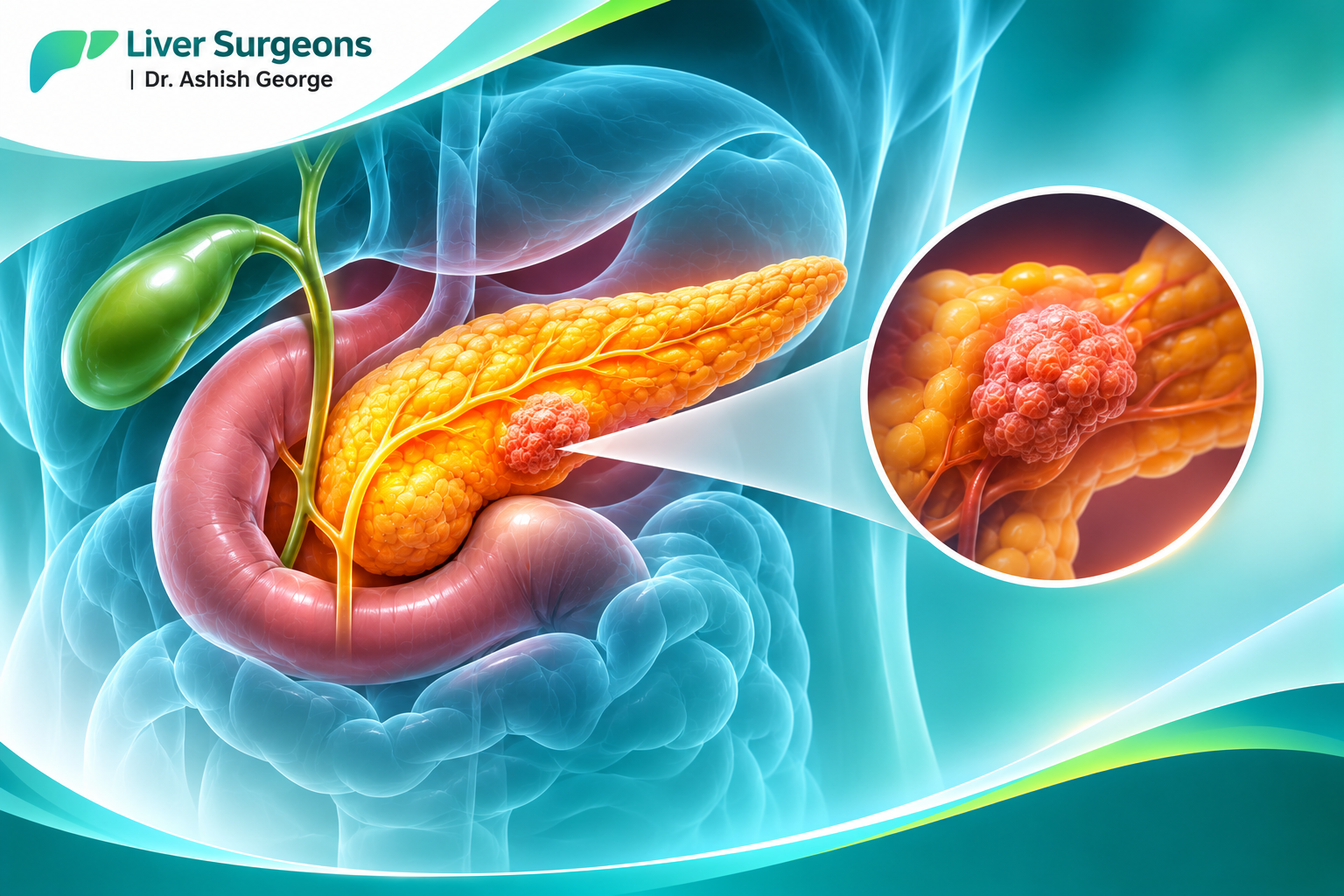
Pancreatic cancer can be difficult to detect early because the pancreas lies deep inside the abdomen and a small tumour may cause few symptoms. When symptoms do appear, they may resemble acidity, gallstones, back strain or ordinary weight loss.
Most people with these symptoms do not have pancreatic cancer. However, persistent or unexplained combinations deserve timely evaluation, particularly jaundice or unexplained weight loss.
Where Is the Pancreas?
The pancreas lies behind the stomach. The head of the pancreas sits close to the bile duct and duodenum, while the body and tail extend toward the spleen.
Tumours in different parts of the pancreas can produce different symptoms. A tumour in the pancreatic head may block the bile duct earlier, while a tumour in the body or tail may remain unnoticed for longer.
Early Symptoms That Should Not Be Ignored
1. Jaundice
Yellowing of the eyes or skin, dark urine, pale stools and itching can occur when a pancreatic-head tumour blocks the bile duct. Painless jaundice requires urgent investigation even when the patient otherwise feels well.
2. Unexplained weight loss
Weight loss without dieting may result from reduced appetite, altered metabolism or poor absorption of food.
3. Upper abdominal or back pain
Pain may be felt in the upper middle abdomen and spread to the back. It may be persistent rather than a brief episode.
4. Loss of appetite or early fullness
A person may feel full after a small amount of food or lose interest in meals.
5. New digestive problems
Floating, pale, oily or difficult-to-flush stools can indicate inadequate pancreatic enzymes. Bloating, nausea or indigestion can also occur, although these are common symptoms with many other causes.
6. New-onset or suddenly worsening diabetes
New diabetes, particularly without the usual risk factors or accompanied by weight loss, may sometimes be associated with pancreatic disease. Most new diabetes is not caused by cancer, but the combination matters.
7. Unexplained blood clot
A new clot in the leg or lung can occasionally be associated with pancreatic cancer, especially when other warning symptoms are present.
8. Persistent fatigue
Unusual weakness or fatigue may accompany poor nutrition, jaundice, anaemia or cancer-related inflammation.
Symptoms That Need Urgent Assessment
Seek prompt medical attention for:
- Yellow eyes or skin
- Dark urine with pale stools
- Persistent vomiting
- Rapid unexplained weight loss
- Severe or progressive abdominal and back pain
- Fever with jaundice
- A swollen painful leg or sudden breathlessness
Sudden breathlessness or fever with jaundice may indicate a medical emergency and requires immediate assessment.
Who Has a Higher Risk?
Risk increases with:
- Increasing age
- Tobacco use
- Chronic pancreatitis
- Obesity and certain metabolic conditions
- A strong family history of pancreatic cancer
- Certain inherited genetic syndromes
- Long-standing diabetes, although diabetes is common and usually unrelated to cancer
Having a risk factor does not mean cancer is inevitable. Some patients have no obvious risk factor.
How Is Pancreatic Cancer Diagnosed?
Evaluation may include:
- Liver-function tests and bilirubin
- Blood glucose and general blood tests
- Pancreas-protocol contrast CT
- MRI or MRCP
- Endoscopic ultrasound with biopsy when required
- CA 19-9 blood test as supportive information, not as a standalone screening test
- CT chest or other staging tests
An ordinary abdominal ultrasound may detect bile-duct dilation or a mass but can miss pancreatic lesions. Persistent concerning symptoms require appropriate cross-sectional imaging.
Why Early Surgical Assessment Matters
Surgery offers the main possibility of long-term disease control or cure when pancreatic cancer is localised and removable. A tumour should be assessed by a multidisciplinary team before it is labelled operable, borderline operable or inoperable.
Tumours in the pancreatic head may require a Whipple procedure. Tumours in the body or tail may require distal pancreatectomy, sometimes with spleen removal.
Read what the Whipple procedure involves and explore pancreatic cancer surgery in Delhi.
What If the Tumour Touches a Blood Vessel?
Contact with the portal vein or nearby vessels does not automatically make every tumour inoperable. Some borderline-resectable cancers are treated with chemotherapy first and then reassessed. Selected operations may include vascular reconstruction at an experienced HPB centre.
The decision depends on detailed imaging, tumour biology, treatment response and the patient's fitness.
Pancreatic Cancer Care in Delhi
Dr Ashish George and the multidisciplinary HPB team at Fortis Hospital, Shalimar Bagh review pancreatic imaging, staging, operability and surgical options including open, laparoscopic and robotic procedures where appropriate.
Patients who have been told that a tumour is inoperable may seek a specialist second opinion, particularly when the decision depends on vascular involvement or response to chemotherapy.
Conclusion
Pancreatic cancer may begin with subtle symptoms such as unexplained weight loss, appetite change, upper abdominal or back pain, oily stools or new diabetes. Jaundice is an especially important warning sign.
These symptoms frequently have non-cancerous causes, but they should not be ignored when persistent or combined. Early imaging and HPB review can preserve treatment options.
Consult a Pancreatic Surgeon in Delhi
If you have jaundice, a pancreatic mass, unexplained weight loss or a scan suggesting pancreatic cancer, arrange a specialist review with Dr Ashish George at Fortis Hospital, Shalimar Bagh, Delhi.
Frequently Asked Questions
What is usually the first symptom of pancreatic cancer?
There is no single first symptom. Jaundice, weight loss, appetite loss, upper abdominal or back pain and digestive changes are common warning features.
Can pancreatic cancer cause back pain?
Yes, but back pain is extremely common and is usually caused by other conditions. Persistent back pain combined with weight loss, abdominal symptoms or jaundice needs assessment.
Is CA 19-9 enough to diagnose pancreatic cancer?
No. It can be normal in some patients and elevated for non-cancerous reasons. Diagnosis relies on imaging and, when required, tissue sampling.
Can an ultrasound detect pancreatic cancer?
It may identify a mass or bile-duct dilation, but bowel gas and the deep position of the pancreas can limit visibility. CT, MRI or endoscopic ultrasound may be needed.
Is pancreatic cancer always inoperable?
No. Localised and selected borderline-resectable cancers may be treated surgically, often as part of a combined oncology plan.
About the Author
Dr Ashish George is a liver transplant and HPB surgeon in Delhi with experience in Whipple surgery, distal pancreatectomy, robotic pancreatic surgery and vascular reconstruction for selected complex tumours.
Medical Sources for Reviewer