Anti Rejection Medicines After Liver Transplant: How Long Do You Need Them?
.webp)
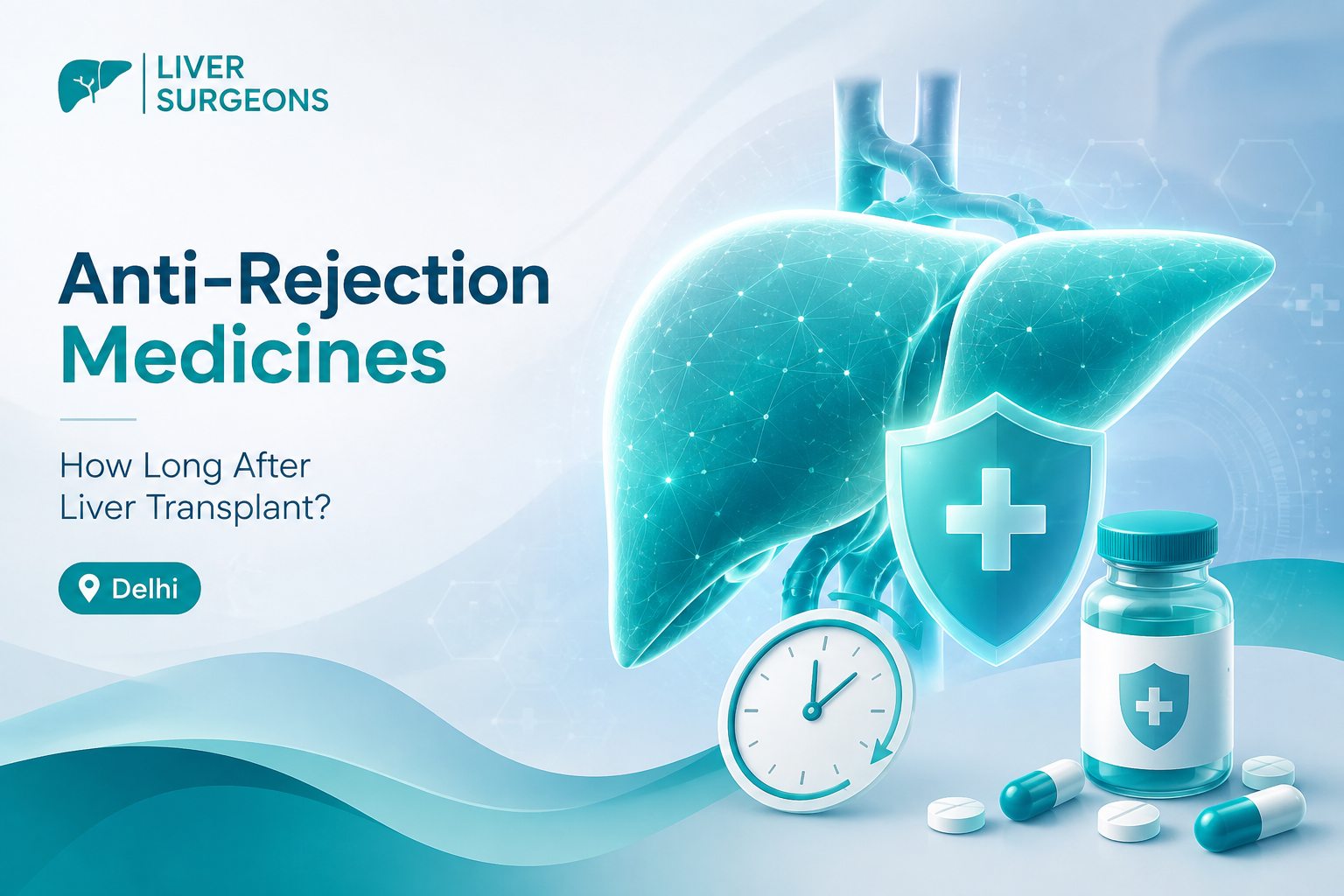
One of the most common questions after liver transplantation is whether anti rejection medicines are temporary or lifelong. For most liver transplant recipients, some form of immunosuppression is needed for the long term, and many patients continue at least one immunosuppressive medicine for the lifetime of the transplant.
The treatment usually becomes simpler over time. Doses are often higher during the early months, when rejection risk is greater, and may be reduced as the patient stabilises. Some medicines, particularly corticosteroids, may be tapered or stopped in selected patients. Other medicines, such as tacrolimus, often remain part of long term maintenance treatment.
The exact plan is individual. A patient should never stop, reduce or change anti rejection medicines without guidance from the transplant team. Patients can review the dedicated immunosuppressive therapy after liver transplant in Delhi service page for an overview of ongoing medication management.
What Are Anti Rejection Medicines?
Anti rejection medicines are immunosuppressive medicines. They reduce the immune response that can damage a transplanted liver.
The immune system is designed to recognise foreign tissue. Even after successful surgery, it can identify the donor liver as different from the recipient’s own tissues. Without adequate immunosuppression, immune cells can attack the graft and cause rejection.
The aim of treatment is therefore to achieve a balance: enough immune suppression to protect the liver, but not more than the patient needs. Excessive immunosuppression can increase the risk of infection, kidney problems, metabolic complications and other long term adverse effects.
Which Anti Rejection Medicines Are Used After Liver Transplant?
The exact combination differs between transplant centres and individual patients. Common medicine groups include the following.
Tacrolimus
Tacrolimus is a calcineurin inhibitor and is commonly used as a core maintenance medicine after liver transplantation. It requires blood level monitoring because both inadequate and excessive exposure can cause problems.
Ciclosporin
Ciclosporin is another calcineurin inhibitor. It may be used in selected patients depending on clinical needs and tolerance. Like tacrolimus, it can affect kidney function and requires monitoring.
Mycophenolate
Mycophenolate may be combined with tacrolimus or another medicine. It can allow a transplant team to use a lower calcineurin inhibitor exposure in some patients, particularly when kidney protection is important.
Corticosteroids
Steroids such as prednisolone are often used early after transplantation. In many lower risk patients they can be tapered over the first months. Some higher risk patients, including selected people with autoimmune liver disease or previous rejection, may need steroids for longer.
Other Immunosuppressive Medicines
Other agents, including medicines that act through different immune pathways, may be considered when the standard regimen is not ideal because of kidney dysfunction, cancer related considerations, side effects or other individual factors.
How Long Do You Need Anti Rejection Medicines After Liver Transplant?
For most adult liver transplant recipients, the answer is long term. Current transplant guidance states that adult recipients almost universally require long term immunosuppression. NHS Blood and Transplant also advises that although doses often reduce over time, some immunosuppressive medicines are needed for the lifetime of the liver transplant.
That does not mean the same medicines and doses are used forever. The regimen may become simpler as recovery progresses. A patient who begins with several medicines may later continue with fewer medicines or a lower dose.
Why Are Doses Higher Soon After Transplant?
The early period after transplantation carries a greater risk of immune rejection. Transplant programmes therefore use more intensive immunosuppression during this stage.
As liver function stabilises and the patient moves further from surgery, the transplant team may gradually reduce medicine exposure where it is safe to do so. The aim is to protect the graft while reducing avoidable long term toxicity.
The liver transplant recovery timeline explains how medication monitoring fits into the first year of recovery.
Do Steroids Continue for Life?
Not necessarily. In many liver transplant protocols, corticosteroids are tapered during the first several months. Current guidance notes that many centres taper corticosteroids by about three to six months in lower risk patients.
Some patients need steroids for longer. This may include people with autoimmune liver disease or a higher risk of rejection. Whether steroids can be stopped depends on the individual case.
Do You Need Tacrolimus for Life?
Many liver transplant recipients continue tacrolimus or another maintenance immunosuppressive medicine for the long term. Current guidance supports tacrolimus maintenance monotherapy for selected patients at low risk of rejection.
However, tacrolimus is not the only possible long term strategy. Kidney function, previous rejection, cancer risk, pregnancy considerations, side effects and other factors can lead the transplant team to use another regimen.
The important point is that a lower dose later in recovery does not mean the medicine has become optional.
Why Can Anti Rejection Medicines Not Simply Be Stopped?
A transplanted liver can continue to trigger an immune response even years after surgery. The liver is more immunologically tolerant than some other transplanted organs, but this does not mean every recipient becomes naturally tolerant.
Stopping immunosuppression without specialist supervision can expose the graft to immune injury. Rejection can sometimes be silent at first, with abnormal liver blood tests appearing before the patient feels unwell.
This is why long term post transplant monitoring in Delhi remains important even when the patient feels completely healthy.
Can Anti Rejection Medicines Ever Be Completely Withdrawn?
Complete withdrawal is not routine care for most liver transplant recipients. A small number of highly selected patients may be studied or managed with major immunosuppression reduction under specialist supervision, but this should not be interpreted as a general treatment option.
Patients should never attempt medicine withdrawal themselves. Decisions about minimisation require careful assessment of graft health, rejection history, time since transplant, underlying liver disease and other clinical factors.
What Determines How Much Immunosuppression You Need?
The transplant team may consider several factors when adjusting treatment:
- Time since the liver transplant
- History of acute or chronic rejection
- Underlying liver disease
- Kidney function
- Age and overall health
- Infection history
- Cancer risk
- Blood drug levels
- Liver function test results
- Side effects
- Other prescription medicines
- Pregnancy or family planning considerations
Why Are Blood Tests Needed for So Long?
Long term blood tests help the transplant team check both graft protection and medicine safety. Monitoring may include liver enzymes, bilirubin, kidney function, glucose, blood counts and immunosuppressant drug levels.
If liver tests change, the cause needs investigation. Rejection is one possibility, but infection, bile duct problems, vascular complications, medicine effects and recurrence of the original disease can also alter results.
Patients should continue the follow up schedule recommended by their transplant programme. The post transplant instructions page summarises why regular reviews and medication adherence remain essential.
What Are the Long Term Side Effects of Anti Rejection Medicines?
Immunosuppressive medicines are essential, but long term treatment can have adverse effects. The type of risk depends on the medicine, dose and patient.
Kidney Problems
Calcineurin inhibitors such as tacrolimus and ciclosporin can contribute to kidney dysfunction. Transplant teams therefore monitor kidney function and may adjust the regimen when renal risk becomes important.
Infections
All immunosuppressive regimens reduce parts of the immune response. This increases susceptibility to certain infections, especially when immunosuppression is more intensive.
High Blood Sugar and Diabetes
Tacrolimus and corticosteroids can contribute to raised blood glucose. Some patients need temporary or long term diabetes treatment.
High Blood Pressure and Metabolic Changes
Blood pressure, cholesterol and weight may need additional attention after transplantation. The transplant team may recommend medication, dietary changes and physical activity according to the patient’s condition.
Bone Health
Long term steroid exposure can affect bone strength. Patients with relevant risk factors may need bone health assessment and preventive treatment.
Cancer Risk
Long term immunosuppression can increase the risk of certain cancers. This is one reason transplant follow up may include skin checks and age appropriate cancer screening.
Why Doctors Try to Use the Lowest Effective Immunosuppression
The goal is not to keep doses high indefinitely. Modern transplant care aims to use enough immunosuppression to prevent rejection while limiting kidney toxicity, infection and metabolic complications.
For example, in a patient with kidney dysfunction, a transplant specialist may use combination therapy that permits lower tacrolimus exposure. In another patient with a high rejection risk, more intensive treatment may be necessary.
There is therefore no one size fits all maintenance regimen.
What Happens If You Miss Anti Rejection Medicine?
Missing doses can reduce immunosuppressant exposure and may increase rejection risk. If you miss a dose, follow the specific instructions provided by your transplant team.
Do not automatically double the next dose. If you are unsure what to do, contact the transplant team and provide the medicine name, dose, scheduled time and when you noticed it was missed.
NHS Blood and Transplant advises patients to tell their transplant team if they miss immunosuppressive doses.
Can You Change Brands or Buy a Different Version Yourself?
Do not change a tacrolimus formulation, brand or other transplant medicine without checking with the transplant team or transplant pharmacist. Medicines that contain the same active ingredient can have formulation differences that matter when treatment requires close blood level monitoring.
Can Herbal Medicines or Supplements Interfere?
Yes. Some herbal products and medicines can alter immunosuppressant levels. St John’s Wort, for example, can reduce tacrolimus exposure, while grapefruit can increase tacrolimus exposure.
Always check with the transplant team before starting a supplement, herbal medicine or over the counter treatment.
What If Side Effects Make You Want to Stop the Medicine?
Tell the transplant team rather than stopping treatment. Side effects may sometimes be managed by adjusting the dose, changing the timing, treating the adverse effect or switching to another immunosuppressive strategy.
Stopping independently can turn a manageable side effect problem into a rejection risk.
Signs That Need Prompt Medical Advice
Contact your transplant team if you develop fever, jaundice, persistent vomiting, persistent diarrhoea, abdominal pain, reduced urine output, marked weakness or another significant change in health.
These symptoms do not automatically mean rejection. They can also occur with infection, medicine toxicity or other transplant complications, so proper assessment is needed.
How Can Patients Manage Lifelong Medicines More Easily?
- Take medicines at the prescribed times every day.
- Use alarms or a medication reminder system.
- Keep an updated list of every medicine and dose.
- Arrange refills before supplies run out.
- Carry sufficient medication when travelling.
- Tell every healthcare professional that you are a transplant recipient.
- Check new medicines and supplements with the transplant team.
- Attend every scheduled blood test and review.
- Discuss side effects early rather than skipping doses.
Anti Rejection Medicine Management in Delhi
Long term immunosuppression requires regular review because the ideal regimen can change as the patient moves from early recovery to long term graft care.
At Liver Surgeons, patients can access immunosuppressive therapy after liver transplant in Delhi together with structured post transplant monitoring.
Patients considering transplantation or needing follow up can also consult Dr Ashish George, Principal Consultant and Unit Head, Liver Transplant and HPB Surgery at Fortis Hospital, Shalimar Bagh, Delhi.
Frequently Asked Questions
Are anti rejection medicines lifelong after liver transplant?
Do anti rejection medicine doses reduce over time?
Can steroids be stopped after liver transplant?
Can tacrolimus be stopped after liver transplant?
Why do I still need medicines years after transplant?
Can I take fewer medicines if my liver tests are normal?
What happens if I miss anti rejection medicine?
How often are anti rejection medicine levels checked?
Conclusion
Anti rejection medicines are not simply a short course used while the surgical wound heals. They protect the transplanted liver from immune attack, and most recipients require long term immunosuppression.
The regimen usually changes over time. Some medicines may be tapered or stopped, while another medicine may continue at a lower maintenance dose. The correct balance depends on graft health, rejection risk, kidney function, infections, side effects and other individual factors.
Never stop or reduce an immunosuppressive medicine because you feel well or because your blood tests are currently normal. Work with your transplant team to keep the treatment effective while minimising long term risks.
For practical guidance on life after surgery, read Life After Liver Transplant: Diet, Medication and Returning to Normalcy.
Medical Note
This article provides general education and does not replace advice from your transplant team. Immunosuppressive medicines, doses and duration vary according to individual risk and transplant centre protocols.
Medical Reference Links