Fatty Liver Diet Plan: 7-Day Indian Diet Chart for Grade 1 & Grade 2
.webp)
Principal Consultant & Unit Head, Liver Transplant & HPB Surgery, Fortis Hospital, Shalimar Bagh, Delhi
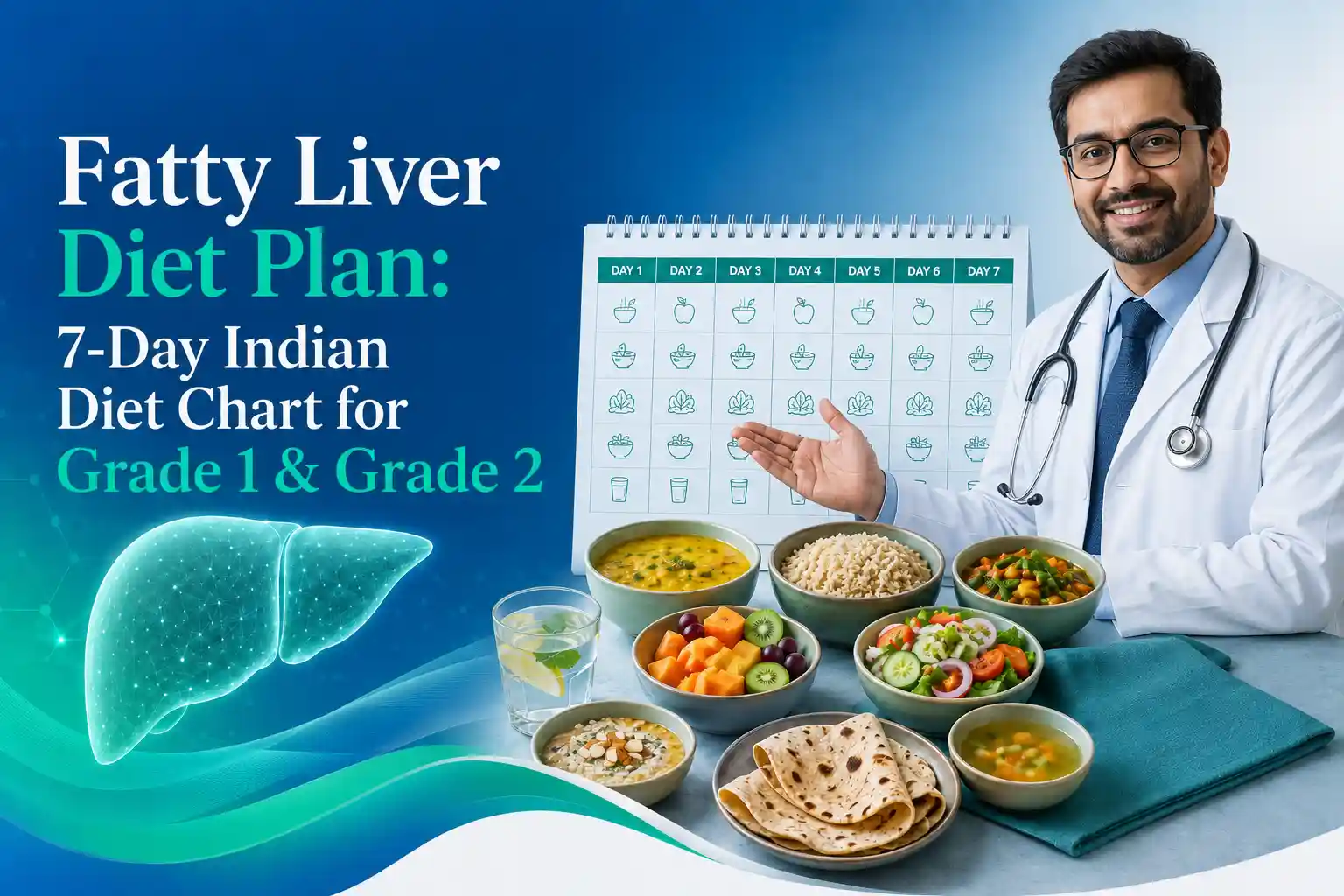
A practical fatty liver diet plan can help reduce excess calorie intake, improve blood sugar control and support gradual reduction of liver fat. For people with Grade 1 or Grade 2 fatty liver, the most effective approach is not a crash diet or liver detox. It is a balanced Indian eating pattern that can be followed consistently.
Fatty liver disease is now commonly called metabolic dysfunction-associated steatotic liver disease, or MASLD. It is often associated with excess abdominal weight, insulin resistance, diabetes, high triglycerides and limited physical activity.
Dietary changes are an important part of treatment, but they should be combined with regular exercise, management of diabetes and cholesterol, and appropriate liver monitoring. People who are overweight may benefit from gradual weight loss. Rapid weight loss and malnutrition can make liver disease worse.
This seven-day Indian diet chart provides a practical starting point. Portions must be personalised according to age, weight, activity level, diabetes, kidney function and other health conditions.
What Do Grade 1 and Grade 2 Fatty Liver Mean?
Grade 1 Fatty Liver
Grade 1 usually describes mild fat accumulation seen during an ultrasound examination. At this stage, many people have no noticeable symptoms.
A fatty liver Grade 1 diet plan generally focuses on:
Grade 2 Fatty Liver
Grade 2 generally indicates a more noticeable or moderate accumulation of liver fat on ultrasound. It may be accompanied by raised liver enzymes, diabetes, obesity or high triglycerides.
A diet chart for fatty liver Grade 2 follows the same core principles as Grade 1, but medical assessment becomes especially important.
Ultrasound grading describes the appearance of fat in the liver. It does not directly determine how much fibrosis or scarring is present. Doctors may use a FIB-4 calculation, FibroScan, elastography or other investigations to assess fibrosis risk.
Goals of a Fatty Liver Treatment Diet
The diet should help the patient:
NIDDK recommends controlling portions, choosing more vegetables, fruits and whole grains, replacing saturated and trans fats with unsaturated fats, and limiting foods and drinks containing large amounts of simple sugars.
7-Day Fatty Liver Diet Plan for Indian Patients
The following fatty liver diet meal plan includes commonly available Indian foods. Water should remain the main drink throughout the day.
Day 1
| Meal | Food Options |
|---|---|
| Breakfast | Vegetable oats or daliya with one boiled egg or plain curd |
| Mid-morning | One apple or guava |
| Lunch | Two small whole-wheat rotis, moong dal, lauki sabzi and salad |
| Evening | Roasted chana with unsweetened tea or coffee |
| Dinner | Vegetable moong-dal khichdi with plain curd |
Day 2
| Meal | Food Options |
|---|---|
| Breakfast | Two moong-dal chillas with mint chutney |
| Mid-morning | Papaya or one orange |
| Lunch | One small bowl of brown rice, rajma, mixed vegetables and cucumber salad |
| Evening | Unsweetened buttermilk with a small handful of nuts |
| Dinner | Vegetable soup with grilled tofu, paneer, fish or skinless chicken |
Day 3
| Meal | Food Options |
|---|---|
| Breakfast | Vegetable poha prepared with limited oil |
| Mid-morning | One pear or seasonal whole fruit |
| Lunch | Two jowar rotis, masoor dal, bhindi and salad |
| Evening | Sprouts chaat without fried sev |
| Dinner | Palak tofu or palak paneer with one small roti |
Day 4
| Meal | Food Options |
|---|---|
| Breakfast | Two idlis with vegetable sambar |
| Mid-morning | One guava or apple |
| Lunch | One small bowl of rice, dal, beans sabzi and plain curd |
| Evening | Roasted makhana or chana |
| Dinner | Grilled fish or tofu with sautéed vegetables and one small roti |
Day 5
| Meal | Food Options |
|---|---|
| Breakfast | Vegetable upma with plain curd |
| Mid-morning | One orange or bowl of papaya |
| Lunch | Two bajra rotis, mixed dal, tori or tinda sabzi and salad |
| Evening | Unsweetened buttermilk with pumpkin or sunflower seeds |
| Dinner | Vegetable and lentil soup with grilled paneer or chicken |
Day 6
| Meal | Food Options |
|---|---|
| Breakfast | Vegetable omelette or besan chilla with one whole-grain toast |
| Mid-morning | One small banana, particularly before physical activity |
| Lunch | Chana curry, one small bowl of rice and mixed salad |
| Evening | A small handful of walnuts or almonds |
| Dinner | Two small rotis, methi sabzi and moong dal |
Day 7
| Meal | Food Options |
|---|---|
| Breakfast | Ragi dosa or vegetable uttapam with sambar |
| Mid-morning | One apple, pear or guava |
| Lunch | Two multigrain rotis, spinach dal, mixed vegetables and salad |
| Evening | Roasted chana or plain curd |
| Dinner | Vegetable quinoa, daliya or millet pulao with tofu, fish or chicken |
Simple Portion Guide
The correct portion depends on individual energy requirements. A practical lunch or dinner plate may include:
ICMR-National Institute of Nutrition recommends a varied plate containing cereals, pulses or suitable animal-protein alternatives, vegetables, fruits, milk or curd, nuts, seeds and controlled quantities of fats and oils. It also recommends fresh fruit instead of juice. Its model plate is a general guide and is not designed for a specific medical condition.
Best Foods for Grade 1 and Grade 2 Fatty Liver
Vegetables
Include vegetables in both lunch and dinner:
Potatoes can be eaten occasionally, but they should not replace other vegetables at every meal.
Whole Grains and Millets
Suitable options include:
These foods still contain calories and carbohydrates. Portion control remains necessary.
Protein-Rich Foods
Include protein with each main meal through:
Avoid deep-frying fish, chicken, paneer or tofu.
Whole Fruits
Suitable choices include apple, guava, papaya, orange, pear, pomegranate and berries.
Eat whole fruit rather than drinking juice. Sweetened beverages, packaged juice and large quantities of fruit juice deliver sugars quickly and provide less fibre than whole fruit.
Nuts and Seeds
Small portions of almonds, walnuts, flaxseeds, chia seeds or pumpkin seeds can be included.
These foods contain beneficial nutrients but are calorie-dense. Eating several handfuls daily may interfere with weight-loss goals.
Foods to Avoid or Restrict
A liver diet chart for fatty liver should restrict foods that are high in added sugar, refined carbohydrates, calories and unhealthy fats.
Sugary Drinks
Avoid or substantially reduce:
Honey, jaggery and brown sugar also count as added sugar.
Refined Carbohydrates
Limit:
Fried and Packaged Foods
Reduce:
Saturated and Trans Fats
Control:
Replacing saturated and trans fats with appropriate amounts of unsaturated fats is preferable to following a completely fat-free diet.
Alcohol
Alcohol can cause additional liver injury and may accelerate disease progression. Patients with fatty liver should discuss alcohol intake openly with their liver specialist. NIDDK advises minimising alcohol because it may further damage the liver.
Is the Diet Different for Grade 1 and Grade 2 Fatty Liver?
The basic food pattern is generally similar. The difference lies in the intensity of assessment and monitoring.
| Grade 1 Fatty Liver | Grade 2 Fatty Liver |
|---|---|
| Mild fat accumulation on imaging | Moderate fat accumulation on imaging |
| Lifestyle changes may be the main initial approach | Lifestyle changes plus closer medical evaluation may be needed |
| Monitor weight, waist and metabolic health | Assess liver enzymes, diabetes, cholesterol and fibrosis risk |
| Follow-up depends on individual risk factors | FibroScan or additional fibrosis assessment may be advised |
Do not assume that Grade 1 is harmless or that Grade 2 means cirrhosis. Ultrasound fat grades and liver fibrosis stages measure different aspects of liver health.
How Much Weight Loss Can Help Fatty Liver?
For adults who are overweight or obese, losing approximately 3% to 5% of body weight may reduce liver fat. Greater weight reduction may be required to improve inflammation and fibrosis. Weight loss should be gradual and medically supervised when other health conditions are present.
AASLD educational guidance reports that a 5% to 10% reduction in body weight is associated with meaningful improvement in liver fat, inflammation and fibrosis.
People who are lean or underweight should not attempt aggressive weight loss. Fatty liver can also occur in people with a normal body mass index.
Lifestyle Changes Along With the Diet Plan
Diet is only one component of fatty liver management. Patients should also:
- Build regular aerobic and strength-based physical activity
- Reduce long periods of sitting
- Control diabetes, cholesterol and blood pressure
- Maintain regular sleep
- Avoid smoking
- Attend liver follow-up appointments
- Take prescribed medicines correctly
- Avoid unapproved herbal remedies and supplements
Physical activity can benefit fatty liver even when substantial weight loss has not yet occurred. Some herbal or alternative products can cause liver injury, so supplements should be discussed with a doctor before use.
Conclusion
A seven-day fatty liver diet plan is useful for beginning healthier habits, but meaningful improvement requires long-term consistency.
Base your meals on vegetables, pulses, whole grains, controlled portions of fruit, lean proteins and limited amounts of healthy fats. Reduce sugary drinks, maida, fried snacks, processed food and excessive alcohol.
Grade 1 and Grade 2 fatty liver can often improve, but diet should not be used as a substitute for fibrosis assessment or medical follow-up.
Consult a Fatty Liver Specialist in Delhi
If you have Grade 1 or Grade 2 fatty liver, consult Dr Ashish George and the liver care team in Delhi for a structured evaluation.
The team provides liver-function assessment, FibroScan, metabolic-risk evaluation and personalised nutritional and lifestyle guidance.
Contact Us to discuss your reports and receive a fatty liver treatment plan suited to your health requirements.
When Should You Consult a Liver Specialist?
Consult a liver specialist if you have:
- Grade 2 fatty liver
- Persistently raised ALT or AST
- Diabetes, obesity or high triglycerides
- A high FIB-4 result
- Increased liver stiffness on FibroScan
- Low platelet count
- Jaundice
- Abdominal or leg swelling
- Unexplained weight loss
- A family history of cirrhosis
Patients in Delhi can undergo clinical evaluation, metabolic-risk assessment and fibrosis testing before receiving a personalised diet and treatment plan. LiverSurgeons.com offers fatty liver management, FibroScan-based assessment and nutritional counselling in Delhi.
Frequently Asked Questions
Can Grade 1 fatty liver be reversed with diet?
Mild fatty liver can often improve through sustained dietary changes, exercise, weight management and control of metabolic conditions. The response varies between patients.
Can Grade 2 fatty liver be reduced?
Grade 2 fatty liver may improve, particularly when it has not progressed to advanced fibrosis. Patients should undergo appropriate assessment rather than relying only on ultrasound grading.
Can I eat rice with fatty liver?
Yes. Use a controlled portion and combine it with vegetables, dal or another protein source. Brown rice may provide more fibre, but portion size remains important.
How many rotis can I eat?
The number depends on body size, physical activity, diabetes and the rest of the meal. Many adults may begin with one or two small rotis, but individual dietary advice is preferable.
Is banana allowed in a fatty liver diet?
A small banana can be included. People with diabetes should account for its carbohydrate content and follow their prescribed meal plan.
Are eggs suitable for fatty liver?
Boiled, poached or lightly cooked eggs can be included as a protein source. Avoid repeatedly eating eggs as part of a fried, butter-heavy meal.
Is tea or coffee allowed?
Unsweetened tea or coffee can usually be included. Avoid excessive sugar, cream and flavoured syrups.
Do lemon water or detox drinks remove liver fat?
No drink can independently remove fat from the liver. Lemon water may support hydration, but it does not replace calorie control, exercise or medical treatment.
How long should I follow the fatty liver diet plan?
The plan should become a sustainable eating pattern rather than a seven-day temporary programme. Your progress may be reviewed through weight, waist circumference, blood tests and appropriate liver imaging.