Waiting for a Liver: How the Deceased Donor Transplant List Works in India
.webp)
Principal Consultant & Unit Head, Liver Transplant & HPB Surgery, Fortis Hospital, Shalimar Bagh, Delhi
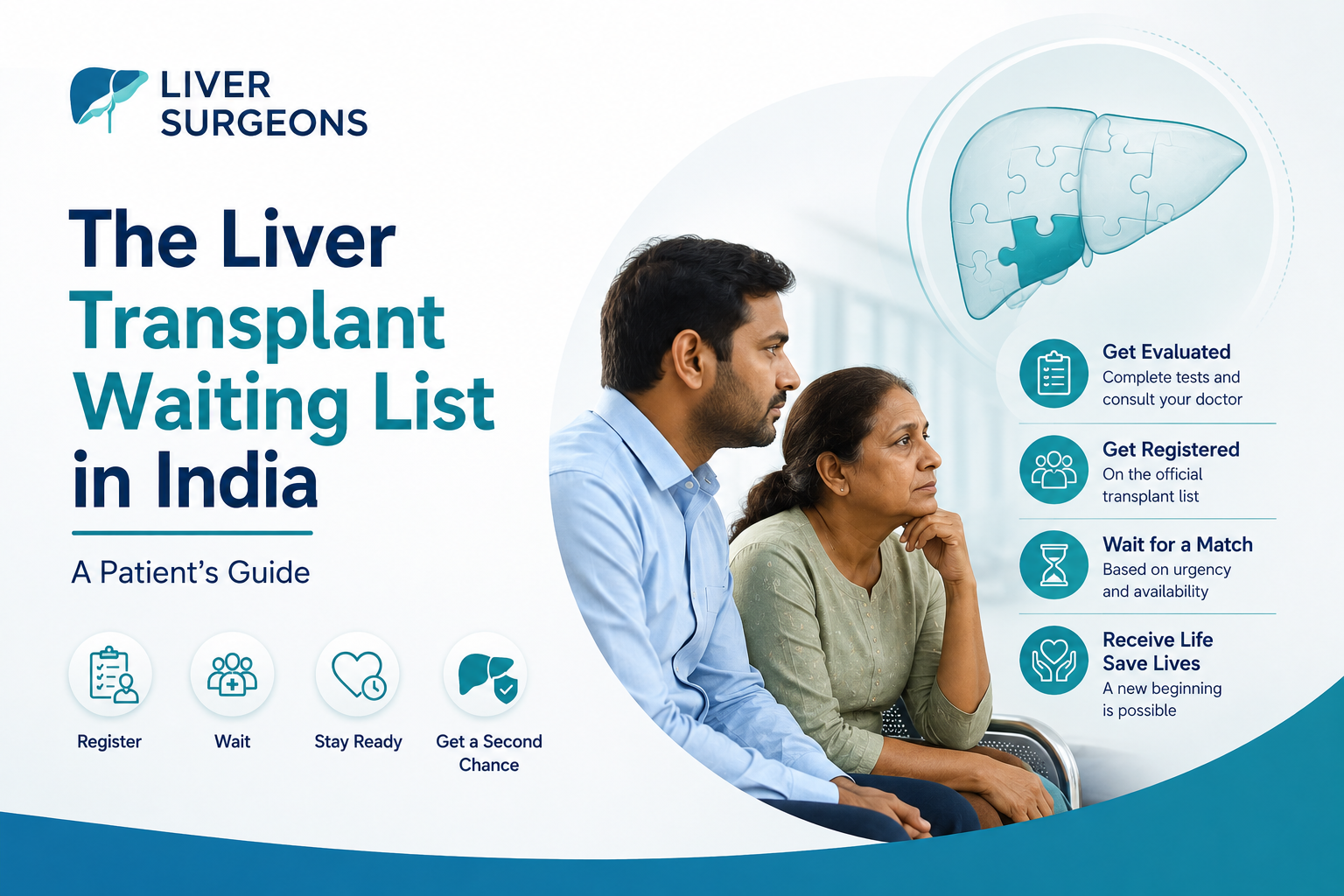
When I tell a patient they need a liver transplant, the second thing they usually ask, right after "will I be alright," is "how long will I have to wait?" It is a fair question, and an anxious one. For patients who do not have a living donor in the family, the answer depends on something many people have never heard of until the day they need it: the deceased donor waiting list.
I want to demystify that list. The more you understand how organ allocation actually works in India, the less frightening the wait becomes, and the more you can do to give yourself the best possible chance. This is the guide I wish every patient had before they were listed.
What a Deceased Donor Transplant Is
A deceased donor liver transplant, sometimes called a cadaveric transplant, uses a healthy liver from a person who has been declared brain-dead and whose family has generously chosen to donate their organs. That liver is then matched to a patient in need through a national system. It is one of two main routes to transplant, the other being a living donor transplant, where a relative donates part of their liver.
For many patients, the deceased donor route is the only option, either because no family member is a suitable donor or because donating is not possible for them. Understanding the list is therefore not a technicality. It is central to the journey.
How the Waiting List Actually Works
The list is not first-come, first-served. That surprises many people, and it is worth sitting with, because it is the fairest part of the whole system. An organ does not go to whoever has waited longest. It goes to whoever needs it most.
In India, deceased donor organ allocation is coordinated by NOTTO, the National Organ and Tissue Transplant Organisation. When a donor liver becomes available, it is offered first to the sickest, most suitable patient in the same region, then more widely if there is no match. Three things decide priority:
- Your MELD score, which measures how urgently you need a transplant.
- Medical urgency, so a patient in sudden acute liver failure moves to the top.
- Geography and blood group, since organs are allocated regionally and must be a compatible match.
Your MELD Score, Explained Simply
MELD stands for Model for End-Stage Liver Disease. It is a number, usually between 6 and 40, that predicts how sick your liver disease has made you. A higher number means a higher risk over the next three months, and therefore a higher priority on the list.
Your score is calculated from a few blood tests:
- Bilirubin, which reflects jaundice.
- INR, which reflects how well your blood clots.
- Creatinine and sodium, which reflect kidney function and fluid balance.
You do not need to memorise the formula. What matters is understanding two things. First, your MELD score is objective. It is not about who you know or how long you have waited. Second, it changes. We review it regularly, so it always reflects your current condition. If you become sicker, your priority rises.
How Long Is the Wait?
This is the question with no single answer, because it depends on your MELD score, your blood group, and how many organs become available in your region. At our centre in Delhi, the average wait for a deceased donor liver is around four to eight months. Some patients wait less, some more.
Delhi NCR has one of the higher levels of deceased donor availability in the country, which helps, but the honest truth of the whole system is that there are still far more patients who need livers than there are organs donated. That single fact shapes everything about the wait.
The Hardest Part: Waiting Well
Waiting is not passive, and this is where I spend a lot of time with my patients. The goal is to arrive at your transplant in the best possible condition, so that when a liver comes, you are ready for it. A few things matter enormously.
- Stay in close contact with your transplant team. Keep your reports and MELD updates current so your list position is accurate.
- Look after your nutrition and muscle. Patients who stay as strong as possible recover far better after surgery. Many people with advanced liver disease lose muscle without realising it.
- Manage complications early. Fluid build-up, infections and bleeding should be treated promptly, not endured.
- Be reachable, always. When a matching organ appears, we may have only hours. Your coordinator will keep you transplant-ready, but you must be contactable.
Waiting well does not shorten the list. It makes sure that when your turn comes, you can take it.
You May Not Have to Wait at All
Here is something patients are often relieved to hear. The waiting list is not your only option. If you have a healthy, willing relative, a living donor liver transplant can often be planned within weeks rather than months. The donor gives a portion of their liver, and both livers regenerate to full size.
For a patient whose liver is failing quickly, that ability to plan can be life-saving. When we first meet, one of the earliest things we assess is whether a living donor is an option for you, or whether the deceased donor list is the right path. Sometimes a single donated liver can even be shared through a split liver transplant, helping two recipients at once.
When the Call Comes
When a matching liver becomes available, everything moves quickly. You will be asked to come to hospital immediately. Final checks confirm you are fit for surgery. The transplant itself takes several hours, and most patients spend a week to ten days in hospital afterwards.
Recovery continues at home over about three months. You will start immunosuppressive therapy, the medicines that stop your body rejecting the new liver, and you will have regular post-transplant monitoring to keep everything on track. Most patients are back to normal life within a year.
A Word on Organ Donation
I cannot write about the waiting list without saying this plainly. Every deceased donor transplant exists only because a family, in the worst moment of their lives, chose to give. One donor can save several lives. If you take nothing else from this article, please consider registering as an organ donor and talking to your family about your wishes. The list gets shorter only when more of us say yes.
Frequently Asked Questions
Is the liver transplant waiting list first-come, first-served?
No. Organs are allocated by medical need, measured mainly by your MELD score, not by how long you have waited.
How long will I wait for a deceased donor liver in Delhi?
On average around four to eight months at our centre, though it varies with your MELD score, blood group and organ availability.
Can I be on the waiting list at more than one hospital?
No. NOTTO allows registration at a single centre to keep allocation fair.
What if I get a living donor while I am on the waiting list?
That is often the better route if a suitable donor is available, because a living donor liver transplant can be scheduled sooner. We will guide you through the decision.
Will I need medicines forever after transplant?
Yes. Immunosuppressive medicines are lifelong but become a simple daily routine. You can read more about immunosuppression after transplant.