Normal Liver Tests but Fatty Liver: Do You Still Need a FibroScan?

Principal Consultant & Unit Head, Liver Transplant & HPB Surgery, Fortis Hospital, Shalimar Bagh, Delhi
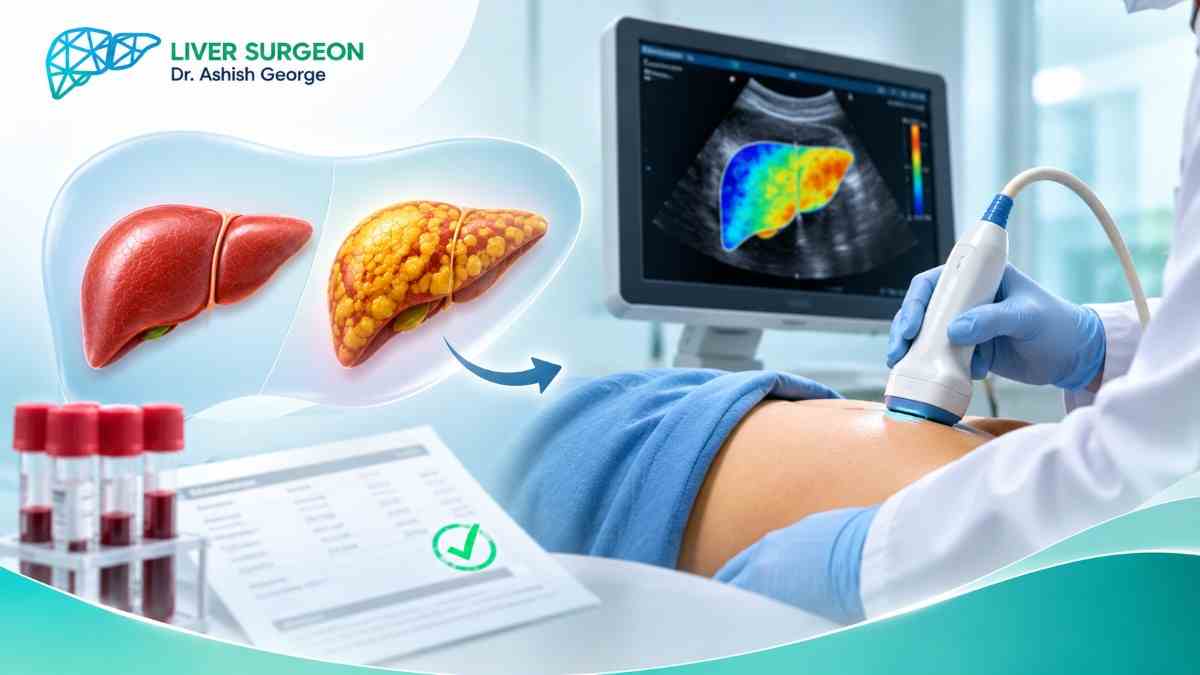
A common source of confusion is an ultrasound report showing fatty liver while blood tests are labelled “normal.” Many people assume that normal SGPT, SGOT or a normal liver function test means the liver is completely healthy.
That conclusion is not always correct.
Blood tests and imaging answer different questions. Liver enzymes may remain within the laboratory range even when fat is present, and some people with clinically important fibrosis do not have dramatically abnormal enzymes. A FibroScan or another fibrosis assessment may therefore be useful for selected patients, but it is not automatically necessary for everyone.
What Does an LFT Measure?
A typical liver panel may include:
- ALT, also called SGPT
- AST, also called SGOT
- Alkaline phosphatase
- GGT
- Bilirubin
- Albumin
- Sometimes total protein and related measurements
ALT and AST are mainly markers of cell injury. Albumin, bilirubin and clotting tests provide different information about how the liver is functioning.
The term “liver function test” can be misleading because normal enzyme levels do not prove that there is no fat, inflammation or scarring.
How Can Fatty Liver Exist With Normal ALT or SGPT?
Fatty liver often develops silently. Enzymes may fluctuate, and a single blood sample gives only a snapshot.
Possible reasons include:
- Early disease may not release enough enzymes to exceed the laboratory range
- Enzyme levels can change over time
- Laboratory reference ranges differ
- Age, sex, muscle mass and other health conditions affect interpretation
- Fibrosis can sometimes progress without persistently high enzymes
This is why clinicians consider the complete picture: metabolic risk, waist size, diabetes, blood pressure, cholesterol, imaging, alcohol exposure, medicines and family history.
What Does an Ultrasound Show?
Ultrasound can suggest the presence of liver fat and identify structural problems such as gallstones, masses, bile-duct dilation or signs of advanced cirrhosis.
However, ultrasound has limitations. It does not reliably measure the exact amount of inflammation, and it may not accurately stage fibrosis. A report saying “grade 1 fatty liver” describes the imaging appearance; it does not by itself establish whether scarring is absent.
What Is a FibroScan?
FibroScan is a brand name commonly used for vibration-controlled transient elastography. It is a quick, non-invasive test that measures liver stiffness. Greater stiffness can be associated with fibrosis, although inflammation, congestion, recent food intake and technical factors can influence the result.
Some devices also estimate liver fat using a measurement called the controlled attenuation parameter.
The test usually does not require an injection or incision. Results should still be interpreted by a clinician alongside blood tests and clinical history.
Who May Benefit From Fibrosis Assessment?
A clinician may consider FIB-4, FibroScan or another non-invasive test when fatty liver is accompanied by one or more risk factors:
- Type 2 diabetes or prediabetes
- Obesity or increased waist circumference
- High blood pressure
- High triglycerides or abnormal cholesterol
- Persistently abnormal liver enzymes
- Older age
- Significant alcohol consumption
- A family history of cirrhosis or liver cancer
- Imaging or examination findings that suggest fibrosis
- More than one metabolic risk factor
People with diabetes deserve particular attention because metabolic liver disease and fibrosis may progress without obvious symptoms.
What Is FIB-4?
FIB-4 is a calculation based on age, AST, ALT and platelet count. It is commonly used as an initial risk-assessment tool for advanced fibrosis.
A low score may help identify people with a lower likelihood of advanced scarring, while an indeterminate or high score can lead to secondary assessment such as FibroScan or another elastography test.
FIB-4 has limitations. It can be less reliable at younger ages, can be influenced by age in older adults and should not be interpreted during some acute illnesses. Do not use an online calculator as a substitute for medical advice.
Does Everyone With Grade 1 Fatty Liver Need FibroScan?
Not necessarily.
A younger person with mild steatosis, no diabetes, normal platelets and few metabolic risks may be managed initially through risk assessment, lifestyle changes and follow-up. Another person with the same ultrasound description but with diabetes, abdominal obesity and hypertension may have a stronger reason for fibrosis testing.
The decision should be based on overall risk rather than the ultrasound grade alone.
How Should a FibroScan Result Be Interpreted?
The report may show liver stiffness in kilopascals and a fat-related measurement. There is no single number that means the same thing in every condition.
Interpretation depends on the suspected disease, test quality, recent meals, inflammation and other clinical details. Borderline or unexpectedly high measurements may need repeat testing or another method rather than an immediate conclusion that cirrhosis is present.
Can FibroScan Replace a Liver Biopsy?
FibroScan has reduced the need for biopsy in many situations, but it does not replace biopsy in every patient. A biopsy may still be considered when the diagnosis is uncertain, tests disagree or information about inflammation and disease type will change treatment.
Most people being assessed for uncomplicated fatty liver will not automatically require a biopsy.
What Can You Do If Your LFT Is Normal?
Normal results are reassuring, but they should be interpreted in context.
- Review the ultrasound and blood results with a clinician
- Check blood sugar, blood pressure and lipids
- Discuss alcohol honestly
- Provide a complete list of medicines and supplements
- Work toward sustainable weight and waist reduction when appropriate
- Exercise regularly
- Avoid unproven liver-detox products
- Follow the recommended interval for reassessment
Do not repeat tests every few weeks without a plan. Monitoring frequency depends on risk.
Warning Signs That Need Medical Attention
Fatty liver usually causes few symptoms. Seek assessment promptly for yellow eyes, abdominal swelling, vomiting blood, black stools, unexplained confusion, marked weight loss or persistent right-upper-abdominal pain. These symptoms should not be attributed to uncomplicated fatty liver without evaluation.
Frequently Asked Questions
Can I have liver fibrosis with a normal SGPT?
Yes. Normal enzymes reduce some concerns but do not completely exclude fibrosis, particularly in people with metabolic risk factors.
Is FibroScan painful?
It is generally non-invasive and quick. Patients may feel a light tapping sensation over the right upper abdomen.
Do I need FibroScan every year?
Not everyone does. The interval depends on baseline risk, previous results and changes in diabetes, weight or other health factors.
Which is better: ultrasound or FibroScan?
They provide different information. Ultrasound assesses anatomy and can suggest fat; FibroScan estimates stiffness and may estimate fat. One does not completely replace the other.
Can a normal FibroScan guarantee that my liver will stay healthy?
No. It reflects risk at the time of testing. Ongoing metabolic health and appropriate follow-up still matter.
Final Takeaway
A normal liver panel does not always rule out fatty liver or clinically important fibrosis. At the same time, every ultrasound finding does not require urgent advanced testing.
The best approach is risk-based: combine medical history, metabolic factors, platelets and liver enzymes with an appropriate non-invasive fibrosis assessment when indicated. This helps identify people who need closer follow-up while avoiding unnecessary worry and testing for those at low risk.
Normal LFT but Fatty Liver on Ultrasound?
Have an ultrasound showing fatty liver despite normal SGPT or LFT results? Request a risk-based review to determine whether FIB-4, FibroScan or routine monitoring is appropriate.
Related Liver Health Articles
- Liver Function Test: What High SGPT and SGOT Mean
- Liver Disease Screening: Which Tests Matter Most?
- Fatty Liver Disease in India
- How to Reverse Fatty Liver in Delhi
References for Medical Review
- AASLD: Non-invasive Assessment of Patients With MASLD: View Reference
- AASLD: MASLD Decision Tree: View Reference
- AASLD: Approach to Elevated Liver Enzymes: View Reference
Medical Disclaimer
This article is educational. Fibrosis scores, liver-stiffness measurements and follow-up intervals must be interpreted by a qualified clinician using the individual patient’s complete medical information.