Post Liver Transplant Monitoring: Tests & Follow-Up Schedule

Principal Consultant & Unit Head, Liver Transplant & HPB Surgery, Fortis Hospital, Shalimar Bagh, Delhi
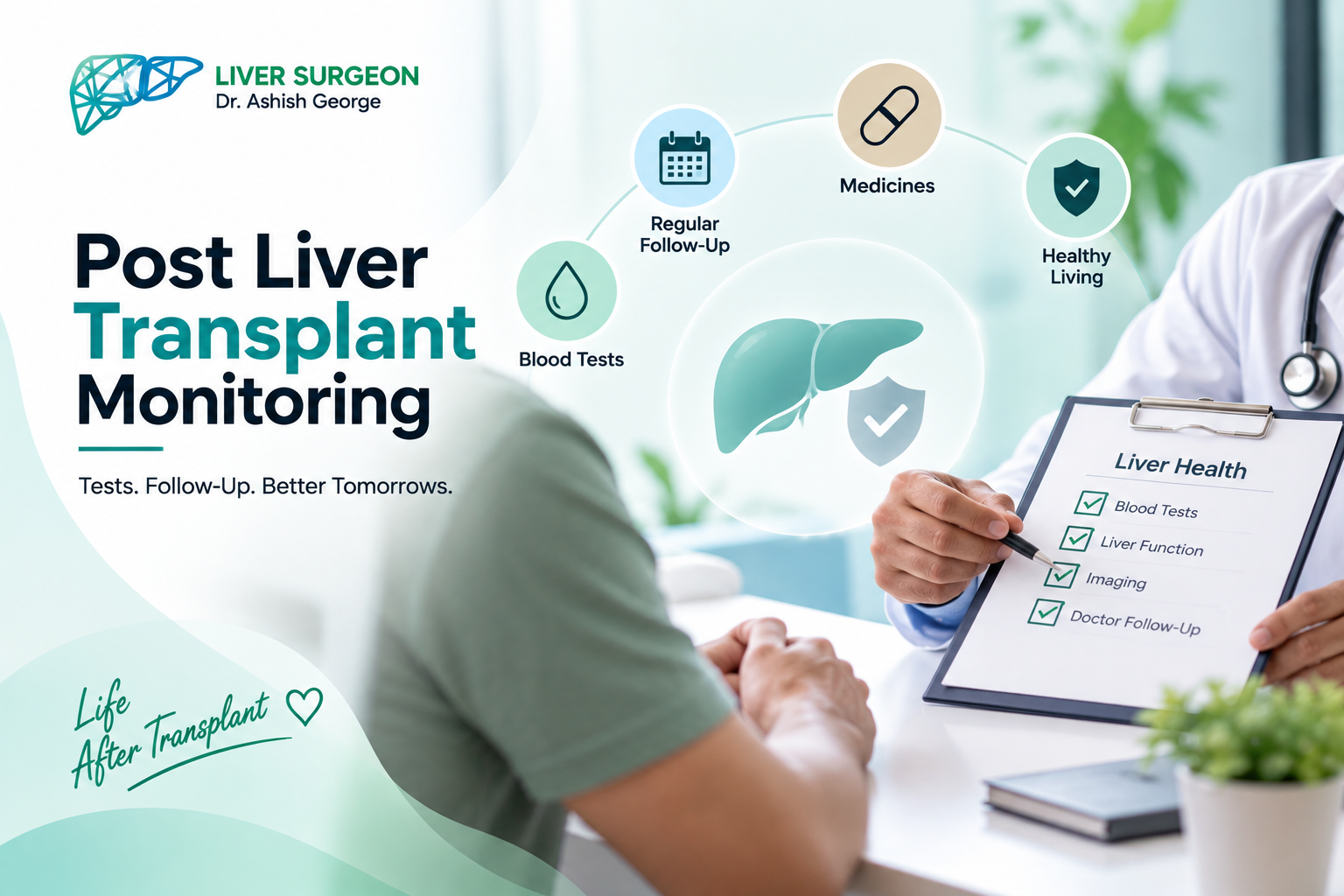
A liver transplant gives you a second chance at life, but the surgery is only the beginning. What protects your new liver for the long run is careful, regular monitoring.
Receiving a liver transplant is a major milestone, but the transplanted liver needs lifelong protection. The single biggest factor that decides how well and how long a new liver works is consistent post liver transplant monitoring. Regular blood tests and follow-up visits let your transplant team catch problems like rejection or infection early, often before you feel anything at all. This guide explains exactly what post op monitoring after a liver transplant involves, the follow-up schedule, the tests done at each stage, and what your doctors are looking for.
Why Is Monitoring So Important After a Liver Transplant?
In the first weeks and months after surgery, your body is adjusting to a new organ and to the immunosuppressant medicines that stop your immune system from attacking it. This is a delicate balance. Too little immunosuppression and the body can reject the liver; too much and you become vulnerable to infection and other side effects.
The only way to keep that balance right is through structured liver transplant post operative care. Most early rejection and most dangerous infections are picked up by routine blood tests before the patient notices any symptoms. By the time you feel unwell, a problem may already be advanced. This is why monitoring, not just medication, is the real key to a long-lasting transplant.
What Is Post Liver Transplant Monitoring?
Post liver transplant monitoring is the planned schedule of blood tests, scans, and clinic visits that continues for the rest of your life after surgery. It has three main jobs:
- Detect rejection early, while it is still easy to treat with a medication adjustment.
- Catch infection before it becomes serious, since immunosuppression raises infection risk.
- Keep medication levels and organ function in the safe range, protecting the new liver and also the kidneys, blood sugar and heart.
Monitoring is most intensive in the first three months and then gradually spaces out as the liver settles and medication doses stabilise.
The Liver Transplant Follow-Up Schedule
Every patient is different, but the general post transplant follow-up schedule at a specialist centre looks like this:
| Time After Transplant | How Often | What Happens |
|---|---|---|
| First 2 to 4 weeks | Twice a week | Frequent blood tests, wound check and medication fine-tuning, often while still near the hospital. |
| 1 to 3 months | Weekly to fortnightly | Blood tests and clinic reviews; immunosuppressant doses are adjusted as levels stabilise. |
| 3 to 6 months | Every 2 to 4 weeks | Less frequent tests as the liver settles; screening for CMV and other infections. |
| 6 to 12 months | Every 1 to 2 months | Routine blood work; monitoring kidney function, blood sugar and blood pressure. |
| After 1 year | Every 3 to 6 months | Lifelong follow-up with periodic blood tests, scans and specialist review. |
This schedule is a guide. If a blood test shows a change, or if you are unwell, your transplant team will bring your next review forward.
What Blood Tests Are Done After Liver Transplant?
Blood tests are the backbone of post op monitoring. A single sample usually covers several of the checks below.
Liver Function Tests (LFTs)
LFTs measure enzymes and bilirubin that show how well the liver is working. A rise can be the first sign of rejection, a bile duct problem, or infection, often before any symptoms appear. These are the most important routine tests after transplant.
Immunosuppressant (Tacrolimus) Levels
The level of tacrolimus or other anti-rejection medicine in your blood must stay within a narrow range. Too low risks rejection; too high risks kidney damage and infection. See our detailed guide on tacrolimus levels after liver transplant .
Kidney Function and Electrolytes
Immunosuppressant medicines can strain the kidneys, so creatinine and electrolytes such as sodium, potassium and magnesium are checked regularly to catch any early kidney stress.
Complete Blood Count (CBC)
A CBC checks for anaemia, low platelets, and white cell changes that can signal infection or a medication side effect.
Blood Sugar and Cholesterol
Steroids and other transplant medicines can raise blood sugar and cholesterol, so these are monitored to protect against diabetes and heart disease over the long term.
Infection and Virus Screening
Because immunosuppression lowers your defences, tests for infections such as CMV (cytomegalovirus) and reactivation of hepatitis B or C are done, especially in the first six months.
What Scans and Other Tests Are Used?
- Ultrasound and Doppler: Checks blood flow in the liver vessels and looks for bile duct or fluid problems, especially in the early period.
- FibroScan or elastography: Used later to check the liver for stiffness or scarring over time.
- Liver biopsy: Done only when blood tests or scans suggest rejection or another problem that needs confirmation.
- CT or MRI: Used in specific situations to look at the liver, bile ducts or blood vessels in detail.
What Are Doctors Actually Looking For?
Each test is aimed at catching a specific problem early. The table below shows what your team is watching for and the signs that prompt action.
| What They Check For | How It Shows Up | Why Early Detection Matters |
|---|---|---|
| Rejection | Rising LFTs, sometimes low tacrolimus level | Usually reversible with a quick medication change if caught early. |
| Infection | Fever, abnormal CBC, positive virus screen | Immunosuppression makes infections spread faster, so speed matters. |
| Bile duct problems | Rising bilirubin, abnormal ultrasound | Can often be fixed with a stent if treated promptly. |
| Kidney stress | Rising creatinine | Medication can be adjusted to protect the kidneys. |
| Diabetes and heart risk | High blood sugar or cholesterol | Managed early to protect long-term health and survival. |
Warning Signs to Report Between Appointments
Monitoring is not only about scheduled visits. Contact your transplant team straight away, without waiting for your next appointment, if you notice:
- Fever, chills, or feeling generally unwell.
- Yellowing of the eyes or skin, known as jaundice, or dark urine.
- Pain or swelling over the liver area, or a swollen abdomen.
- Persistent vomiting or diarrhoea, which can affect medication levels.
- Unusual tiredness, bruising, or any sudden change in how you feel.
When in doubt, it is always safer to call. Your transplant team in Delhi would far rather hear from you early.
Why You Should Never Skip Post-Transplant Monitoring
It is natural to feel well months after a transplant and wonder if all the tests are still necessary. They are. Most episodes of rejection and most serious infections happen in patients who feel completely fine. Skipping blood tests or follow-up visits is one of the most common reasons a transplant runs into avoidable trouble.
Staying with a structured monitoring programme, under a team that knows your history, is the surest way to protect the investment of your transplant and enjoy a long, healthy life with your new liver. This continuity of care is exactly what a dedicated transplant centre provides and a general clinic cannot.
Post Liver Transplant Monitoring in Delhi
At Liver Surgeons, Dr. Ashish George and the team at Fortis Hospital, Shalimar Bagh, Delhi, run a structured, lifelong post-transplant monitoring programme.
Patients receive a clear schedule of blood tests and reviews, rapid interpretation of results by a specialist transplant team, and quick action the moment anything changes. For out-of-city and international patients, follow-up blood reports can be reviewed remotely so your monitoring continues wherever you are.
Whether your transplant was done with us or elsewhere, our team can take over your post transplant liver follow-up and give your new liver the long-term protection it deserves. This page sits alongside our life after liver transplant recovery guide and our liver transplant complications guide .
Frequently Asked Questions
How often do I need blood tests after a liver transplant?
Very frequently at first, often twice a week in the first month, then gradually less often as the liver settles. After the first year, most patients have blood tests every 3 to 6 months, continuing for life.
How long does monitoring after a liver transplant continue?
For life. The intensity reduces a lot after the first year, but lifelong periodic blood tests and reviews are essential because rejection and medication side effects can occur even years later.
What is the most important test after a liver transplant?
Liver function tests (LFTs) and tacrolimus immunosuppressant levels are the two most important routine tests. Together they show how the liver is working and whether your anti-rejection medicine is in the safe range.
Can post-transplant monitoring be done in my home city?
Local blood tests can often be done near home, with the reports reviewed by your transplant team. Key reviews and any scans or biopsies are usually done at the transplant centre. Many centres, including ours in Delhi, review out-of-city reports remotely.
What happens if my blood test is abnormal?
An abnormal result does not always mean something is wrong, but it prompts a closer look. Your team may repeat the test, adjust medication, arrange a scan, or occasionally a biopsy. Acting early is why monitoring works so well.
Is monitoring different after a living donor vs deceased donor transplant?
The principles are the same. Both need the same intensive early monitoring and lifelong follow-up. Your specific schedule depends on your recovery and medication levels, not only on the type of transplant.
Conclusion
A liver transplant can give you decades of healthy life, but only if the new liver is protected by consistent monitoring. Regular blood tests, a clear follow-up schedule, and a specialist team watching your results are what keep rejection and infection at bay, usually before you would ever feel them. Never treat follow-up as optional.
If you have had a liver transplant, or are caring for someone who has, book a consultation with Dr. Ashish George at Fortis Hospital, Shalimar Bagh, Delhi to set up or continue a structured monitoring plan.