Tacrolimus After Liver Transplant: Levels, Side Effects and What Patients Need to Know
.webp)
Principal Consultant & Unit Head, Liver Transplant & HPB Surgery, Fortis Hospital, Shalimar Bagh, Delhi
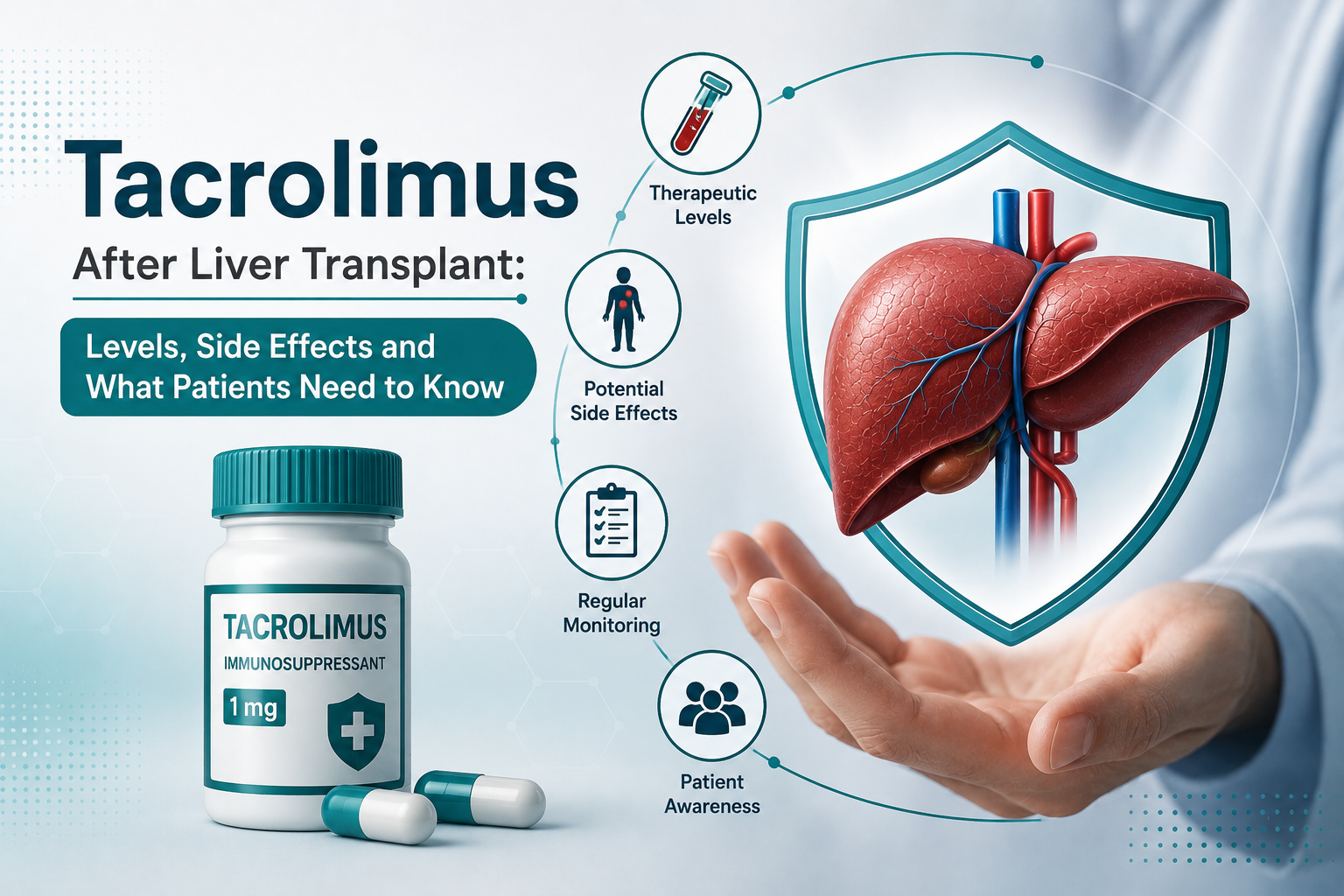
Tacrolimus is one of the most commonly used medicines after liver transplantation. It helps prevent the immune system from attacking the transplanted liver, but the dose needs careful individual adjustment. Too little immunosuppression can increase the risk of rejection, while excessive drug exposure can increase side effects and toxicity.
For this reason, patients taking tacrolimus need regular blood tests, kidney function monitoring and consistent communication with their transplant team. The exact dose and target blood concentration are not the same for every patient. They can change according to the time since transplant, kidney function, rejection risk, other medicines and the protocol used by the transplant centre.
If you are receiving immunosuppressive therapy after liver transplant in Delhi, understanding how tacrolimus monitoring works can make long term treatment safer and easier to manage.
What Is Tacrolimus?
Tacrolimus is an immunosuppressive medicine. It belongs to a group of medicines known as calcineurin inhibitors. These medicines reduce activation of immune cells that would otherwise recognise the transplanted liver as foreign and attack it.
Modern liver transplant programmes often use tacrolimus as a central part of maintenance immunosuppression. Depending on the patient, it may be used alone later in recovery or together with medicines such as mycophenolate, corticosteroids or another immunosuppressive agent.
The choice of medicines is personalised. Patients with kidney problems, autoimmune liver disease, a history of rejection, cancer related considerations or other clinical factors may need a different approach.
Why Is Tacrolimus Used After Liver Transplant?
After transplantation, the immune system can identify the new liver as foreign tissue. Tacrolimus reduces the immune response responsible for this process. The goal is not to switch off the immune system completely. The goal is to provide enough immunosuppression to protect the graft while limiting infection risk and medicine related toxicity.
Patients undergoing a liver transplant in Delhi should expect immunosuppressive medicines to remain a major part of care after discharge.
Why Are Tacrolimus Blood Levels Checked?
Tacrolimus has a relatively narrow therapeutic range. This means the difference between inadequate exposure and excessive exposure can be clinically important. The same oral dose can also produce different blood concentrations in different people.
Regular monitoring helps the transplant team answer several questions:
- ●Is the patient receiving enough tacrolimus to help prevent rejection?
- ●Is the level higher than intended and increasing the risk of toxicity?
- ●Does the dose need adjustment because kidney function has changed?
- ●Has another medicine altered tacrolimus exposure?
- ●Has diarrhoea, vomiting or another illness affected absorption?
- ●Does the target need to change because the patient is further along in recovery?
This monitoring forms part of structured post transplant monitoring in Delhi, where liver function, kidney function and immunosuppressant levels are reviewed together rather than in isolation.
What Is a Tacrolimus Trough Level?
A trough level is a blood concentration measured at a specific point in the dosing cycle, usually close to the time before the next scheduled dose. It gives the transplant team a standardised way to assess exposure and decide whether the current dose remains appropriate.
Patients should follow their own centre instructions about when to take tacrolimus on a blood test day. Taking a dose at the wrong time in relation to the blood sample can make the result difficult to interpret.
What Should Tacrolimus Levels Be After Liver Transplant?
There is no single tacrolimus level that is correct for every liver transplant recipient. Current liver transplant guidance emphasises that targets vary by transplant centre and by time since transplantation.
Early after surgery, the transplant team may aim for a different degree of immunosuppression than months or years later. A patient with previous rejection may also need a different strategy from a stable patient with kidney impairment.
For patients, the practical message is simple: do not compare your tacrolimus result with another transplant recipient and do not change your dose based on an internet range. Your transplant team should interpret the result in the context of your individual case.
Why Does the Tacrolimus Dose Change Over Time?
Tacrolimus requirements often change during recovery. Immediately after transplantation, immune suppression is generally more intensive. As the patient stabilises, doses may be adjusted to reduce long term toxicity while maintaining graft protection.
Dose changes may also be required because of kidney function, infections, rejection episodes, weight changes, interactions with other medicines or changes in how the body processes tacrolimus.
The liver transplant recovery timeline explains how monitoring and medication management remain important through the first year and beyond.
What Happens If Tacrolimus Levels Are Too Low?
If tacrolimus exposure is lower than intended, the immune system may have less protection against rejection. Low levels do not automatically mean that rejection is occurring, but they can increase concern when combined with abnormal liver tests, missed doses or other clinical findings.
The transplant team may review medication timing, adherence, new medicines, herbal products, gastrointestinal illness and laboratory results before making an adjustment.
Never take extra tacrolimus simply because you believe your level may be low. Dose changes should be made by the transplant team.
What Happens If Tacrolimus Levels Are Too High?
Excessive tacrolimus exposure can increase the likelihood of adverse effects. High levels may occur because the prescribed dose is too high for the patient, kidney function has changed, another medicine has altered tacrolimus metabolism or a food or supplement interaction has occurred.
High levels require clinical interpretation rather than self treatment. Depending on the situation, the transplant team may repeat blood testing, assess kidney function, review interacting medicines and adjust the dose.
Common Tacrolimus Side Effects After Liver Transplant
Not every patient develops side effects, and symptoms vary considerably. Common or clinically important issues associated with tacrolimus include the following.
Kidney Function Changes
Tacrolimus can impair kidney function, particularly when exposure is high or when other kidney stressors are present. This is why creatinine, estimated kidney function and tacrolimus blood levels may be reviewed together.
Tremor and Other Neurological Symptoms
Some patients notice hand tremor, headaches or other neurological symptoms. Severe neurological toxicity is uncommon but requires urgent medical assessment. New confusion, seizures, major visual changes or marked neurological symptoms should not be ignored.
High Blood Sugar and Diabetes Risk
Tacrolimus can contribute to raised blood glucose. Some patients who already have diabetes need closer glucose management after transplant, while others may develop new glucose problems after transplantation.
Blood Pressure and Electrolyte Changes
Blood pressure and electrolytes may also need monitoring. Your transplant team will decide which blood tests are required and how frequently they should be repeated.
Infection Risk
Tacrolimus lowers immune activity, which is the reason it helps prevent rejection. The same effect can make infections easier to acquire or more difficult to control. Infection prevention and early reporting of fever or illness are therefore important parts of post transplant care.
Tacrolimus and Kidney Risk: What Patients Should Know
Kidney protection is one of the main reasons transplant teams carefully minimise unnecessary tacrolimus exposure over time. Current guidance recognises that calcineurin inhibitors can contribute to kidney dysfunction. In selected patients, the team may use combination therapy so that a lower tacrolimus exposure can still provide adequate rejection protection.
This does not mean that tacrolimus should be stopped when creatinine rises. Kidney dysfunction after liver transplantation has many possible causes, including dehydration, infection, other medicines and pre existing kidney disease. The cause needs proper assessment.
Can Other Medicines Change Tacrolimus Levels?
Yes. Tacrolimus is affected by important medicine interactions. Some antibiotics, antifungal medicines, heart medicines, seizure medicines, herbal products and other treatments can increase or decrease tacrolimus exposure.
Always tell your transplant team before starting, stopping or changing a prescription medicine, an over the counter medicine, a vitamin, a herbal product or a supplement.
St John’s Wort can lower tacrolimus exposure and may increase rejection risk. Grapefruit and grapefruit juice can increase tacrolimus exposure and are generally avoided during treatment. Follow the food and medicine instructions provided by your own transplant centre.
What If You Miss a Tacrolimus Dose?
Do not create your own replacement schedule and do not automatically double the next dose. Different tacrolimus formulations and transplant programmes may use different missed dose instructions.
If you miss a dose, follow the written instructions given by your transplant centre. If you are uncertain, contact the transplant team and tell them which medicine was missed, the scheduled time, when you noticed the missed dose and when the next dose is due.
The post transplant instructions page also explains why immunosuppressive medicines should never be skipped or altered without advice.
What If You Vomit After Taking Tacrolimus?
Vomiting can make it difficult to know how much medicine has been absorbed. Do not automatically repeat the dose. Contact your transplant team for specific advice, especially if vomiting continues or you are unable to keep transplant medicines down.
Can Diarrhoea Affect Tacrolimus?
Yes. Gastrointestinal illness can change tacrolimus exposure and can also cause dehydration or kidney stress. Persistent or severe diarrhoea after liver transplantation should be discussed with the transplant team.
Can You Stop Tacrolimus If You Feel Well?
No. Feeling well does not mean the immune system has permanently accepted the transplanted liver. Most adult liver transplant recipients require long term immunosuppression, and stopping tacrolimus or another anti rejection medicine without specialist supervision can increase the risk of graft injury.
Some patients may eventually use a lower dose or a different medicine, but these changes are based on clinical monitoring and individual risk.
How to Take Tacrolimus More Safely
- ●Take tacrolimus exactly as prescribed.
- ●Keep the timing consistent according to your transplant centre instructions.
- ●Attend every scheduled blood test.
- ●Tell the team about all new medicines and supplements.
- ●Avoid grapefruit and grapefruit juice unless your transplant team specifically tells you otherwise.
- ●Do not change brands or formulations without checking with the transplant team or pharmacist.
- ●Report persistent vomiting or diarrhoea.
- ●Report fever, jaundice or a major change in health promptly.
- ●Do not stop tacrolimus because of a side effect without medical advice.
When Should You Contact Your Transplant Team?
Contact the team if you have missed doses, cannot keep medicines down, develop persistent diarrhoea, start a new interacting medicine, have concerning side effects or receive an unexpected tacrolimus result.
Seek prompt medical advice for fever, jaundice, severe abdominal symptoms, breathing difficulty, marked weakness, reduced urine output, confusion or another major change in your condition.
Tacrolimus Monitoring in Delhi
Tacrolimus management works best when drug levels are interpreted together with liver function, kidney function, symptoms and the patient’s rejection risk.
At Liver Surgeons, patients requiring long term follow up can access post transplant monitoring in Delhi and individualised immunosuppressive therapy after liver transplant.
Patients who need transplant evaluation or ongoing care can also consult Dr Ashish George, Principal Consultant and Unit Head, Liver Transplant and HPB Surgery at Fortis Hospital, Shalimar Bagh, Delhi.
Frequently Asked Questions
What is tacrolimus used for after liver transplant?
Tacrolimus suppresses immune activity that could attack the transplanted liver. It is commonly used as part of maintenance immunosuppression after liver transplantation.
What is a normal tacrolimus level after liver transplant?
There is no single level that is correct for everyone. Targets vary according to the transplant centre, time since transplantation, kidney function and individual rejection risk.
Why are tacrolimus levels checked before a dose?
A standardised trough sample helps the transplant team interpret drug exposure. Follow your centre instructions about the timing of the blood test and medicine dose.
Can tacrolimus damage the kidneys?
Tacrolimus can contribute to kidney dysfunction, especially when drug exposure is high. Kidney function and tacrolimus levels are therefore monitored regularly.
Can tacrolimus cause diabetes?
Tacrolimus can raise blood glucose and may contribute to new or worsening diabetes after transplantation. Your team may monitor glucose and adjust treatment where necessary.
Can I drink grapefruit juice while taking tacrolimus?
Grapefruit can increase tacrolimus exposure and is generally avoided. Follow the dietary instructions provided by your transplant team.
Should I stop tacrolimus if I have tremors?
No. Tremor can occur with tacrolimus, but stopping the medicine without advice can increase rejection risk. Tell the transplant team so they can assess the symptom and your drug level.
Do I need tacrolimus for life?
Many liver transplant recipients require long term tacrolimus or another immunosuppressive medicine. The exact regimen can change over time and should only be adjusted by the transplant team.
Conclusion
Tacrolimus is a highly effective anti rejection medicine, but successful treatment depends on careful monitoring rather than a fixed dose for every patient. Blood levels, kidney function, liver tests, side effects and medicine interactions all influence how the drug is managed.
Take tacrolimus exactly as prescribed and do not change the dose because of an internet blood level range or because another transplant patient takes a different amount. If you have side effects, miss doses or are starting a new medicine, contact your transplant team.
For a broader overview of medicines, diet and recovery, read Life After Liver Transplant: Diet, Medication and Returning to Normalcy.
Medical Note
This article is for general patient education. Tacrolimus targets, formulations, dosing schedules and monitoring plans vary between transplant centres and individual patients. Always follow the instructions of your own liver transplant team.