Robotic Whipple Procedure: What It Is and Who Needs It

Principal Consultant & Unit Head, Liver Transplant & HPB Surgery, Fortis Hospital, Shalimar Bagh, Delhi
The Whipple is one of the most complex operations in surgery. Doing it robotically can mean less pain and faster recovery, but only in the right hands and the right patient.
The robotic Whipple procedure is a minimally invasive version of one of the most demanding operations in abdominal surgery. Instead of a large open cut, the surgeon performs the same removal and reconstruction through a few small incisions using a surgical robot. For suitable patients, this can mean less pain and a faster recovery. But a robotic Whipple is not for everyone, and it needs a surgeon with deep experience in both pancreatic surgery and robotics. This guide explains what the robotic Whipple is, how it differs from open surgery, who is a candidate, and why the choice of centre matters more than ever.
What Is the Robotic Whipple Procedure?
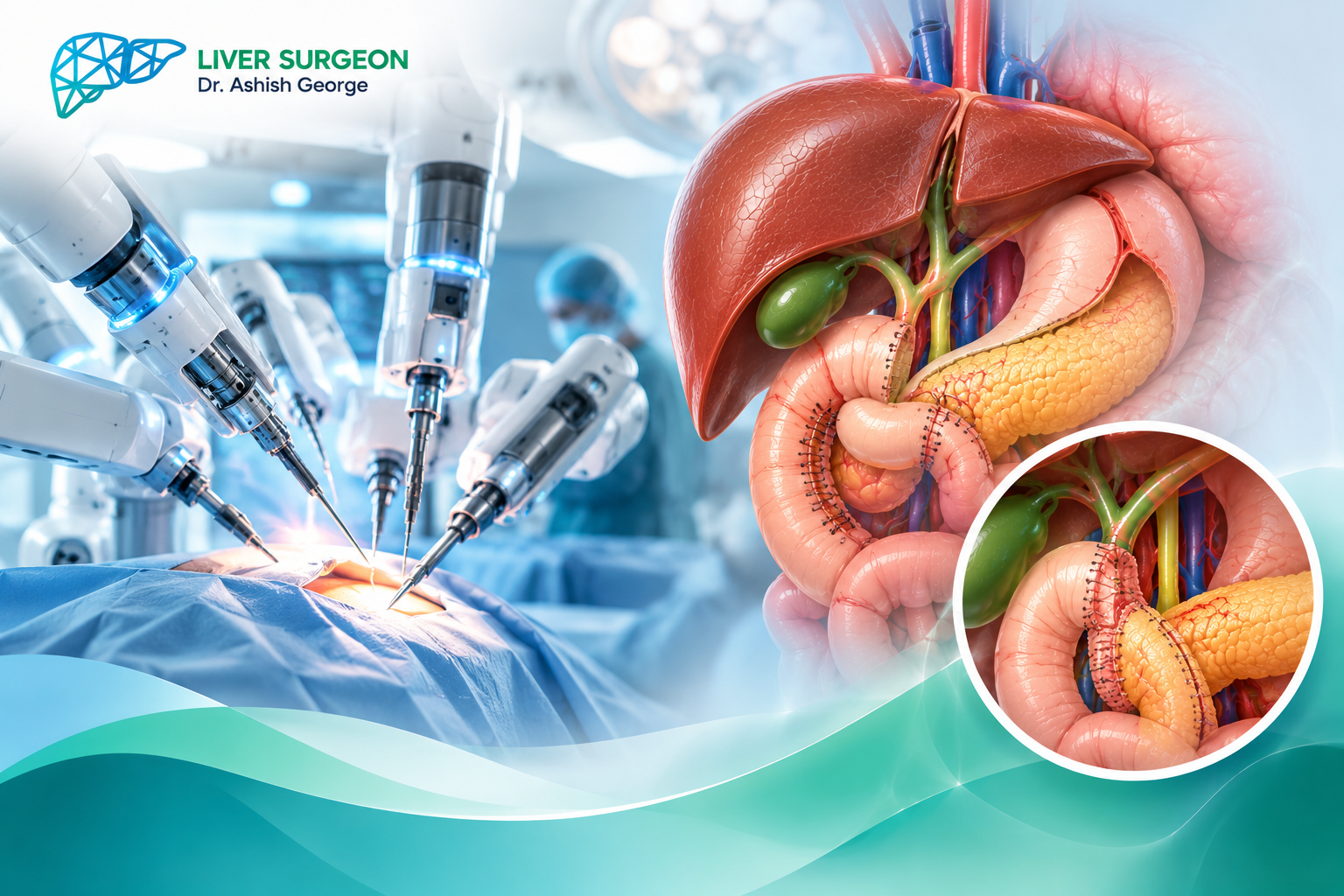
A robotic Whipple (robotic pancreaticoduodenectomy) removes the same structures as a standard Whipple, the head of the pancreas, the duodenum, the gallbladder and part of the bile duct, and then reconstructs the digestive tract, but it is done through small keyhole incisions using a robotic surgical system. The surgeon sits at a console and controls robotic arms that hold tiny instruments and a high-definition 3D camera inside the body. If you are new to the operation itself, start with our guide on what the Whipple procedure is and who needs it.
How Does a Robotic Whipple Differ from Open Surgery?
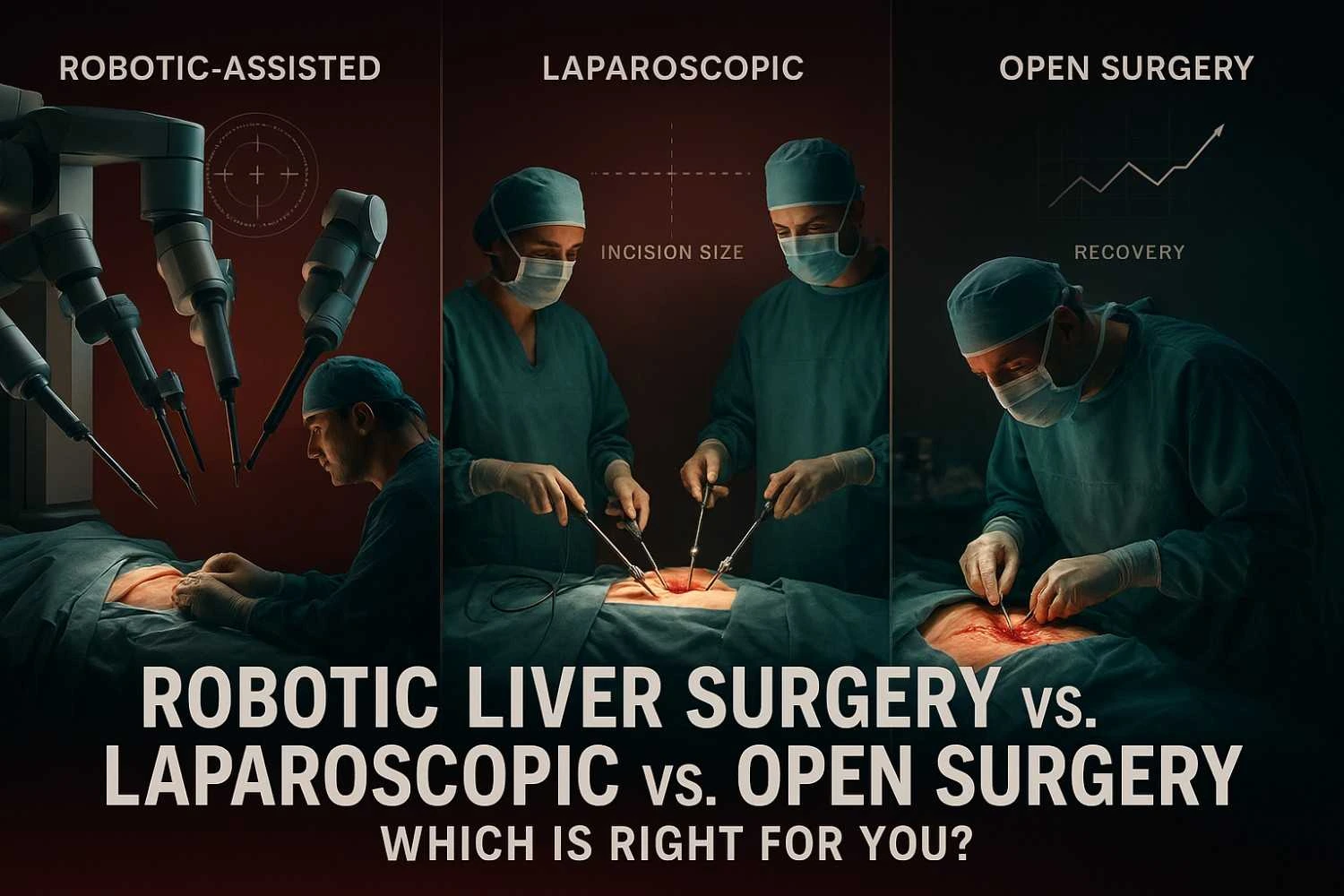
The operation removed and rebuilt is the same. What changes is how the surgeon reaches and performs it.
| Feature | Robotic Whipple | Open Whipple |
|---|---|---|
| Incision | A few small keyhole incisions | One large abdominal incision |
| Surgeon control | Console-controlled robotic arms with 3D magnified view | Direct hands-on surgery |
| Pain and scarring | Usually less pain, smaller scars | More post-operative pain, larger scar |
| Recovery | Often faster return to activity | Longer recovery period |
| Best suited to | Selected, carefully assessed tumours | Large or complex tumours, or where speed and access matter |
What Are the Benefits of a Robotic Whipple?
- Less pain and smaller scars, because the incisions are small
- Less blood loss in suitable cases, thanks to precise, magnified control
- Faster recovery and shorter hospital stay for many patients compared with open surgery
- Greater precision in a confined space, as the robotic wrists move more finely than the human hand in tight areas
Importantly, when done by an experienced team, a robotic Whipple aims to achieve the same cancer-clearing result as open surgery. The goal is a less invasive route to the same outcome, not a compromise on the cancer surgery itself.
Who Is a Candidate for a Robotic Whipple?
A robotic Whipple is suitable for selected patients, generally those with:
- A resectable tumour in the head of the pancreas, lower bile duct, or ampulla
- A tumour that does not widely involve major blood vessels
- Reasonable overall fitness for minimally invasive surgery
- Anatomy that the surgical team judges suitable on scans
Large or locally advanced tumours, or those involving major vessels, are often safer with open surgery or advanced resection techniques. The decision is made case by case, with your safety and a complete tumour removal as the priorities, not the technique for its own sake.
What a Robotic Whipple Cannot Do
Being honest about the limits matters. A robotic Whipple is not automatically better for every patient. For a very large tumour, one that involves major arteries, or an emergency, open surgery can be safer and faster. A good surgeon recommends the robotic approach only when it genuinely benefits you, and will switch to open surgery during the operation if that becomes the safer choice. The technique should fit the patient, never the other way around.
Recovery After a Robotic Whipple
Recovery is often quicker than after open surgery, but it is still major surgery:
- Hospital stay: frequently shorter than open Whipple, often around a week in suitable cases
- Return to activity: generally faster, with less wound pain
- Digestion and follow-up: some patients need pancreatic enzyme supplements, and for cancer, chemotherapy is often given afterwards
Why Experience Matters Even More with Robotic Surgery
The Whipple is already an operation where surgeon volume strongly affects safety. Adding robotics raises the bar further: it requires a surgeon skilled in both complex pancreatic surgery and robotic reconstruction, at a centre with the robotic platform and the team to support it. Few centres combine all of this. This is why, for a robotic Whipple, choosing an experienced high-volume HPB centre is not just advisable, it is central to a safe result.
Robotic Whipple Procedure in Delhi
At Liver Surgeons, Dr. Ashish George offers the Whipple procedure with open, laparoscopic and robotic options at Fortis Hospital, Shalimar Bagh, Delhi, as part of a high-volume HPB and cancer surgery programme. Each patient is assessed individually to choose the safest approach for their tumour. To understand the technology more broadly, see our post on robotic HPB surgery in Delhi, and our pancreatic cancer surgery page. For out-of-city and international patients, scans can be reviewed remotely before travel.
Frequently Asked Questions
Is a robotic Whipple better than an open Whipple?
For suitable patients, a robotic Whipple can mean less pain, smaller scars and faster recovery, while aiming for the same cancer-clearing result. But it is not better for everyone. Large or vessel-involving tumours are often safer with open surgery. The best approach depends on your specific tumour.
Is a robotic Whipple safe?
In experienced hands at a high-volume centre, yes. The robot is controlled entirely by the surgeon. Safety depends heavily on the surgeon's experience in both pancreatic and robotic surgery, which is why centre choice matters so much.
Who is a candidate for a robotic Whipple?
Patients with a resectable tumour of the pancreatic head, lower bile duct or ampulla that does not widely involve major blood vessels, and who are fit for minimally invasive surgery. Candidacy is confirmed with scans.
Does a robotic Whipple remove the cancer as completely as open surgery?
That is the goal. When performed by an experienced team in a suitable patient, a robotic Whipple aims for the same complete tumour removal as open surgery. If a complete removal needs open surgery, the team will choose that.
Is recovery faster after a robotic Whipple?
Often yes. Many patients have a shorter hospital stay and less wound pain than after open surgery, though it is still major surgery with a real recovery period.
Conclusion
The robotic Whipple procedure brings the benefits of minimally invasive surgery, less pain and faster recovery, to one of the most complex operations in medicine. But it is the right choice only for selected patients, and only in experienced hands. If a Whipple has been advised for you or a family member and you want to know whether the robotic approach is suitable, book a consultation with Dr. Ashish George at Fortis Hospital, Shalimar Bagh, Delhi.