Can Cholangiocarcinoma Be Operated? What Determines If Bile Duct Cancer Is Operable
.webp)
Principal Consultant & Unit Head, Liver Transplant & HPB Surgery, Fortis Hospital, Shalimar Bagh, Delhi
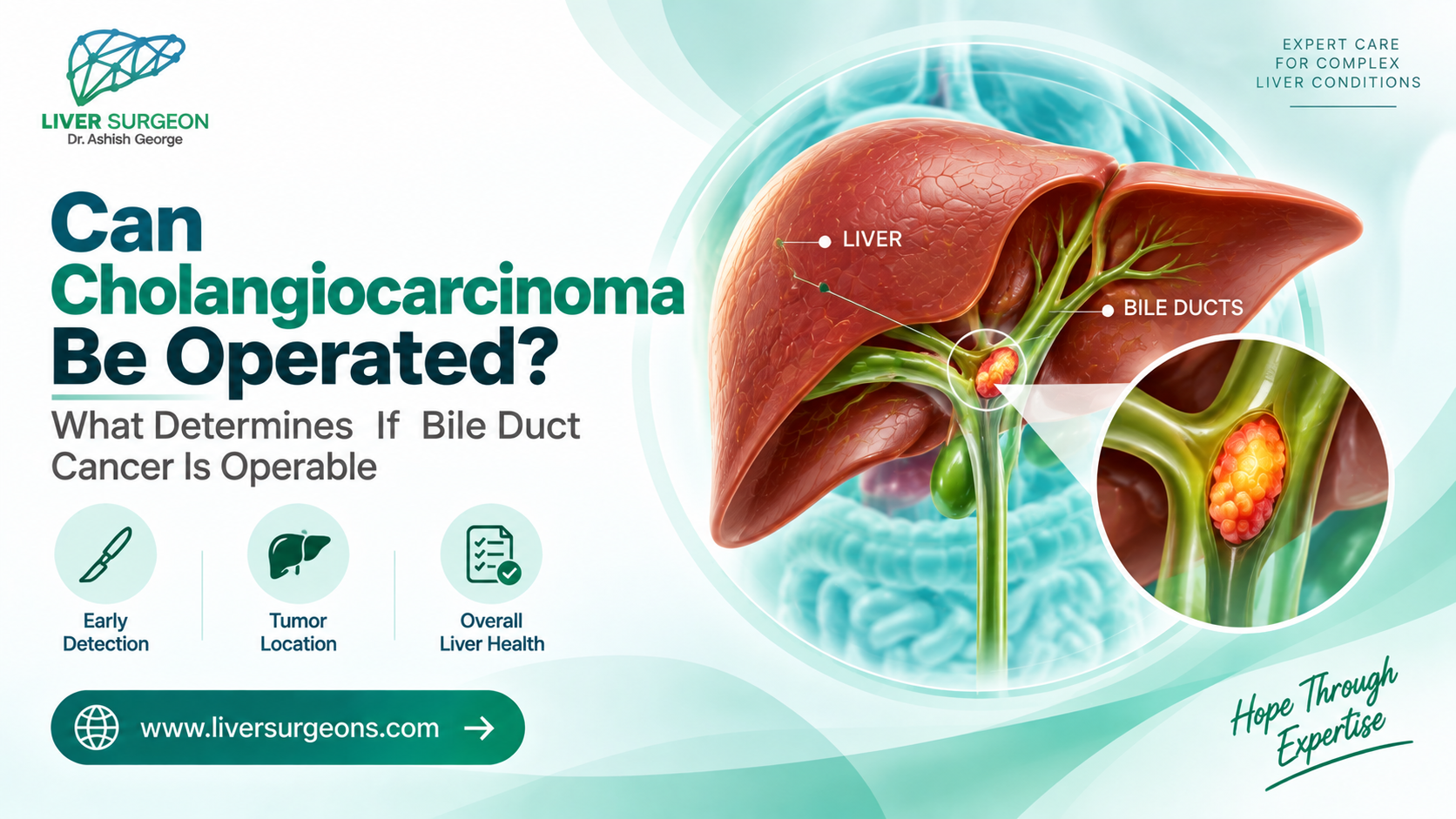
Being told a bile duct cancer may be inoperable is frightening. But operability depends on the type, the stage, and crucially, the experience of the surgeon assessing it.
If you or a family member has been diagnosed with cholangiocarcinoma, also known as bile duct cancer, the most urgent question is usually simple: can it be operated on? Surgery offers the only realistic chance of a cure, so the answer matters enormously.
The honest answer is that it depends on the type and stage of the tumour, and also on who is assessing it. A tumour called inoperable at a general hospital can sometimes be removed at a specialist HPB centre. This guide explains what makes bile duct cancer operable, what “inoperable” really means, and why a second opinion is worth seeking.
The Short Answer
Yes, cholangiocarcinoma can often be operated on, and surgery is the treatment that offers a chance of cure. However, not every tumour is operable.
Whether it can be removed depends on where the tumour is, how far it has spread, whether it involves major blood vessels, and how much healthy liver would remain. These factors are assessed with detailed scans and, importantly, by a surgeon experienced in complex bile duct surgery.
What Makes Cholangiocarcinoma Operable or Not?
A tumour is considered operable, or resectable, when the surgeon can remove all of it with a clear margin while leaving enough working liver behind. The main factors are:
| Factor | Usually Operable | May Be Harder or Not Operable |
|---|---|---|
| Spread | Confined to the bile duct and nearby area | Spread to distant organs, also called metastasis |
| Blood vessels | Vessels are clear or reconstructable | Major arteries are widely encased |
| Liver remnant | Enough healthy liver remains after surgery | Too little working liver would be left |
| Extent along ducts | Limited spread along the bile ducts | Extends far into both sides of the liver |
Operability Depends on the Type of Cholangiocarcinoma
Where the tumour sits changes the operation and its level of difficulty:
Perihilar Cholangiocarcinoma
Also called a Klatskin tumour, this cancer develops at the junction of the bile ducts. It is the most common and most complex type and often requires removal of part of the liver together with the affected bile ducts.
Distal Cholangiocarcinoma
This develops in the lower bile duct near the pancreas and is usually treated with a Whipple procedure .
Intrahepatic Cholangiocarcinoma
This type develops within the liver and is generally treated with liver resection when it is operable.
Full details about each type and its operation are available on our cholangiocarcinoma and bile duct cancer surgery page .
What Does “Inoperable” Really Mean?
This is the most important point. When a tumour is called “inoperable,” it often means it cannot be removed with the techniques available at that particular hospital, not that it can never be removed anywhere.
Complex bile duct cancer surgery requires skills that general surgical units may not have, including major liver resection, vascular reconstruction, and other advanced surgical techniques. A tumour that is beyond the capabilities of one centre may be within reach of a specialist HPB centre.
How an “Inoperable” Tumour Can Sometimes Become Operable
Several specialist strategies can bring a borderline or locally advanced tumour back into the operable range:
- Vascular reconstruction: Resecting and rebuilding an involved blood vessel so that the tumour can be removed.
- Growing the liver remnant: Portal vein embolisation helps the healthy part of the liver grow before surgery so that enough working liver remains afterwards.
- Advanced resection: Techniques such as ante-situm and ex-situ liver resection may be considered for tumours involving major veins.
- Downstaging: Chemotherapy may be used to shrink the tumour before reassessing whether surgery has become possible.
- Bile duct reconstruction: Rebuilding the biliary drainage system as part of the operation. Learn more on our bile duct reconstruction page .
Why a Second Opinion Is Worth Seeking
Because operability depends heavily on the surgeon's experience and the centre's capabilities, a second opinion is one of the most valuable steps you can take after a cholangiocarcinoma diagnosis, especially if you have been told surgery is not possible.
A specialist review of your scans and pathology can confirm whether the tumour is truly inoperable or whether one of the strategies above could offer a path to surgery and a chance of cure. Seeking a second opinion does not offend your current doctors. It is a normal and sensible part of cancer care.
If Surgery Is Not Possible
When a tumour genuinely cannot be removed, treatment focuses on controlling the disease and relieving symptoms. Treatment may include chemotherapy and procedures such as stenting to relieve jaundice.
These treatments can significantly improve comfort and quality of life. In some cases, chemotherapy may shrink a tumour enough for the specialist team to reconsider surgery later.
Cholangiocarcinoma Surgery and Second Opinions in Delhi
At Liver Surgeons, Dr. Ashish George performs complex bile duct cancer surgery at Fortis Hospital, Shalimar Bagh, Delhi, including perihilar or Klatskin tumour resection, Whipple surgery, vascular reconstruction, and advanced liver resection.
Patients who have been told elsewhere that their cholangiocarcinoma is inoperable are specifically welcome to seek a second opinion. Scans and reports can be reviewed remotely for out-of-city and international patients, so you can receive a clearer assessment before travelling.
Frequently Asked Questions
Can cholangiocarcinoma be cured with surgery?
Surgery offers the only realistic chance of a cure for bile duct cancer when the tumour can be completely removed with a clear margin. Outcomes depend on the type, stage, and whether a complete R0 removal is achieved.
What does it mean if my bile duct cancer is called inoperable?
It often means the tumour cannot be removed with the techniques available at that hospital, not that it can never be removed. A specialist HPB centre may be able to operate using advanced techniques, which is why a second opinion is valuable.
Can an inoperable tumour become operable?
Sometimes. Vascular reconstruction, portal vein embolisation, advanced resection, and downstaging chemotherapy can bring some borderline or locally advanced tumours back into the operable range.
Should I get a second opinion for cholangiocarcinoma?
Yes, especially if you have been told surgery is not possible. Because operability depends on the surgeon and centre, a specialist review of your scans can confirm the situation or identify a possible surgical option.
What happens if surgery really is not possible?
Treatment focuses on controlling the cancer and relieving symptoms with chemotherapy and procedures such as stenting for jaundice. In some cases, chemotherapy may shrink the tumour enough to reconsider surgery later.
Conclusion
So, can cholangiocarcinoma be operated on? Often yes, and surgery is the best chance of a cure, but it depends on the tumour and, critically, on the experience of the surgeon assessing it.
If you have been told your bile duct cancer is inoperable, do not take it as the final word before a specialist has reviewed your case. Book a second opinion with Dr. Ashish George at Fortis Hospital, Shalimar Bagh, Delhi to find out whether surgery may be possible for you.