Cost of Immunosuppressant Medicines After Liver Transplant in India: Monthly and Lifelong Breakdown
.webp)
Principal Consultant & Unit Head, Liver Transplant & HPB Surgery, Fortis Hospital, Shalimar Bagh, Delhi
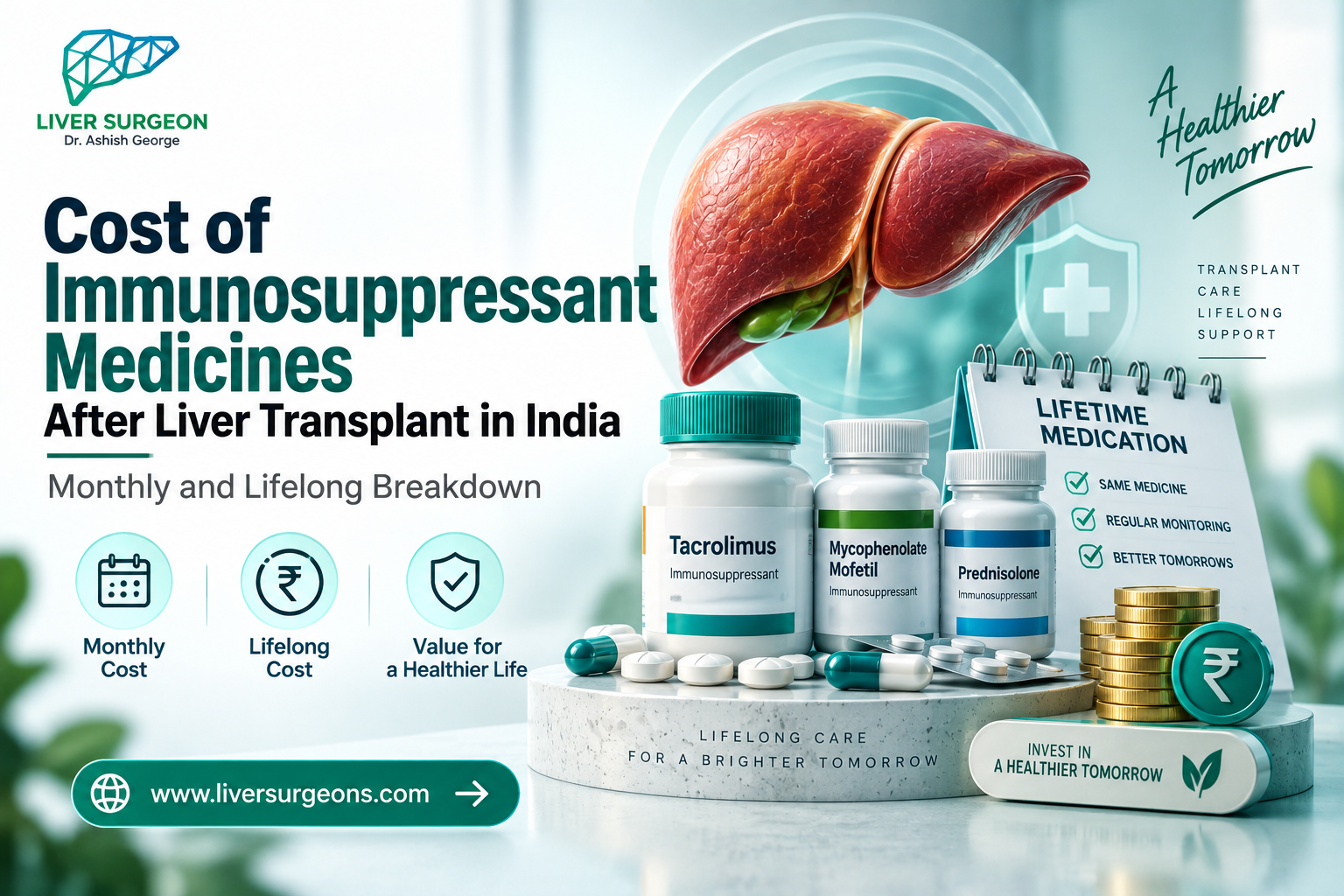
The transplant surgery is a one-time cost. The medicines that protect your new liver are a lifelong one. Here is what to expect, and how it reduces over time.
Most guides to liver transplant cost in Delhi focus on the surgery and hospital stay. But one of the most common questions families ask after the first year is different: how much do the immunosuppressant medicines cost every month, and for how long? These anti-rejection medicines are lifelong, so planning for them matters. This guide gives a clear, realistic breakdown of the cost of immunosuppressants after a liver transplant in India, how it changes over time, and how to keep it affordable without risking your liver.
Why Are Immunosuppressant Medicines a Lifelong Cost?
After a liver transplant, your immune system sees the new liver as foreign and tries to attack it. Immunosuppressant medicines (also called anti-rejection medicines) quieten the immune system so it accepts the liver. Because the risk of rejection never fully goes away, these medicines continue for life, though usually at much lower doses as time passes. This is why they become the main ongoing medical cost after the transplant. For how long and why, see our guide on anti-rejection medicines after liver transplant .
Which Medicines Make Up the Cost?
Most patients take a combination of two or three medicines, especially in the first year. The main cost drivers are:
- Tacrolimus: the main immunosuppressant and usually the biggest single medicine cost. Available as generic and branded versions.
- Mycophenolate (MMF): often used alongside tacrolimus in the first year.
- Steroids (prednisolone): low cost; often reduced and sometimes stopped after the early months.
- Other medicines: antacids, and in the early months preventive antibiotics and antivirals, which add to the first-year cost but are mostly temporary.
Monthly Cost Breakdown by Phase
The cost is highest in the first few months, when doses are high and several medicines are combined, and then reduces as the liver settles. The table below gives an indicative monthly range for the immunosuppressant medicines. Actual figures depend on your doses, whether generic or branded medicines are used, and your city.
| Phase | Approx. Monthly Range | Why It Changes |
|---|---|---|
| First 1 to 3 months | Higher range | High doses, multiple medicines, plus temporary preventive antibiotics and antivirals. |
| 3 to 12 months | Moderate range | Doses reduced, steroids often tapered, fewer temporary medicines. |
| After 1 year | Lower, stable range | Usually maintenance tacrolimus at a low dose, sometimes with one other medicine. |
As a rough planning guide, medicine costs are highest in the first quarter and then typically fall over the first year to a stable monthly maintenance cost that continues long term. Our team gives you exact figures for your specific prescription, and these reduce further as doses come down.
Generic vs Branded Tacrolimus: The Biggest Cost Lever
Tacrolimus is usually the largest single medicine cost, and it comes in both branded and generic (quality-approved) versions. The generic versions can be significantly cheaper and are widely used in India. This single choice is the biggest factor in your monthly cost.
However, this is a decision to make only with your transplant team, never on your own. Tacrolimus has a narrow safe range, so if a switch between brands or to a generic is made, your blood levels must be rechecked and the dose adjusted. Never change brand yourself, because an unmonitored switch can change your blood level and risk rejection. Ask your team which option they recommend for you and how to switch safely if cost is a concern.
How to Keep Medicine Costs Affordable Safely
- Ask about quality-approved generics: your team can tell you which generic tacrolimus is suitable and safe to use.
- Buy a full month at once: monthly purchase is usually cheaper than buying a few days at a time, and avoids running out.
- Never skip or stretch doses to save money: a missed dose risks rejection, and treating rejection costs far more than the medicine. See what happens if you miss a dose .
- Keep up with monitoring: correct dosing through regular blood tests avoids waste and prevents costly complications.
The Hidden Saving: Avoiding Complications
The cheapest medication plan is not the one with the lowest monthly bill. It is the one that keeps your liver healthy. A single episode of rejection or a serious infection, often caused by skipping or mismanaging medicines, can cost many times a year of medication and put the transplant at risk. Taking your medicines correctly and staying with a specialist monitoring programme is the real way to keep the lifelong cost down.
Immunosuppressant Cost and Care in Delhi
At Liver Surgeons, Dr. Ashish George and the team at Fortis Hospital, Shalimar Bagh, Delhi, help patients plan medication cost as part of long-term care. That includes advising on safe generic options where suitable, adjusting doses to the lowest effective level over time, and clear guidance so you never pay for avoidable complications. For out-of-city and international patients, prescriptions and dose changes can be managed remotely alongside local blood tests.
For the full picture of surgery and hospital costs, read our liver transplant cost in Delhi guide and our Delhi vs Mumbai cost comparison .
Frequently Asked Questions
How much do immunosuppressant medicines cost per month after a liver transplant?
The cost is highest in the first few months, when doses are high and several medicines are combined, and then reduces over the first year to a lower, stable monthly maintenance cost. The exact figure depends on your doses and on generic vs branded choice. Your transplant team gives you a precise estimate for your prescription.
Do I have to take these medicines for life?
Yes. Anti-rejection medicines continue for life because the risk of rejection never fully disappears, but the dose and therefore the cost usually reduce a lot after the first year.
Is generic tacrolimus safe?
Quality-approved generic tacrolimus is widely and safely used in India and can lower cost significantly. The important rule is never to switch brand or to a generic on your own. Any change must be made with your team so your blood level is rechecked and the dose adjusted.
Does the cost reduce over time?
Yes. As the liver settles, doses are lowered, steroids are often tapered, and temporary early medicines are stopped, so the monthly cost typically falls over the first year and then stays stable.
What happens if I stop the medicines to save money?
Stopping or skipping doses is very dangerous and can cause rejection, which can damage or destroy the transplanted liver. Treating rejection costs far more than the medicines. If cost is a worry, talk to your team about safe ways to reduce it rather than stopping.
Conclusion
Immunosuppressant medicines are the main lifelong cost after a liver transplant, but the good news is that the cost usually falls over the first year and can be managed safely with the right advice. The key is to never cut corners on your own: use safe generics where your team allows, stay on schedule, and keep up with monitoring. To plan your post-transplant medication and care, book a consultation with Dr. Ashish George at Fortis Hospital, Shalimar Bagh, Delhi .