Immunosuppressive Therapy After Liver Transplant: A Complete Guide

Principal Consultant & Unit Head, Liver Transplant & HPB Surgery, Fortis Hospital, Shalimar Bagh, Delhi
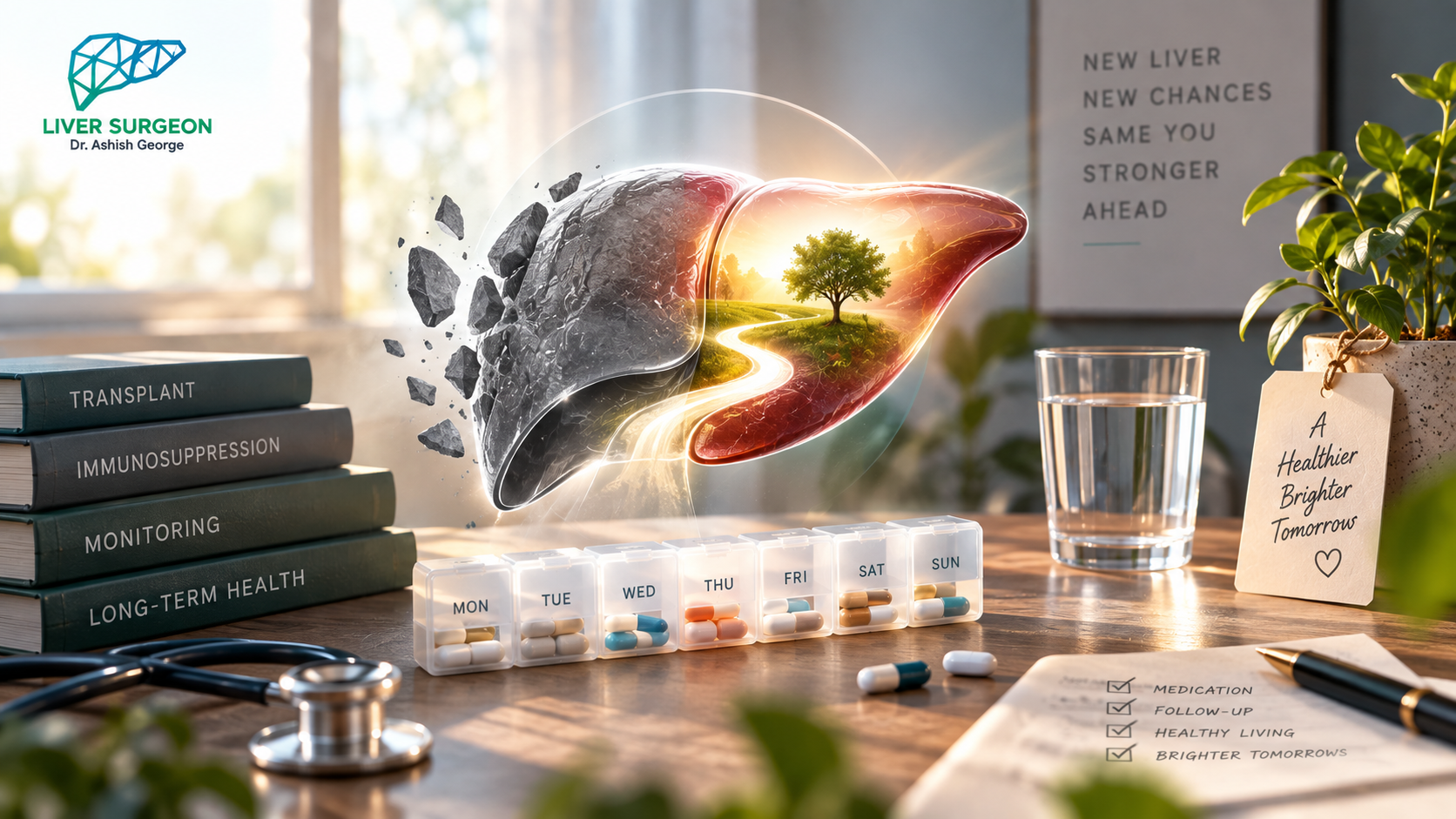
A new liver only lasts if the body accepts it. Immunosuppressive therapy is what makes that possible, and understanding it helps you protect your transplant for life.
A successful liver transplant depends on two things: a good operation and lifelong immunosuppressive therapy. These anti-rejection medicines stop your immune system from attacking the new liver. For most patients this is confusing at first: several medicines, changing doses, and regular tests. This guide explains liver transplant immunosuppression in plain language: the main medicines, how they work together, how the plan changes over time, and how to take them safely.
What Is Immunosuppressive Therapy?
Your immune system is built to attack anything it sees as foreign, including a transplanted liver. Immunosuppressive therapy is a carefully balanced combination of medicines that lowers this immune response just enough for the body to accept the liver, while still leaving enough defence against infection. Getting this balance right, and keeping it right for life, is the central job of post-transplant care.
Why Is Immunosuppression Needed for Life?
The risk of rejection is highest in the first few months but never fully disappears, so immunosuppressants for liver transplant continue for life. The good news is that the doses usually reduce significantly after the first year, as the body settles into accepting the liver. Stopping them, even years later, can trigger rejection.
The Main Immunosuppressant Medicines
Most patients take a combination, especially early on. The main classes are:
| Medicine | Role | Notes |
|---|---|---|
| Tacrolimus (calcineurin inhibitor) | The backbone of most regimens; prevents rejection | Needs regular blood level checks; dose adjusted to stay in a safe range |
| Mycophenolate (MMF) | Works alongside tacrolimus to strengthen protection | Often used in the first year, then sometimes reduced |
| Steroids (prednisolone) | Used early to prevent and treat rejection | Usually tapered down and often stopped after the early months |
| Others (e.g. everolimus, sirolimus) | Used in selected patients | Chosen for specific situations such as kidney protection or certain cancers |
For a detailed look at the main medicine, see our guide on tacrolimus after liver transplant .
How the Regimen Changes Over Time
Immunosuppressive therapy is not fixed. It starts strong and is gradually lightened:
- First few months: Higher doses and usually two or three medicines together, because rejection risk is highest
- First year: Steroids are tapered, doses are reduced as blood levels stabilise
- Long term: Most patients settle onto a low maintenance dose, often just tacrolimus, continued for life
Taking Immunosuppressants Safely
- Take them at the same times every day, as timing keeps blood levels steady
- Never skip, double, or stop a dose on your own. See what happens if you miss a dose
- Tell every doctor you are on immunosuppressants, as some common medicines and even some foods change their levels
- Keep up with blood tests, which are how the dose is kept correct. See our post-transplant monitoring guide
What About Side Effects?
Because these medicines lower the immune response, they carry side effects such as higher infection risk, kidney strain, raised blood sugar and blood pressure. Most are manageable and are watched for through routine monitoring. For a full guide, see our post on immunosuppressant side effects after liver transplant .
Immunosuppressive Therapy in Delhi
At Liver Surgeons, Dr. Ashish George and the team at Fortis Hospital, Shalimar Bagh, Delhi, manage immunosuppressive therapy for liver transplant patients as a lifelong partnership: the right combination for your situation, doses adjusted to the lowest safe level over time, and close monitoring to catch any problem early. Whether your transplant was done with us or elsewhere, our team can take over your immunosuppression and follow-up, including remote management of prescriptions and dose changes for out-of-city and international patients.
Frequently Asked Questions
What is immunosuppressive therapy after a liver transplant?
It is the combination of anti-rejection medicines that stops your immune system from attacking the new liver. It usually involves two or three medicines early on, reducing to a low maintenance dose for life.
What are the main immunosuppressant medicines?
Tacrolimus is the backbone for most patients, often combined with mycophenolate and, early on, steroids. Some patients use other agents like everolimus for specific reasons.
How long do I need immunosuppression?
For life, because rejection risk never fully disappears. The dose usually reduces a lot after the first year, but the medicines continue long term.
Can the doses be reduced?
Yes. Doses are gradually lowered as the body accepts the liver, steroids are often stopped, and most patients settle onto a low maintenance dose. This is done carefully with blood tests, never on your own.
Can I manage immunosuppression if I live outside Delhi?
Yes. Local blood tests can be done near home with reports reviewed by the transplant team, and prescriptions and dose changes managed remotely. Key reviews are done at the transplant centre.
Conclusion
Immunosuppressive therapy is the foundation of a lasting liver transplant. Understanding the medicines, taking them exactly as prescribed, and keeping up with monitoring is what keeps your new liver healthy for decades. If you need to start, review, or take over your immunosuppression after a liver transplant, book a consultation with Dr. Ashish George at Fortis Hospital, Shalimar Bagh, Delhi .