Indian Diet for Fatty Liver: Best Foods, Meal Plan & Daily Diet Chart
.webp)
Principal Consultant & Unit Head, Liver Transplant & HPB Surgery, Fortis Hospital, Shalimar Bagh, Delhi
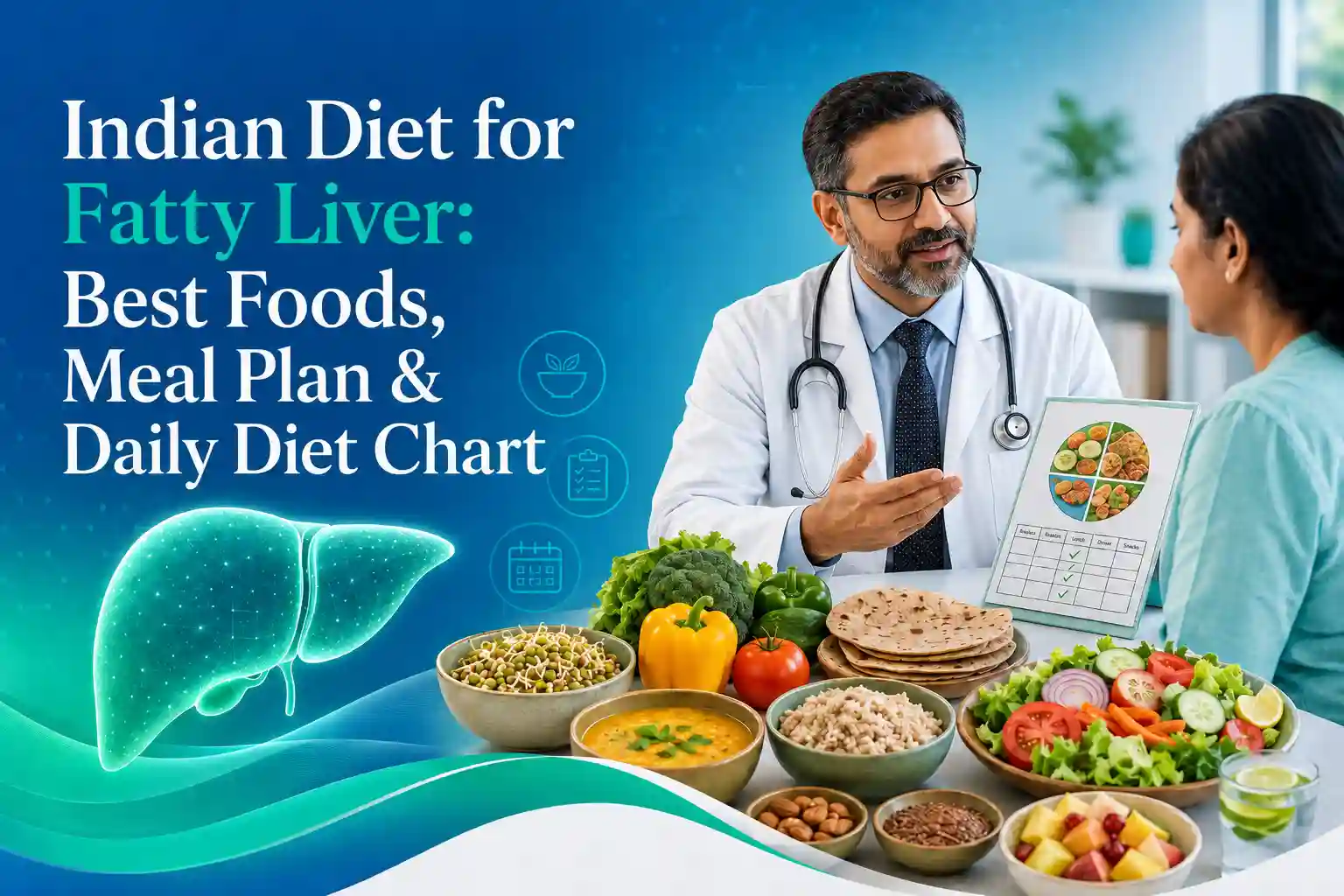
An Indian diet for fatty liver does not have to mean bland food, expensive ingredients or giving up rice and roti completely. The goal is to build balanced meals using familiar Indian foods while reducing added sugar, refined carbohydrates, excessive oil and highly processed snacks.
Fatty liver disease is now commonly called metabolic dysfunction-associated steatotic liver disease, or MASLD. It is frequently associated with excess abdominal weight, insulin resistance, type 2 diabetes, high cholesterol and limited physical activity. Healthy eating, portion control, physical activity and gradual weight loss can help reduce liver fat in people who are overweight.
Many people search online for an Indian diet plan for fatty liver PDF. However, a fixed downloadable chart cannot account for differences in body weight, diabetes, kidney health, food preferences, medicines or the stage of liver disease. The daily chart below should therefore be used as a practical starting point, not as an individual medical prescription.
How Can an Indian Diet for Fatty Liver Help?
Fat accumulates in the liver when the body stores more energy than it uses and when metabolic conditions affect the way fats and sugars are processed.
A structured eating pattern may help by:
- Reducing excess calorie intake
- Supporting gradual weight loss
- Improving blood sugar control
- Reducing frequent insulin spikes
- Lowering the intake of saturated and trans fats
- Increasing dietary fibre
- Supporting healthier cholesterol and triglyceride levels
- Making portion control easier
For people with overweight or obesity, losing approximately 3% to 5% of body weight may reduce liver fat. A larger reduction may be required to improve inflammation and fibrosis. Weight loss should be gradual because rapid weight loss and malnutrition can worsen liver disease.
People with a normal body weight can also develop fatty liver. They should focus on metabolic health, food quality, muscle-building activity and medical assessment rather than following an aggressive weight-loss diet.
Principles of a Healthy Liver Diet
A sustainable healthy liver diet should be built around minimally processed foods rather than detox drinks or restrictive cleanses.
The main principles are:
- Eat vegetables with lunch and dinner.
- Include protein in every main meal.
- Choose whole grains or millets in controlled portions.
- Prefer whole fruit instead of fruit juice.
- Reduce sugary drinks, mithai and bakery products.
- Limit deep-fried and packaged foods.
- Use oil, butter and ghee sparingly.
- Avoid or minimise alcohol as advised by your liver specialist.
- Maintain regular meal timings.
- Combine diet with consistent physical activity.
NIDDK recommends limiting portion sizes, choosing vegetables, fruits and whole grains, replacing saturated and trans fats with unsaturated fats, and reducing foods and drinks that contain large amounts of simple sugar.
Best Indian Foods for Fatty Liver
There is no single food that cleans the liver. Improvement comes from the overall eating pattern followed consistently.
1. Green and Non-Starchy Vegetables
Vegetables provide fibre, vitamins, minerals and relatively few calories.
Suitable Indian options include:
| Lauki | Tori | Tinda |
| Bhindi | Karela | Spinach |
| Methi | Bathua | Cabbage |
| Cauliflower | Beans | Capsicum |
| Tomato | Cucumber | Carrot |
| Pumpkin |
Aim to fill approximately half of your lunch and dinner plate with vegetables and salad. Steam, grill, roast or lightly sauté vegetables instead of deep-frying them.
Potatoes, sweet potatoes, peas and corn can still be eaten, but they contain more starch than most other vegetables. Consider them part of the carbohydrate portion of the meal.
2. Whole Grains and Millets
Rice and roti do not need to be completely removed from a diet for fatty liver in India. Portion size and grain quality matter more than following a zero-carbohydrate diet.
Better options include:
| Whole-wheat roti | Jowar roti | Bajra roti |
| Ragi roti or dosa | Oats | Daliya |
| Barley | Brown rice | Hand-pounded rice |
| Quinoa | Millet khichdi |
NIDDK recommends choosing more low-glycaemic foods, including vegetables, most fruits and whole grains, while limiting high-glycaemic options such as white bread and large portions of white rice.
White rice can still fit into a healthy meal when the portion is controlled and it is eaten with dal, vegetables, salad and a suitable protein source.
3. Pulses, Beans and Plant Proteins
Pulses and legumes provide fibre, plant protein and sustained fullness.
Good choices include:
| Moong dal | Masoor dal | Arhar dal |
| Chana dal | Rajma | Kala chana |
| Kabuli chana | Lobia | Soybeans |
| Tofu | Unsweetened sprouts |
People who experience gas or bloating can begin with smaller portions of well-cooked moong or masoor dal.
4. Eggs, Fish and Lean Chicken
Non-vegetarian protein choices may include:
| Boiled or poached eggs | Grilled fish | Baked fish |
| Skinless chicken | Lightly cooked chicken curry without cream | Lean meat in limited quantities |
Avoid deep-fried fish, fried chicken, processed meat and gravies prepared with large amounts of butter, cream or oil.
5. Whole Fruits
Whole fruit provides fibre and nutrients and can be included in controlled portions.
Suitable choices include:
| Apple | Guava | Papaya |
| Orange | Pear | Pomegranate |
| Berries | Kiwi | Watermelon |
| Small banana |
Choose one serving at a time. Fruit juice, even when freshly prepared, delivers sugar more quickly and contains less fibre than whole fruit. Sweetened beverages and juices should be restricted.
Patients with diabetes should discuss fruit quantities and timings with their doctor or dietitian.
6. Nuts, Seeds and Healthier Fats
Healthy options include:
| Almonds | Walnuts | Groundnuts |
| Flaxseeds | Chia seeds | Pumpkin seeds |
| Sunflower seeds | Mustard oil | Groundnut oil |
| Other vegetable oils in controlled quantities |
Nuts and seeds are nutritious but calorie-dense. A small portion is generally enough.
Ghee does not need to be treated as a medicine or completely banned. Use it sparingly because it is rich in saturated fat and calories.
7. Plain Dairy Products
Depending on individual tolerance, suitable options may include:
| Toned or low-fat milk | Plain curd | Unsweetened buttermilk |
| Low-fat paneer | Unsweetened fortified dairy alternatives |
Avoid flavoured yoghurt, sweetened lassi, milkshakes and dairy desserts that contain large amounts of added sugar.
Daily Indian Liver Diet Chart
This liver diet chart provides flexible vegetarian and non-vegetarian options. Portion sizes should be adjusted according to body weight, activity level, diabetes and medical advice.
| Time | Vegetarian options | Non-vegetarian options |
|---|---|---|
| Early morning | Plain water; no compulsory detox drink | Plain water; no compulsory detox drink |
| Breakfast | Vegetable oats, daliya, two moong chillas, vegetable poha or two idlis with sambar | Vegetable omelette with one whole-grain toast |
| Mid-morning | One apple, guava, orange, pear or bowl of papaya | One whole fruit |
| Lunch | Two small rotis, dal, cooked vegetables, salad and plain curd | Two small rotis or a small rice portion, vegetables, salad and grilled fish or chicken |
| Evening snack | Roasted chana, sprouts, makhana, plain buttermilk or a small portion of nuts | Boiled egg, roasted chana or unsweetened buttermilk |
| Dinner | Vegetable soup with tofu, dal and one small roti, or vegetable khichdi | Grilled fish or chicken with vegetables and one small roti |
| If hungry later | Plain low-fat milk, when suitable | Plain low-fat milk, when suitable |
Tea and coffee can generally be included without excess sugar, cream or flavoured syrup.
The Indian Plate Method for Fatty Liver
A simple way to prepare lunch and dinner is:
- Half the plate: Vegetables and salad
- One-quarter: Dal, beans, tofu, paneer, egg, fish or lean chicken
- One-quarter: Roti, millet, rice or another grain
- Optional side: Plain curd or unsweetened buttermilk
ICMR-National Institute of Nutrition recommends a varied Indian plate containing cereals, pulses or suitable protein sources, vegetables, fruits, milk or curd, nuts and controlled quantities of fats and oils. Its model plate is general population guidance and not a disease-specific fatty liver prescription.
Healthy Indian Food Swaps
| Instead of | Choose |
|---|---|
| Sugary breakfast cereal | Vegetable oats or daliya |
| Poori or bhatura | Whole-wheat, jowar or bajra roti |
| Packaged fruit juice | One whole fruit |
| Sweetened lassi | Plain buttermilk |
| Fried namkeen | Roasted chana or makhana |
| Creamy paneer gravy | Grilled or lightly cooked paneer |
| Fried chicken | Grilled skinless chicken |
| Large white-rice portion | Smaller rice portion with dal and vegetables |
| Biscuits with tea | Nuts, roasted chana or fruit |
| Mithai after every meal | Occasional small portion or fruit |
Foods to Avoid or Limit With Fatty Liver
Sugary Drinks and Sweets
Reduce:
| Soft drinks | Energy drinks | Packaged juice |
| Sugarcane juice | Sweetened tea or coffee | Milkshakes |
| Flavoured lassi | Mithai | Cakes |
| Pastries | Ice cream | Sweet biscuits |
Honey, jaggery and brown sugar are still forms of added sugar.
Refined Carbohydrates
Limit:
| Maida bread | Naan made from refined flour | Bhatura |
| Poori | Pizza | Instant noodles |
| Bakery products | Sugary cereals | Oversized portions of white rice |
Fried and Ultra-Processed Foods
Reduce:
| Samosa | Kachori | Pakora |
| Chips | Namkeen | French fries |
| Fried chicken | Burgers | Frozen snacks |
| Instant packaged meals |
Saturated and Trans Fats
Limit:
| Vanaspati | Excess butter | Excess ghee |
| Cream | Fatty meat | Processed meat |
| Commercial bakery products | Repeatedly heated cooking oil |
Alcohol
Alcohol can cause additional liver injury. People with fatty liver, inflammation or fibrosis should discuss whether complete abstinence is required with their liver specialist. NIDDK advises minimising alcohol in people with MASLD because it may cause further liver damage.
Common Mistakes in an Indian Fatty Liver Diet
Depending on Detox Drinks
Lemon water, amla juice, turmeric water or green tea cannot independently remove fat from the liver. They should not replace balanced meals, physical activity or medical treatment.
Avoiding Rice and Roti but Eating Fried Food
Removing one carbohydrate source will not help if the overall diet remains high in calories, oil, sweets and packaged snacks.
Drinking Large Quantities of Fruit Juice
Several fruits may be used to prepare one glass of juice. This makes it easy to consume more sugar and calories than intended.
Following a Crash Diet
Extreme calorie restriction may cause muscle loss, weakness and nutritional deficiencies. Rapid weight loss can also worsen liver disease.
Taking Unapproved Liver Supplements
Some herbal and dietary supplements can damage the liver or interact with medicines. Speak with your doctor before starting powders, capsules, herbal remedies or high-dose vitamins.
Is This Diet Suitable for Grade 1 and Grade 2 Fatty Liver?
The same broad principles may support both Grade 1 and Grade 2 fatty liver, but ultrasound grading alone does not show whether fibrosis is present.
Patients with Grade 2 fatty liver, raised liver enzymes, diabetes, obesity, low platelets or high cholesterol may require additional assessment. Blood-based fibrosis scores and liver-elastography tests may help evaluate the risk of liver scarring.
Fatty liver management services on liver Surgeon include medical evaluation, metabolic-risk assessment, FibroScan and nutritional counselling in Delhi.
How to Support Liver Health Beyond Diet
A healthy eating plan works best when combined with:
- Regular walking or other aerobic activity
- Strength or resistance exercise
- Reduced sitting time
- Diabetes management
- Cholesterol and triglyceride control
- Healthy sleep habits
- Avoidance of smoking
- Medical follow-up
- Responsible alcohol use or abstinence
- Correct use of prescribed medicines
Physical activity can benefit fatty liver even before major weight loss occurs.
When Should You Consult a Liver Specialist?
Seek medical evaluation if you have:
- Grade 2 or Grade 3 fatty liver
- Persistently elevated ALT or AST
- Diabetes with fatty liver
- Obesity or high triglycerides
- A high FIB-4 result
- Increased liver stiffness on FibroScan
- Low platelet count
- Jaundice
- Abdominal swelling
- Leg swelling
- Unexplained weight loss or weakness
Fatty liver may cause few or no symptoms in its early stages, so a lack of discomfort does not confirm that the liver is healthy.
Conclusion
A practical Indian diet for fatty liver should be balanced, familiar and sustainable. You do not need imported superfoods or a restrictive detox plan.
Build meals around vegetables, pulses, controlled portions of whole grains, lean protein, whole fruits and small quantities of healthier fats. Reduce sugary drinks, sweets, maida products, fried food and highly processed snacks.
Diet can support improvement, particularly in early fatty liver, but it should be combined with physical activity, metabolic-risk control and appropriate liver assessment.
Consult a Fatty Liver Specialist in Delhi
If you have been diagnosed with fatty liver, the next step is to determine whether you have simple liver-fat accumulation or signs of inflammation and fibrosis.
Dr Ashish George and the liver care team at Fortis Hospital, Shalimar Bagh, Delhi, provide fatty liver assessment, FibroScan testing and personalised nutritional and lifestyle counselling.
Frequently Asked Questions
What should an Indian patient eat for fatty liver?
Base meals on vegetables, dal or another protein source, controlled portions of whole grains, whole fruit and small amounts of healthier fats. Reduce sugar, refined flour, fried food and packaged snacks.
Can I eat rice with fatty liver?
Yes. Keep the portion controlled and combine rice with dal, vegetables, salad and protein. Avoid treating a large bowl of rice as the entire meal.
Can I eat roti every day?
Whole-wheat, jowar, bajra or ragi rotis can be included. The number depends on calorie requirements, activity level and diabetes control.
Is dal good for fatty liver?
Dal provides plant protein and fibre. Prepare it with limited oil, cream and butter.
Can fatty liver patients eat bananas?
A small banana can generally be included. Patients with diabetes should consider the carbohydrate content and follow their personalised diet plan.
Is curd suitable for fatty liver?
Plain, unsweetened curd can be included when tolerated. Avoid sweetened or heavily flavoured yoghurt.
Is an Indian diet plan for fatty liver PDF enough for treatment?
No. A PDF or online chart can provide general ideas, but it cannot determine portion size, fibrosis risk or the correct plan for diabetes, kidney disease or advanced liver disease. A personalized medical and nutritional assessment is safer.
How long does it take to reduce fatty liver?
The timeline varies according to liver-fat severity, fibrosis, body weight, diabetes control, exercise and consistency. Improvement should be monitored through clinical review, blood tests and appropriate liver imaging rather than symptoms alone.
References Used