Jaundice in Adults: Causes, Warning Signs and When It Is Serious

Principal Consultant & Unit Head, Liver Transplant & HPB Surgery, Fortis Hospital, Shalimar Bagh, Delhi
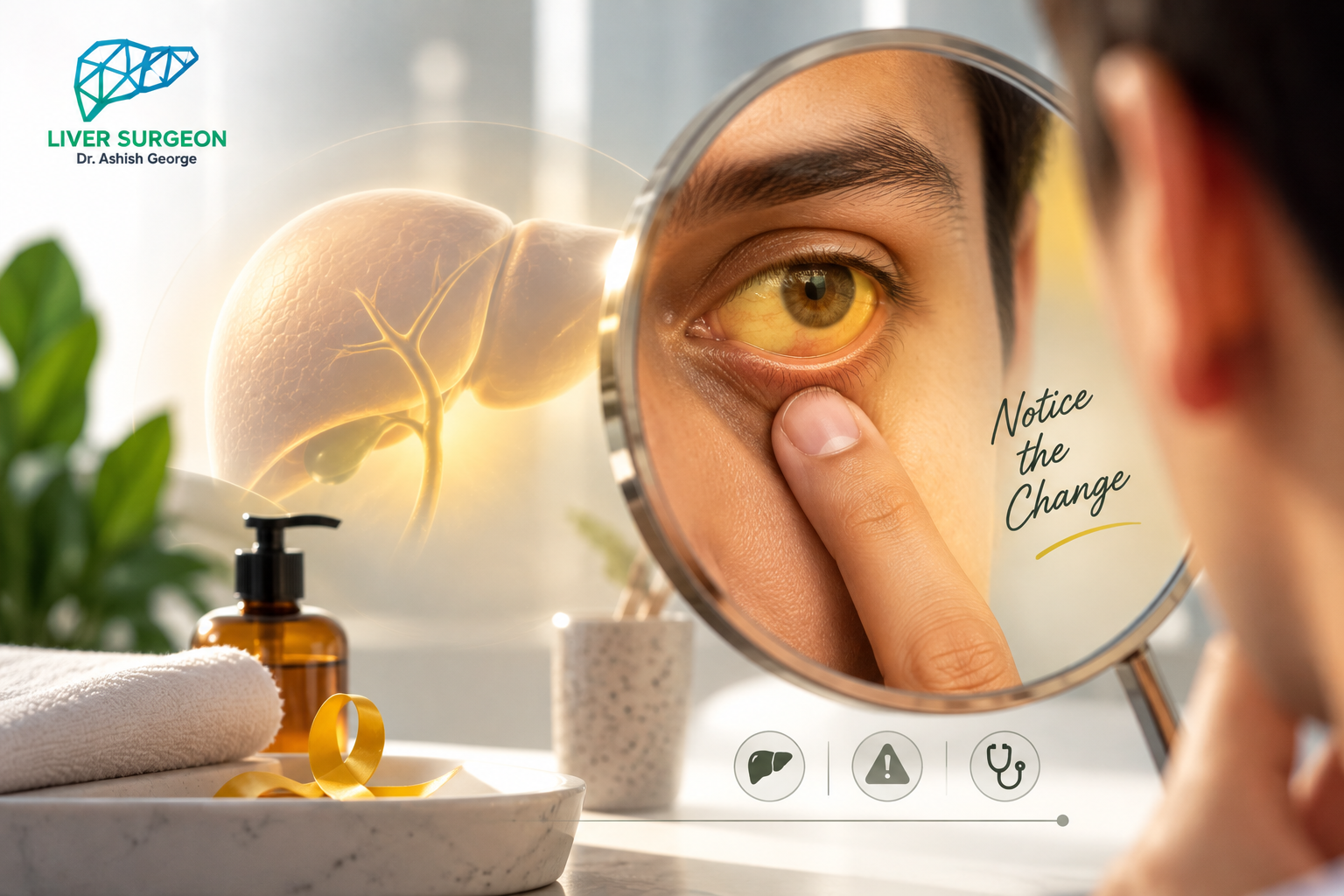
Yellow eyes or skin in an adult is never something to ignore. Jaundice is a signal, and what it points to ranges from easily treated to serious.
Jaundice in adults means a yellow tinge to the skin and the whites of the eyes, caused by a build-up of a yellow pigment called bilirubin. It is not a disease in itself but a sign that something is affecting the liver, the bile ducts, or the blood. Some causes are mild and reversible; others, especially painless jaundice, can be serious and need urgent attention. This guide explains what causes jaundice in adults, how to tell mild from serious, and when to see a specialist quickly.
What Causes Jaundice?
Bilirubin is made when old red blood cells break down. Normally the liver processes it and sends it out in bile. Jaundice happens when this pathway is disrupted at one of three points, and where the problem is tells the doctor a lot about the cause.
| Type | Where the Problem Is | Common Causes |
|---|---|---|
| Pre-hepatic | Too much red cell breakdown | Haemolysis, some blood conditions |
| Hepatic (liver) | The liver itself is affected | Hepatitis, alcohol, cirrhosis, medicines |
| Post-hepatic (obstructive) | Bile cannot drain out | Gallstones in the bile duct, bile duct or pancreatic cancer |
The Most Important Warning: Painless Jaundice
Here is the single most important point in this guide. Jaundice that comes on without pain, in an adult, is a red flag until proven otherwise. Painful jaundice is often from gallstones or hepatitis. But painless jaundice, especially with weight loss, can be the first sign of a blockage from bile duct cancer (cholangiocarcinoma) or pancreatic cancer, where early assessment can make the difference for treatment. Painless jaundice should always be investigated urgently.
Other Warning Signs to Act On
- Dark urine and pale, clay-coloured stools (suggest a bile flow blockage)
- Unexplained weight loss and loss of appetite
- Fever with chills, or abdominal pain
- Itching all over the body
- Confusion, drowsiness, or swelling, which can signal advanced liver disease
How Is the Cause of Jaundice Found?
- Blood tests: bilirubin, liver function tests , and hepatitis tests
- Ultrasound: the first scan, which shows whether the bile ducts are blocked or dilated
- MRCP, CT or endoscopic tests: to look at the bile ducts in detail when a blockage is suspected
How Is Jaundice Treated?
Jaundice is not treated on its own; the cause is treated. Hepatitis is managed medically, alcohol-related jaundice needs stopping alcohol and liver support, and a blockage from stones or a tumour needs the blockage relieved, sometimes with a stent and sometimes with surgery. This is why finding the exact cause quickly matters so much.
When Should You See a Specialist?
Any jaundice in an adult should be assessed, but see a specialist urgently for painless jaundice, jaundice with weight loss, jaundice with fever and pain, or jaundice in someone with known liver disease. Early assessment by a liver specialist can be critical, especially when a blockage or tumour is the cause.
Jaundice Assessment in Delhi
At Liver Surgeons, Dr. Ashish George and the team at Fortis Hospital, Shalimar Bagh, Delhi, assess jaundice quickly to find the cause, from hepatitis and gallstones to bile duct and pancreatic problems, and treat it with the full range of HPB expertise. Because painless jaundice can signal something serious, early review is important. Reports and scans can be reviewed remotely for patients outside Delhi.
Frequently Asked Questions
Is jaundice in an adult always serious?
Not always, but it should always be checked. Some causes are mild and reversible, while others, especially painless jaundice with weight loss, can be serious. Only testing can tell the difference, so jaundice in an adult should never be ignored.
Why is painless jaundice a warning sign?
Painful jaundice is often from gallstones or hepatitis, but painless jaundice can be the first sign of a bile duct or pancreatic cancer blocking bile flow. It should be investigated urgently.
What do dark urine and pale stools mean with jaundice?
They suggest the jaundice is due to a bile flow blockage (obstructive jaundice), which needs prompt imaging of the bile ducts to find the cause.
How is jaundice treated?
By treating the cause. Hepatitis is managed medically, a gallstone or tumour blockage is relieved with a stent or surgery, and alcohol-related jaundice needs stopping alcohol. There is no single jaundice medicine; finding the cause is the key step.
Can jaundice go away on its own?
Some causes, like mild viral hepatitis, settle with time and supportive care. But you cannot assume this, because a blockage or serious liver problem will not resolve on its own and can worsen. Always get jaundice assessed.
Conclusion
Jaundice in adults is a signal that should never be ignored. While some causes are mild, painless jaundice in particular can point to something serious, and early assessment changes outcomes. If you or someone in your family has developed yellow eyes or skin, book a consultation with Dr. Ashish George at Fortis Hospital, Shalimar Bagh, Delhi .