High SGPT and SGOT: What Your Liver Function Test (LFT) Report Really Means
.webp)
Principal Consultant & Unit Head, Liver Transplant & HPB Surgery, Fortis Hospital, Shalimar Bagh, Delhi
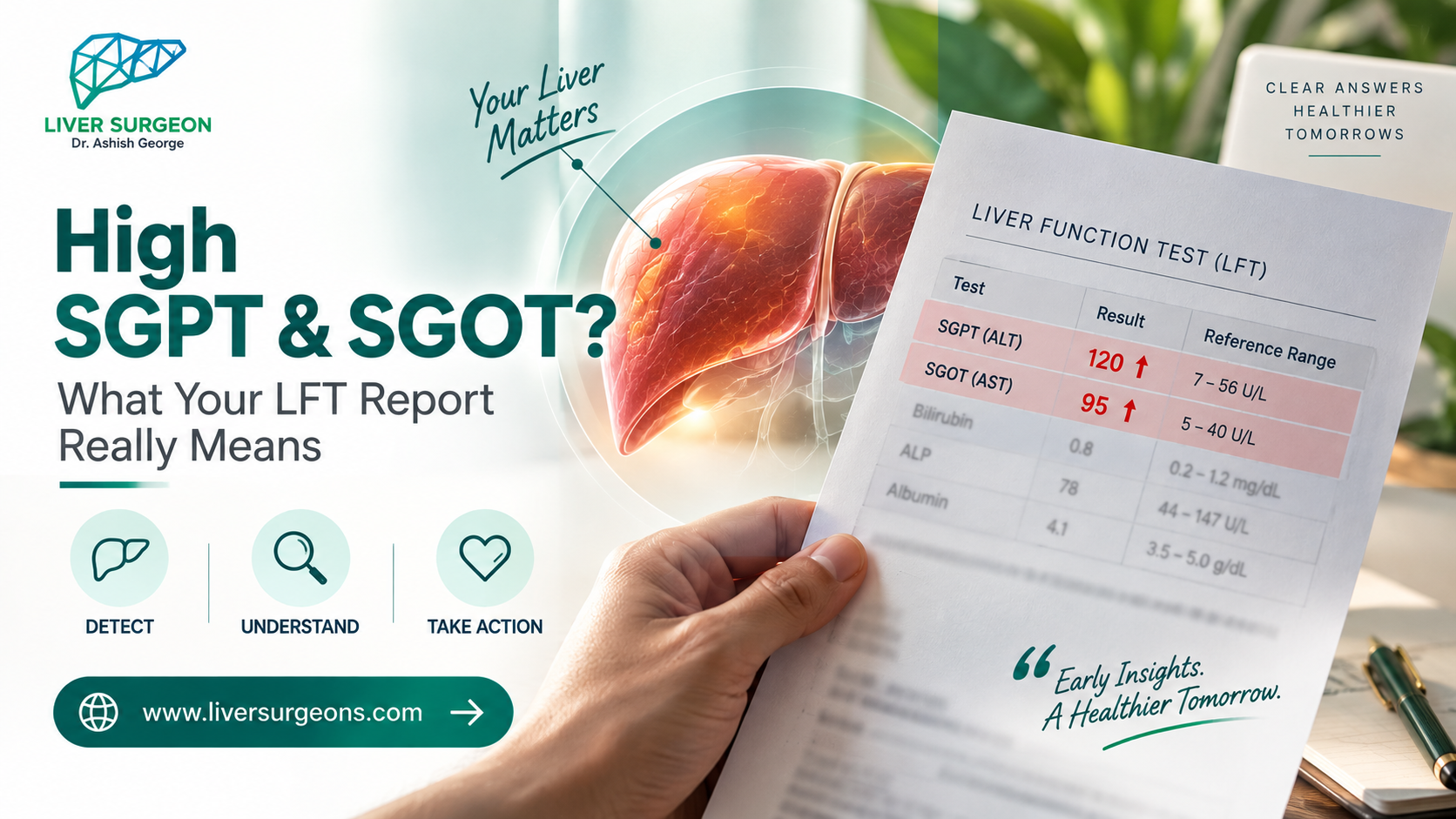
Got a liver function test back with high SGPT or SGOT? Before you worry, here is what those numbers actually mean and when they matter.
A liver function test (LFT) is one of the most common blood tests done in India, and a very common result is high SGPT or SGOT. Seeing a number flagged in red is alarming, but raised liver enzymes are often caused by something manageable, and sometimes they are not even a liver problem. This guide explains what each value on your LFT means, the common reasons for high liver enzymes, how worried you should be, and when you should see a liver specialist. If you want to know when to get tested in the first place, see our liver disease screening guide .
What Is a Liver Function Test (LFT)?
An LFT is a blood test that measures several substances made or processed by the liver. Despite the name, it does not only measure "function"; some values show liver cell damage, while others show how well the liver is working or whether bile flow is blocked. Reading them together gives a picture of liver health.
What Each Value Means
| Test | Approx. Normal | What It Shows |
|---|---|---|
| SGPT (ALT) | about 7 to 55 U/L | Liver cell damage; the most liver-specific enzyme |
| SGOT (AST) | about 8 to 48 U/L | Liver cell damage, but also from muscle and heart |
| ALP | about 40 to 130 U/L | Bile flow; rises when bile ducts are blocked |
| GGT | about 8 to 61 U/L | Bile flow and alcohol-related liver stress |
| Bilirubin | about 0.3 to 1.2 mg/dL | Causes jaundice when high |
| Albumin | about 3.5 to 5.0 g/dL | How well the liver is working; low in chronic disease |
Normal ranges vary between laboratories. Always read your result against the reference range printed on your own report.
What Does High SGPT and SGOT Mean?
SGPT (ALT) and SGOT (AST) are enzymes released when liver cells are injured, so high levels usually mean the liver is under some stress. How high they are gives a clue to how worried to be, though the number alone never gives the full picture:
- Mildly raised (up to about 2 to 3 times normal): very common, often from fatty liver, and usually not an emergency
- Moderately raised: seen in hepatitis, alcohol-related liver injury, or medicine effects
- Very high (many times normal): suggests significant liver injury such as acute hepatitis and needs prompt assessment
Common Causes of High Liver Enzymes
- Fatty liver disease: by far the most common cause in India today. See fatty liver disease in India .
- Alcohol: regular or heavy drinking. See how much alcohol damages your liver .
- Viral hepatitis: hepatitis B or C. See hepatitis B vs C .
- Medicines and supplements: some painkillers, and certain herbal or bodybuilding supplements
- Non-liver causes: SGOT can rise from muscle strain or heavy exercise, which is why the pattern matters
Hepatocellular vs Cholestatic Pattern
Specialists look at the pattern, not single numbers. When SGPT and SGOT are the main raised values, it points to liver cell injury (a hepatocellular pattern, as in fatty liver or hepatitis). When ALP and bilirubin are the main raised values, it points to a bile flow or duct problem (a cholestatic pattern), which may need imaging of the bile ducts. This is why your report should be interpreted as a whole by a doctor.
When Should You See a Liver Specialist?
- Liver enzymes that stay high on a repeat test a few weeks later
- Very high enzymes, or high bilirubin with jaundice
- Raised enzymes with symptoms: fatigue, abdominal pain, swelling, or yellow eyes
- Known risk factors: diabetes, obesity, alcohol use, or hepatitis B or C
A single mildly abnormal result is usually not an emergency, but it should not be ignored either. Persistent or significant abnormalities deserve a liver specialist review .
What Happens Next?
Depending on the pattern, a specialist may repeat the LFT, arrange an ultrasound or FibroScan, test for hepatitis, and review your medicines and lifestyle. Most causes, especially fatty liver, improve a great deal with the right changes when caught early. The goal is to find the cause while it is still reversible.
Liver Testing and Specialist Care in Delhi
At Liver Surgeons, Dr. Ashish George and the team at Fortis Hospital, Shalimar Bagh, Delhi, help patients make sense of abnormal liver tests, find the cause, and act early, before reversible problems become serious. If your SGPT or SGOT is high, especially if it stays high, a specialist review is worthwhile. Reports can be reviewed remotely for patients outside Delhi.
Frequently Asked Questions
Is high SGPT or SGOT dangerous?
A mildly raised level is common and often due to fatty liver, which is manageable. Very high levels, or raised levels with jaundice or symptoms, need prompt assessment. The number should always be read alongside the rest of the report and your symptoms.
What is the most common cause of high liver enzymes in India?
Fatty liver disease is now the most common cause, linked to diabetes, obesity and diet. Alcohol and viral hepatitis are other frequent causes.
Can high SGPT and SGOT come back to normal?
Yes, very often. When the cause is fatty liver, alcohol or a medicine, addressing it can bring the enzymes back to normal, especially when caught early. This is why acting on an abnormal result matters.
My SGOT is high but SGPT is normal. What does that mean?
SGOT also comes from muscle and the heart, so an isolated high SGOT can be from strenuous exercise or a muscle cause rather than the liver. A doctor will look at the full picture to decide.
Do I need to fast before a liver function test?
Often it is advised, as it can affect some values, but follow the instructions given with your test. If in doubt, ask the lab or your doctor.
Conclusion
A high SGPT or SGOT result is common and usually not a cause for panic, but it is a signal worth acting on. Reading your whole LFT, finding the cause, and addressing it early is how most liver problems are stopped before they become serious. If your liver enzymes are high, book a consultation with Dr. Ashish George at Fortis Hospital, Shalimar Bagh, Delhi .