Paediatric Liver Transplant in Delhi: A Parent's Guide to What Comes Next
.webp)
Principal Consultant & Unit Head, Liver Transplant & HPB Surgery, Fortis Hospital, Shalimar Bagh, Delhi
There are few sentences a parent dreads more than "your child needs a liver transplant." I have sat across from hundreds of mothers and fathers at the moment they hear it, and the room always goes quiet in the same way. The fear is real, and so are the questions that follow. Will my child survive? Where do we go? Can I help? Will life ever feel normal again?
I want to answer those questions honestly, because a paediatric liver transplant in Delhi today is not the frightening gamble it once was. For a child with liver failure, it is often a cure. Many of the children I operated on years ago are now teenagers who go to school, play cricket, and argue with their parents like every other child their age. That is the outcome we are working towards, and it is very much within reach.
What a Paediatric Liver Transplant Actually Means
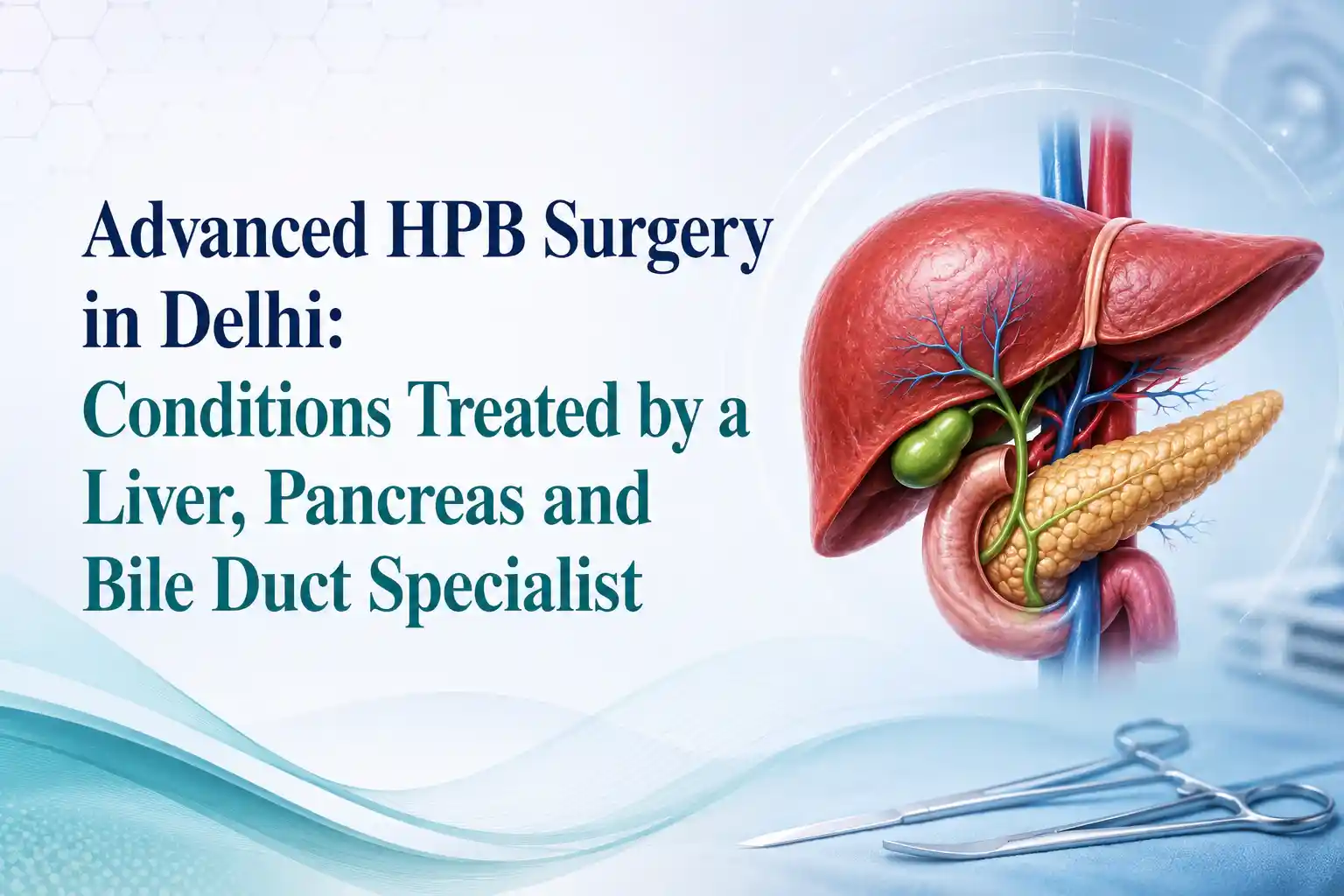
A liver transplant replaces a child's diseased liver, or part of it, with healthy liver tissue from a donor. In children, we usually transplant only a segment of an adult liver, because a small portion is enough for a small body. The liver is remarkable in this respect: it is the only organ that regrows. The transplanted segment grows with the child, and a donor's liver grows back to full size within weeks.
For most families, the fear comes from imagining a lifetime of hospitals. In reality, the goal of transplant is the opposite. We are trying to give a child their childhood back. You can read a full clinical overview on our paediatric liver transplant programme in Delhi page, but here I want to walk you through it as a parent would experience it.
Why Children Need a Liver Transplant
The most common reason is biliary atresia, a condition babies are born with in which the bile ducts are blocked or missing. Bile builds up, and the liver is slowly damaged. It is also the reason I urge every parent to watch newborn stools closely. If your baby has jaundice that lasts beyond two weeks and pale, chalky or clay-coloured stools, please see a paediatric liver specialist immediately. There is an early surgery called the Kasai procedure that works best before 60 days of age, and acting early can change everything.
Other children come to us with genetic and metabolic conditions such as Wilson's disease, Alagille syndrome or PFIC, and some with sudden acute liver failure from an infection. Whatever the cause, the principle is the same: when the liver can no longer recover on its own, a transplant becomes the treatment that saves the child's life.
The News I Wish More Parents Heard First: The Outcomes
Because parents arrive frightened, they rarely know how good the results have become. So let me lead with the numbers I share in my clinic.
- Around 85 to 90% of transplanted livers are working well at one year.
- 80 to 85% of children are thriving five years after transplant.
- The great majority go on to normal growth, normal schooling and a normal quality of life.
A transplanted liver, cared for properly, can last for decades. These are not fragile children living in bubbles. They are children who recover, grow up, and get on with life.
Can I Donate to My Own Child?
This is often the first question a parent asks, and the answer is usually yes. The most common transplant we perform for children is a living donor liver transplant, where a parent or close relative donates the left lateral segment of their liver, roughly a fifth of it. It is perfectly sized for a child, and both the parent's liver and the child's new liver regenerate within weeks.
There is a quiet relief in this for many families. A living donor transplant can be planned in advance, which matters enormously when a child's liver is deteriorating and there is no time to wait. When a living donor is not suitable, we turn to a deceased donor liver transplant through India's national organ allocation system, which prioritises children.
What the Journey Looks Like in Delhi
Every family's path is different, but the shape of it is broadly the same.
- First, we talk. I sit down with parents, review the diagnosis, and explain honestly where the child stands and how urgent transplant is. No jargon, no rush.
- Then we prepare. A thorough evaluation checks the child's blood, imaging, heart, nutrition and development. Many children with liver disease are undernourished, and building them up before surgery genuinely improves how they heal.
- Surgery itself takes eight to twelve hours. The diseased liver is removed and the new liver segment is put in its place. It is complex work, which is exactly why it belongs with a team that does it often.
- Recovery begins in a dedicated paediatric liver ICU, with nurses and intensivists who work only with children. Most children leave hospital within two to three weeks.
- Then comes the long, good part. Your child will need lifelong immunosuppressive therapy to stop the body rejecting the new liver, and regular post-transplant monitoring with blood tests and check-ups. Parents worry about the medicines at first, but within a few weeks they become as routine as brushing teeth.
How to Choose the Right Team
If you take one practical thing from this article, let it be this: in paediatric transplant, experience is not a luxury, it is the single biggest factor in your child's outcome. When you are comparing hospitals for a paediatric liver transplant in Delhi, look for three things.
- A team that performs paediatric transplants regularly, not occasionally.
- A dedicated paediatric liver ICU, not a general adult unit.
- Access to both living and deceased donor options, so the right choice is available for your child.
Ask how many paediatric cases the surgeon has done. A good team will answer plainly. Our own team has performed more than 100 paediatric liver transplants, on children from a few months old to their teens.
Life After Transplant
I keep photographs that parents send me over the years. First day of school. A birthday. A child who once could not eat, now refusing vegetables like any healthy five-year-old. This is what the work is for.
After recovery, most children return to school within two to three months and to sport within six. They grow, they catch up on milestones, and they live full lives. The medicines and follow-up become a manageable background routine rather than the centre of a family's world.
When to Act Now
If your child already has a diagnosis, do not wait for symptoms to worsen. And if you are a parent of a newborn reading this with a worry in your stomach, trust it. Persistent jaundice beyond two weeks with pale stools is a red flag for biliary atresia, and the earlier we see the baby, the more options we have.
You can reach my team directly to arrange an evaluation. Book a consultation here or call us on +91 93101 39800.
Frequently Asked Questions
How young can a child have a liver transplant?
There is no strict lower age limit. We have transplanted babies just a few months old, some weighing only 5 to 6 kg. What matters is that the child is stable enough for surgery.
Is a living donor transplant safe for me as the parent?
Living donation is a well-established, carefully evaluated procedure. Donors are assessed thoroughly, they keep the majority of their liver, and the donated portion regenerates within weeks.
Will my child take medicines forever?
Yes, immunosuppressive medicines are lifelong, but they are simple daily doses that families adapt to quickly. You can read more about immunosuppression after transplant.
How soon can we get surgery done?
With a living donor, transplant can be planned in a matter of weeks once evaluation is complete, which is a major advantage for a child who cannot afford to wait.
Can my child live a normal life afterwards?
In the vast majority of cases, yes. School, sport, friendships and a full future are the expected outcome, not the exception.