Rejected as a Liver Donor? How Families in Delhi Still Get a Living Donor Liver Transplant
Learn why a donor may be unsuitable, how graft-size limitations are assessed and when two living donors may help make transplantation possible.
Read More
A dual lobe liver transplant also called a dual graft living donor liver transplant or a two donor liver transplant is a procedure in which portions of liver from two healthy living donors are transplanted into a single recipient who needs a larger graft than one donor alone can safely provide. Each donor gives a smaller, safer portion of their liver. Together, the two grafts give the recipient enough functional liver volume to survive and recover. The liver's ability to regenerate means both donors' remaining livers, and both transplanted segments in the recipient, grow to functional size within six to eight weeks. It is an innovative solution to a real biological problem: large adults or patients with acute liver failure sometimes need more liver volume than any single donor can safely give. A dual lobe transplant resolves that constraint, and in the right hands it does so without compromising either donor's safety. At Liver Surgeons in Delhi, dual lobe liver transplantation is led by Dr. Ashish George, a specialist liver transplant and HPB surgeon with 18+ years of experience and over 1,000 transplants performed. Families across Delhi NCR and across India come to our Delhi centre for this complex two lobe liver transplant procedure because of our experience, our 24/7 ICU infrastructure, and our commitment to donor safety.





Advanced two-lobe transplantation for large adults and complex cases with 85% 1-year survival rates
A dual lobe transplant is considered when a single donor's liver segment would be too small relative to the recipient's body size a risk known as small-for-size syndrome, where an undersized graft cannot meet the recipient's metabolic demands and risks failure. The main situations where we recommend this approach:
Not everyone who needs a large graft requires two donors our team calculates the graft-to-recipient weight ratio (GRWR) precisely from 3D CT volumetry before every case. If a single living donor is genuinely sufficient, we proceed with one. If not, we explore a dual lobe approach rather than expose the recipient to small-for-size risk. For recipients who have no living donors at all, we also evaluate deceased donor liver transplant through the NOTTO system.
Both donors are evaluated with the same rigour we apply to all living donor liver transplants. Each must independently pass our full donor workup. Donor safety comes first always regardless of the urgency of the recipient's condition. Neither donor will proceed if our evaluation raises any concern.
If a family member was rejected as a living donor and you are wondering whether a dual lobe approach with two relatives each giving a smaller portion could work, our guide on what to do when a donor is rejected explains this option in detail.
| Factor | Dual lobe liver transplant | Single lobe liver transplant |
|---|---|---|
| Graft volume | 60–70% of recipient's liver need covered by two grafts | 30–40% may be insufficient for large adults |
| Donors needed | Two living donors | One living donor |
| Best suited for | Large adults, re-transplantation, acute liver failure with massive necrosis | Standard adult and paediatric recipients |
| Technical complexity | High dual vascular and bile-duct repair, parallel theatre coordination | Moderate |
| Graft outcomes | Comparable to single lobe in experienced hands | Well-established in routine cases |
Bottom line: a dual lobe transplant is more complex and requires two donors, but for the right recipient it is the difference between a transplant that succeeds and one that fails because of inadequate graft volume.
As with all major transplant surgery, dual lobe transplants carry risks. Transparency matters here is what to know:
Choosing a high-volume, experienced dual lobe transplant team is the most important factor in keeping every one of these risks as low as possible.
A dual lobe liver transplant is one of the most technically demanding operations in all of transplant surgery. It should only be performed by a specialist team that carries out these procedures regularly not occasionally. When you are comparing a dual lobe liver transplant hospital or surgeon in Delhi, look specifically for:
Dr. Ashish George's Delhi-based dual lobe liver transplant programme meets every one of these standards. With 50+ dual lobe procedures performed since 2017, alongside a full living donor, split liver, paediatric and combined liver and kidney transplant programme, our centre offers families in Delhi NCR and from across India the full spectrum of specialist transplant options in one place. For further guidance on selecting a transplant specialist, see our blog on how to find the best liver transplant surgeon in Delhi.
The cost of a dual lobe liver transplant at our Delhi centre is in the range of ₹35–45 lakh, covering the evaluation and surgery for both donors, the recipient's surgery, ICU stay, and the first year of follow-up. The exact figure depends on the length of stay and the recipient's clinical complexity. We provide a full, itemised cost estimate before you commit, and we assist with insurance documentation.
If your doctor has told you that a single donor's liver won't be enough, or if a donor has already been declined because of graft size, a dual lobe transplant may be the answer. Book a consultation with Dr. Ashish George in Delhi to understand your options.
Expert guidance on dual lobe liver transplant, living donor evaluation, donor safety, graft-size planning, transplant eligibility, rejection, recovery and long-term outcomes for recipients and their families.

Learn why a donor may be unsuitable, how graft-size limitations are assessed and when two living donors may help make transplantation possible.
Read More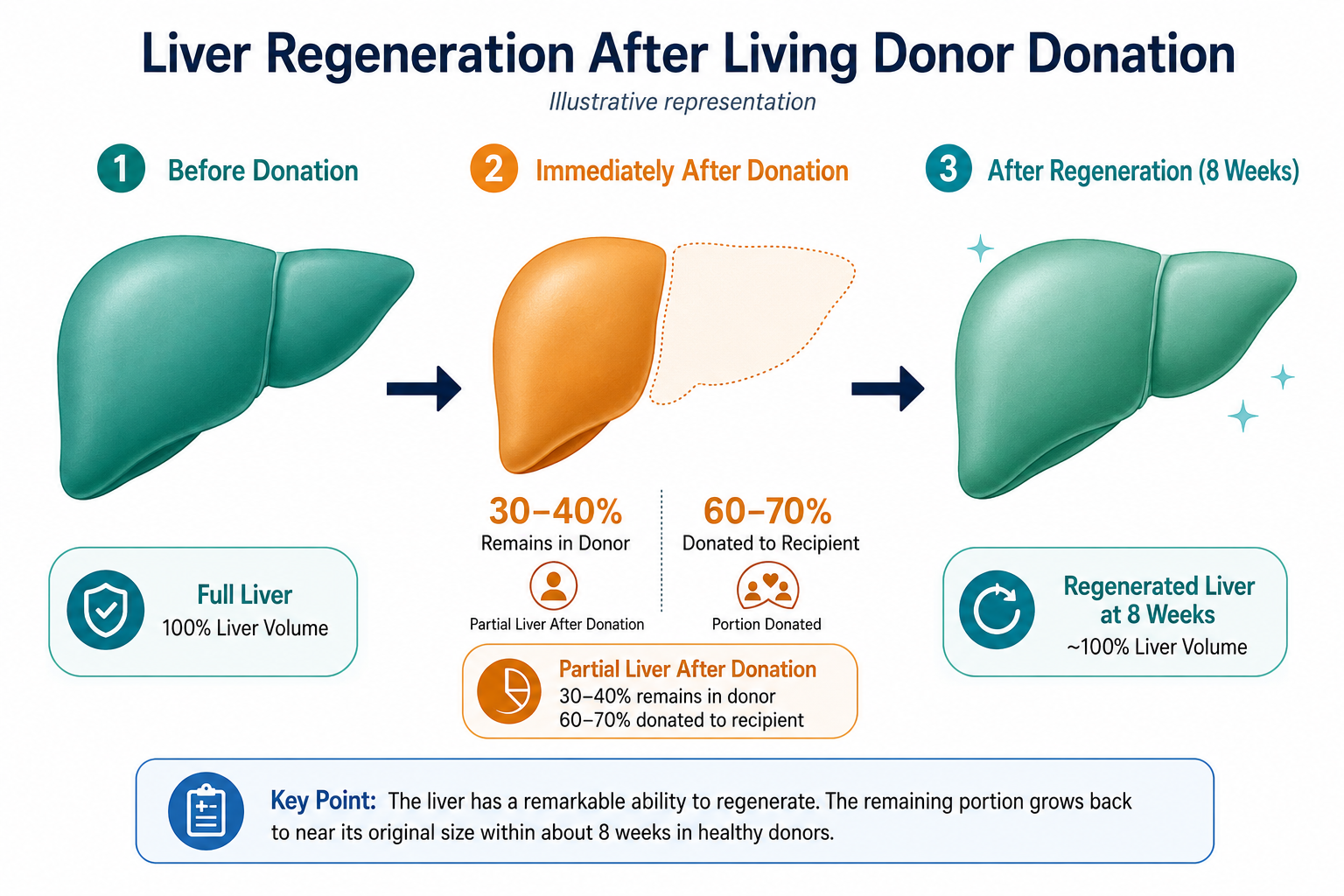
Understand donor eligibility, donor evaluation, graft planning, surgery, donor safety and recipient recovery after living donor liver transplant.
Read More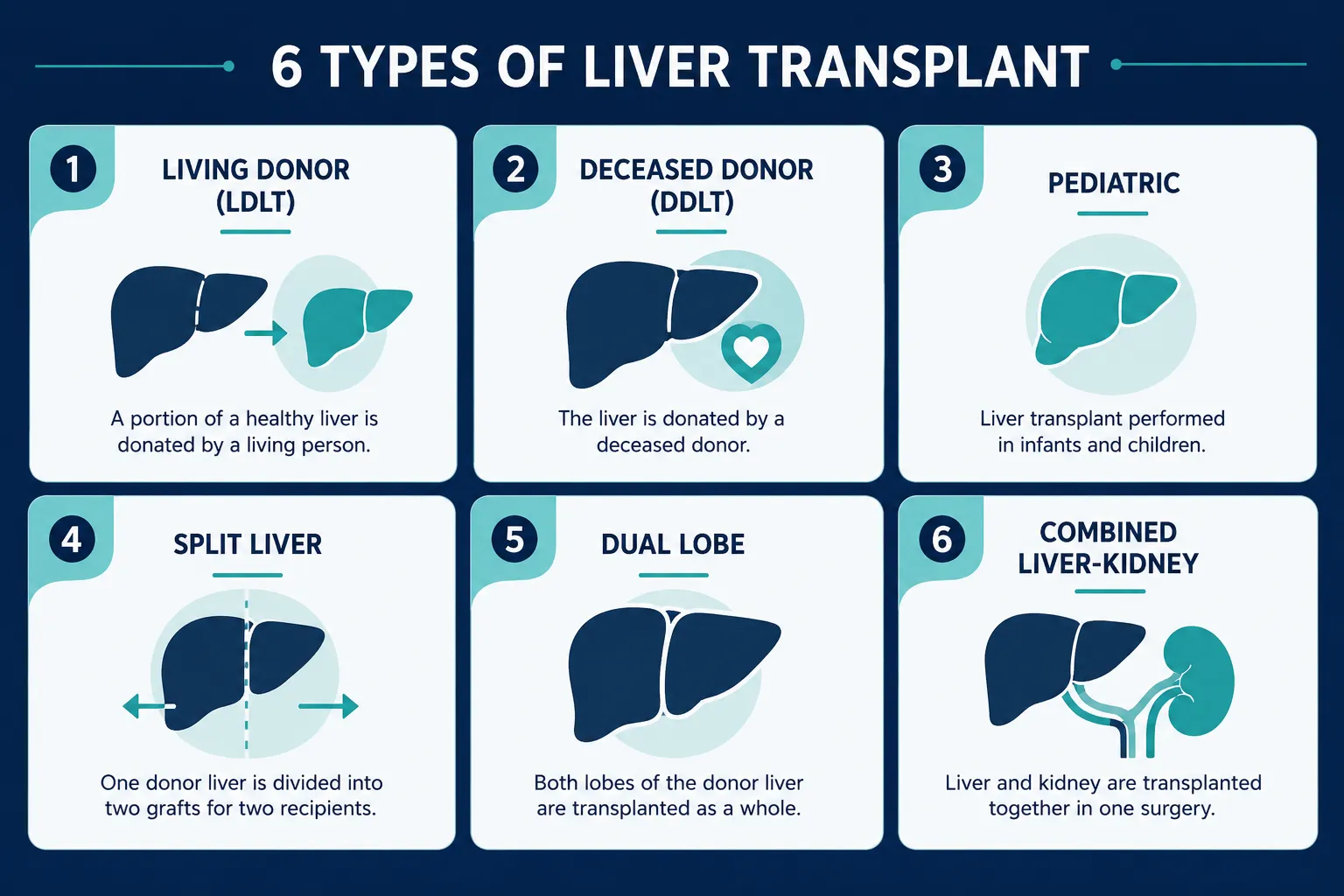
A complete guide to liver transplant options, including living donor, deceased donor and advanced transplant approaches for complex recipients.
Read More
Understand graft survival, patient survival and the clinical factors that influence outcomes after living donor and complex liver transplantation.
Read More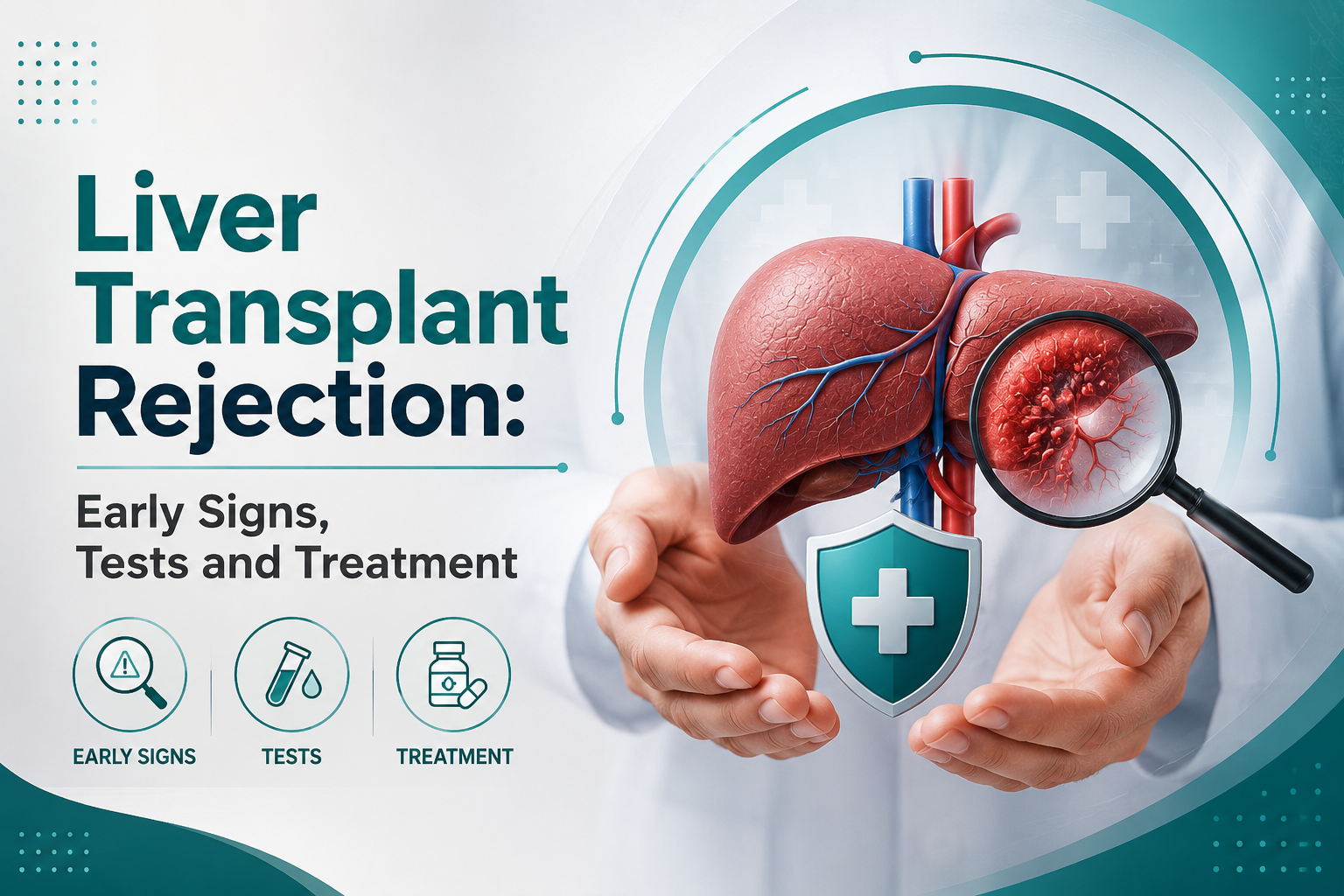
Learn about rejection warning signs, diagnostic testing, graft monitoring, immunosuppression and treatment after liver transplantation.
Read More
Understand transplant eligibility, MELD score, urgency, recipient evaluation and how doctors decide when liver transplantation is needed.
Read More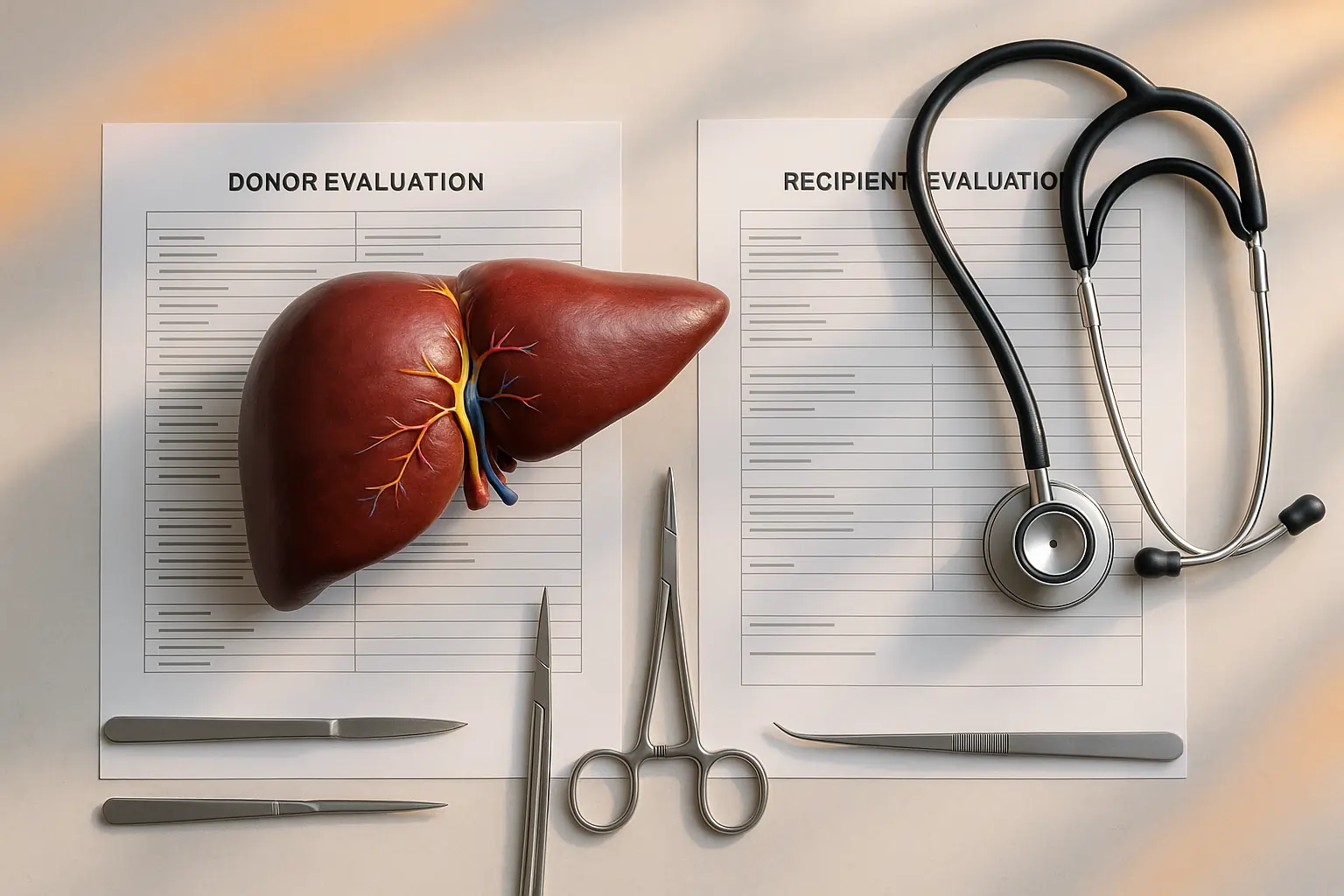
Follow the living donor transplant journey from donor evaluation and surgical planning through recipient surgery, donor recovery and long-term care.
Read More
Understand NOTTO allocation, MELD priority, deceased donor availability and the alternative route when living donor transplantation is not possible.
Read More