GLP-1 Drugs for Fatty Liver: Can Weight-Loss Injections Really Reverse MASH?
.webp)
Principal Consultant & Unit Head, Liver Transplant & HPB Surgery, Fortis Hospital, Shalimar Bagh, Delhi
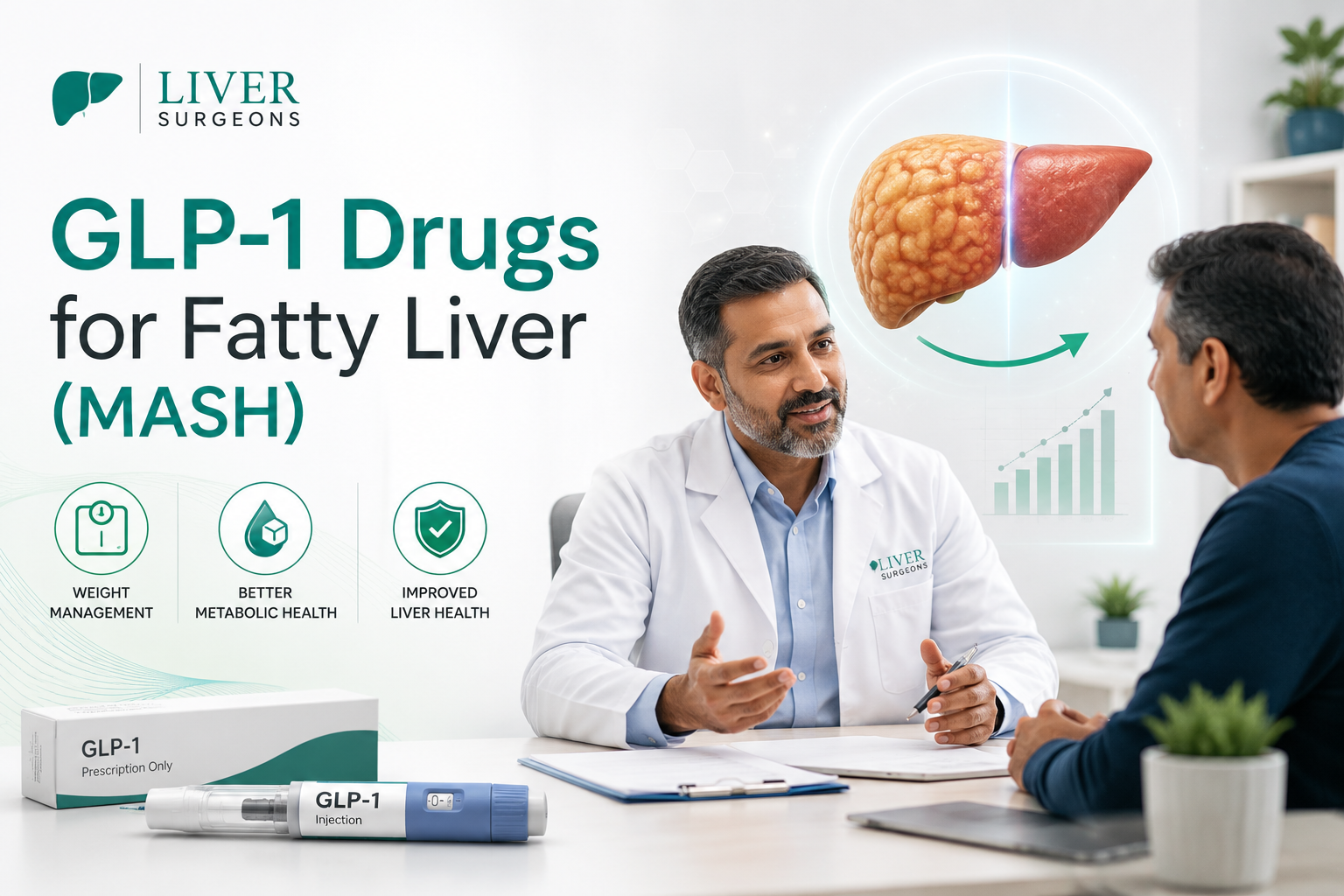
You have almost certainly heard of them by now Ozempic, Wegovy, Mounjaro. The weight-loss injections that have taken over waiting rooms and WhatsApp groups alike. What fewer people know is that these same drugs have just crossed into liver medicine. In July 2026, India's drug regulator approved the first GLP-1 medicine specifically to treat fatty liver disease a condition that, until very recently, had no approved drug at all.
So is this the breakthrough that finally lets you reverse a fatty liver with a weekly injection? Partly yes and partly hype. Here is an honest look at what GLP-1 drugs can and can't do for your liver, from the perspective of a Delhi liver surgeon who sees where fatty liver ends up when it isn't caught in time.
Quick vocabulary: NAFLD and NASH are now MASLD and MASH
If your reports still say “NAFLD” or “fatty liver,” here's the update. In 2023 the medical world renamed these conditions to better reflect their metabolic roots: MASLD (metabolic dysfunction-associated steatotic liver disease) is simple fat in the liver, and MASH (metabolic dysfunction-associated steatohepatitis) is the more dangerous form, where that fat drives inflammation and scarring (fibrosis). MASH is the one that can progress to cirrhosis, liver failure or liver cancer and it is very common in India. That progression is exactly what our guide on the fatty-liver-to-cirrhosis journey walks through.
What are GLP-1 drugs?
GLP-1 receptor agonists copy a natural gut hormone that controls appetite and blood sugar. The best-known is semaglutide (sold as Ozempic for diabetes and Wegovy for weight loss). A close cousin, tirzepatide (Mounjaro / Zepbound), acts on two hormones at once. They were built for type 2 diabetes and obesity but because they drive significant, sustained weight loss and improve how the body handles sugar and fat, researchers suspected they might help the liver too. They were right.
The breakthrough: India approves the first GLP-1 for fatty liver
In July 2026, the Central Drugs Standard Control Organisation (CDSCO) approved Wegovy (semaglutide 2.4 mg) for adults with non-cirrhotic MASH and moderate-to-advanced liver fibrosis, to be used alongside a reduced-calorie diet and more physical activity. It is the first and so far only GLP-1 drug approved in India (and worldwide) specifically to treat MASH. Read that indication carefully, because the two most important words in it are non-cirrhotic and alongside. We'll come back to both.
What the evidence actually shows
The approval was built on a large international trial (ESSENCE). In the first phase, among patients with MASH and significant fibrosis:
- About 63% on semaglutide had their steatohepatitis resolve without their scarring getting worse, versus about 34% on placebo.
- About 37% showed improvement in liver fibrosis, versus about 22% on placebo.
- Participants lost roughly 10% of their body weight on average the engine behind most of the liver benefit.
Newer 2026 research has gone further, suggesting semaglutide may even help reduce scarring in people with more advanced disease, including early cirrhosis though that use is still being studied and is not yet approved. Tirzepatide has also produced strong MASH results in its own trials, but in India it is currently approved for diabetes and weight management, not specifically for MASH.
How GLP-1 drugs help the liver
The mechanism is refreshingly logical. Excess fat and insulin resistance are what fuel MASH. GLP-1 drugs reduce appetite and improve blood sugar, driving meaningful weight loss and lowering insulin resistance. Less fat and less metabolic stress means less liver inflammation and, over time, a chance for some existing scarring to stabilise or partially improve. As a bonus, these drugs also lower cardiovascular risk, which matters because heart disease, not the liver, is the leading cause of death in people with fatty liver.
Important limits please read before you ask for a prescription
- Not for cirrhosis. The approval is for MASH with fibrosis not established cirrhosis. If your liver has already progressed to cirrhosis or liver failure, GLP-1 drugs are not the answer, and management is very different (and may involve transplant).
- Not a replacement for lifestyle. The drug is approved to be used with diet and exercise, not instead of them. Much of the benefit comes from weight loss, and liver fat tends to return if the weight comes back after stopping.
- Not for every “fatty liver.” Simple MASLD without significant fibrosis is usually managed with lifestyle first. These drugs are aimed at MASH with moderate-to-advanced fibrosis.
- Real-world practicalities. They are prescription-only weekly injections, commonly cause nausea and other gut side effects early on, and are expensive. In India, generic semaglutide and rival drugs are arriving, but cost and supply still matter.
- The long game is still being measured. We know these drugs improve liver test and biopsy results; the trials confirming they prevent liver failure and death over many years are still running.
Who might benefit and who should see a liver specialist
The best candidates are adults with confirmed MASH and moderate-to-advanced fibrosis, often alongside obesity or type 2 diabetes, who are also committed to diet and exercise. If that might be you, the right first step is a proper assessment a FibroScan and liver screening to establish how much fat and scarring you actually have, so treatment is matched to your stage. Our fatty liver treatment and Indian diet for fatty liver guides are a good foundation whether or not medication is added.
But if you already have warning signs of advanced liver disease jaundice, swelling of the abdomen or legs, confusion, or vomiting blood a weekly injection is not where your care should start. See a liver specialist promptly.
The bottom line from a liver surgeon
This is genuine progress. For the first time, we have an approved drug for a disease that used to have none, and for the right patient it can meaningfully improve the liver. But it is a tool, not a miracle it works best early, only alongside real lifestyle change, and it does nothing for those who have already crossed into cirrhosis. The most powerful medicine for fatty liver is still catching it before it needs any of this. If your scan says fatty liver, don't wait for symptoms get it staged and act now, while the odds are firmly in your favour.
Frequently asked questions
Can Ozempic or Wegovy reverse a fatty liver?
They can significantly improve MASH reducing liver fat, inflammation and, in many patients, scarring mainly by driving weight loss. “Reverse” is fair for early disease; established cirrhosis is a different situation and is not reversed by these drugs.
Is Wegovy approved for fatty liver in India?
Yes. In July 2026 India's regulator (CDSCO) approved Wegovy (semaglutide 2.4 mg) for adults with non-cirrhotic MASH and moderate-to-advanced fibrosis, used with diet and exercise.
Can I take a GLP-1 drug for fatty liver if I already have cirrhosis?
The current approval does not cover cirrhosis. If you have cirrhosis, you need a liver specialist to guide management GLP-1 drugs alone are not the answer, and some patients need transplant evaluation.
Do I still need diet and exercise if I'm on the injection?
Yes absolutely. The drug is approved to be used with lifestyle change, not instead of it, and weight (and liver fat) tend to return if the medication stops without lasting habit change.
What about Mounjaro (tirzepatide) for fatty liver?
Tirzepatide has produced strong results in MASH trials and is available in India for diabetes and weight management, but it is not yet approved in India specifically for MASH. Discuss options with your doctor.
Worried about your liver? Get it properly assessed
Whether or not a GLP-1 drug is right for you depends entirely on how much fat and scarring your liver already has. To find out and to build a plan that fits your stage book a consultation with Dr. Ashish George in Delhi.