From Fatty Liver to Cirrhosis: The 4-Stage Progression No One Warns You About And How to Stop It
.webp)
Principal Consultant & Unit Head, Liver Transplant & HPB Surgery, Fortis Hospital, Shalimar Bagh, Delhi
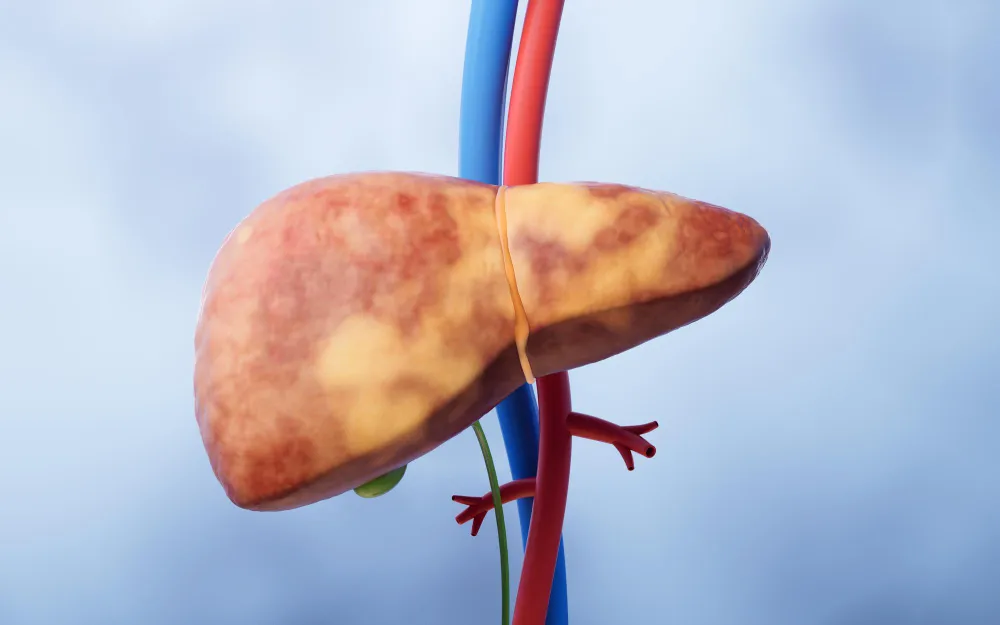
It begins with a routine blood test or an abdominal ultrasound done for an unrelated reason. The report comes back with a phrase that sounds almost reassuring in its ordinariness: "fatty liver." The patient is told to lose some weight, eat less oil, and exercise more. They nod, take the report home, and — more often than not — file it away.
What they are rarely told clearly enough is that fatty liver is not a static condition. It is the first step on a continuum that, in a significant number of patients, leads directly to cirrhosis, liver failure, and liver cancer. The journey between those two points — routine fatty liver and end-stage liver disease — takes place quietly, over years or decades, with very few symptoms to mark the milestones.
This guide walks you through exactly what each stage of fatty liver disease looks like, what happens to the liver at each point, and — most importantly — what can be done to stop the progression before it reaches the point of no return.
Non-alcoholic fatty liver disease (NAFLD/MASLD) now affects an estimated 25 to 38% of the Indian adult population — making it the most common liver disease in the country and the fastest-growing cause of liver cirrhosis and liver transplantation. (Indian National Association for Study of the Liver)
What Is Fatty Liver Disease and Why Does It Develop?
Fatty liver disease (medically termed hepatic steatosis) occurs when fat accumulates in liver cells beyond 5 to 10% of the liver's total weight. The liver is not a fat storage organ — it is a metabolic organ. When it is forced to process and store excess fat, the consequences are progressive and cumulative.
There are two main types. Alcoholic fatty liver disease (AFLD) is caused by excessive alcohol consumption. Non-alcoholic fatty liver disease (NAFLD), now often called Metabolic dysfunction-Associated Steatotic Liver Disease (MASLD), develops in people who drink little or no alcohol and is driven by metabolic factors: obesity, insulin resistance, type 2 diabetes, high blood triglycerides, and sedentary lifestyle.
MASLD is now the dominant form in India and the one this guide primarily addresses. Its rise tracks directly with India's urbanisation, changing dietary patterns, and the diabetes epidemic. A person with both type 2 diabetes and obesity has a greater than 80% chance of having some degree of fatty liver disease.
The 4 Stages — What Is Actually Happening Inside Your Liver
Stage 1 — Simple Steatosis (Fat Accumulation)
At this earliest stage, fat has accumulated in liver cells but has not yet triggered significant inflammation or scarring. The liver is enlarged and "bright" on ultrasound — a term radiologists use to describe the characteristic appearance of a fat-laden liver. Liver enzymes on blood tests may be mildly elevated or completely normal.
Most patients at Stage 1 have no symptoms whatsoever. They feel well, function normally, and have no idea that their liver cells are under metabolic stress. Globally, approximately 20 to 25% of people with Stage 1 NAFLD will progress to Stage 2 over 5 to 10 years if the underlying metabolic risk factors are not addressed.
Stage 1 prognosis: Completely reversible with lifestyle modification. No medication required in most cases. Losing 7 to 10% of body weight produces measurable improvement in liver fat within 3 to 6 months.
Stage 2 — Steatohepatitis (Inflammation)
At Stage 2, the excess fat has triggered inflammation within the liver. In the non-alcoholic context, this is called NASH (Non-Alcoholic Steatohepatitis) or MASH (Metabolic-Associated Steatohepatitis). The liver is now under active biological stress — immune cells are infiltrating liver tissue, releasing inflammatory signals that begin to damage and destabilise liver cells.
Some patients at this stage may begin to notice persistent fatigue, mild discomfort in the upper right abdomen, or a general sense of not feeling quite right. But many remain entirely asymptomatic. On blood tests, ALT and AST are more consistently elevated. FibroScan may show early stiffness.
Stage 2 prognosis: Still largely reversible with sustained lifestyle changes and, in some cases, medical management. However, the window for easy reversal is narrowing. This is the stage at which specialist input is most valuable.
Stage 3 — Fibrosis (Scarring Begins)
Chronic inflammation at Stage 2 activates the liver's repair mechanism — stellate cells begin producing collagen fibres that form scar tissue (fibrosis). This scarring replaces healthy, functional liver cells. The liver begins to lose architectural integrity. Blood flow through the liver becomes progressively more resistant.
Stage 3 fibrosis is a significant clinical turning point. The liver's regenerative capacity is now compromised. While some degree of fibrosis regression is possible with treatment, complete reversal is uncertain. Patients at this stage require dedicated specialist management, regular FibroScan monitoring, and screening for complications including portal hypertension and liver cancer.
Research published in the journal Hepatology shows that patients with NASH-related Stage 3 fibrosis have a liver-related mortality rate approximately 9 times higher than the general population over a 10-year follow-up period. (Hepatology, Singh et al.)
Stage 3 prognosis: Partially manageable. Fibrosis can stabilise or partially regress with aggressive treatment. Specialist care and close monitoring are essential. Liver cancer screening must begin.
Stage 4 — Cirrhosis (Irreversible Scarring)
At Stage 4, the liver has been so extensively scarred that its normal architecture is destroyed. The organ is nodular, stiff, and contracted. Blood flow through the liver is severely obstructed, creating portal hypertension — elevated pressure in the portal venous system that drives the most dangerous complications of liver disease.
These complications include ascites (fluid accumulation in the abdomen), variceal bleeding (rupture of enlarged veins in the oesophagus), hepatic encephalopathy (toxin accumulation affecting the brain), and a dramatically elevated risk of liver cancer. At this stage, the liver cannot be restored to normal. Management focuses on controlling complications and, for eligible patients, evaluation for liver transplantation.
NAFLD-related cirrhosis now accounts for an estimated 25% of liver transplant listings in India — a figure that has more than doubled in the past decade. (Liver Transplant Society of India Annual Report)
Stage 4 prognosis: Not reversible. Comprehensive specialist management required. Liver transplant evaluation for appropriate candidates. Liver cancer surveillance every 6 months without exception.
How to Know Which Stage You Are at
The staging of fatty liver disease is not something that can be accurately determined from symptoms alone — because most patients have very few symptoms until Stage 3 or 4. Accurate staging requires specific investigations:
FibroScan — The Most Important Test
FibroScan (transient elastography) measures liver stiffness — which directly corresponds to the degree of fibrosis. It is non-invasive, painless, takes 10 minutes, and produces immediate results. The Liver Stiffness Measurement (LSM) classifies fibrosis from F0 to F4. It also measures the Controlled Attenuation Parameter (CAP), which quantifies the amount of fat in the liver.
FibroScan is the single most important investigation for staging fatty liver disease and should be the first test requested after a fatty liver diagnosis is made on ultrasound.
Blood Tests
Liver function tests (LFTs) including ALT, AST, GGT, albumin, bilirubin, and INR, combined with a metabolic panel (fasting glucose, HbA1c, lipid profile) provide a comprehensive picture of liver health and underlying metabolic risk factors. However, normal LFTs do not exclude significant fibrosis — some patients with Stage 2 or 3 fibrosis have normal liver enzymes.
Liver Biopsy (When Needed)
Liver biopsy remains the most definitive way to stage fatty liver disease and assess the degree of inflammation — but it is invasive and is generally reserved for cases where FibroScan results are inconclusive or where the exact degree of inflammation changes the treatment plan.
How to Stop the Progression — What Actually Works
Weight Loss — The Most Powerful Intervention
The evidence base for weight loss in NAFLD is among the strongest in hepatology. Losing 5% of body weight reduces liver fat. Losing 7 to 10% reduces inflammation and can reverse early fibrosis. Losing more than 10% has been shown to produce meaningful regression of established fibrosis in some patients. This is not about achieving an ideal BMI — it is about sustained, moderate weight reduction through realistic lifestyle changes.
Diet — What Indian Patients Specifically Need to Change
- Replace maida (refined wheat flour) with whole wheat, millet, and other whole grain alternatives
- Eliminate sugar-sweetened beverages — packaged juices, soft drinks, and sweetened chai are among the biggest contributors to liver fat in Indian patients
- Reduce portion sizes of white rice — replace with brown rice, jowar, or bajra
- Increase dietary fibre through vegetables, lentils, and whole fruits
- Use smaller quantities of healthier oils (mustard, olive) — avoid vanaspati and repeated use of frying oil
- Limit sweets, mithai, and fried snacks to genuine occasional treats rather than daily items
Exercise — Specific Guidance
150 minutes of moderate aerobic exercise per week — brisk walking, cycling, or swimming — is the evidence-based minimum for meaningful impact on liver fat. Resistance training twice a week in addition to aerobic exercise produces even greater benefit. Exercise reduces liver fat independently of weight loss, meaning even patients who do not lose much weight see liver health improvements from regular activity.
Medical Management
For patients with established NASH/MASH (Stage 2 and above), medication is increasingly part of the management plan. Key targets include blood sugar control (metformin, SGLT-2 inhibitors, and GLP-1 agonists have shown liver benefits in diabetic NAFLD patients), cholesterol management with statins, and blood pressure control. Several NASH-specific medications are currently in advanced clinical trials, with regulatory approvals expected in the near term.
Frequently Asked Questions
How long does it take to go from fatty liver to cirrhosis?
The timeline varies significantly between patients depending on the underlying cause, metabolic risk factors, and whether lifestyle changes are made. In general, progression from Stage 1 to Stage 4 takes 20 to 30 years in most patients — but a subset with more aggressive disease, particularly those with severe insulin resistance or type 2 diabetes, can progress faster. This is why staging with FibroScan at the time of diagnosis — rather than assuming Stage 1 — is so important.
Can fatty liver go away completely?
Yes — Stage 1 (simple steatosis) is completely reversible with lifestyle changes. Stage 2 (NASH) is largely reversible with sustained effort. Stage 3 (fibrosis) can partially reverse but full reversal is uncertain. Stage 4 (cirrhosis) is not reversible. The key is knowing which stage you are at — which requires a FibroScan, not just an ultrasound.
My ultrasound shows fatty liver but my blood tests are normal. Should I be worried?
Yes — you should take it seriously, but not panic. Normal liver enzymes do not mean the liver is in perfect health. They simply mean the inflammation is not currently causing measurable enzyme leakage. A FibroScan will give you a much more accurate picture of what is actually happening in the liver. Book one and take it from there.
Does fatty liver mean I cannot eat any fat at all?
No — the fat in your liver is not primarily caused by eating fat. It is caused primarily by excess carbohydrate intake, particularly refined sugars and starches, which the liver converts to fat through a process called de novo lipogenesis. The priority is reducing refined carbohydrates and sugars, not eliminating all dietary fat. Healthy fats from nuts, seeds, olive oil, and fatty fish are actually beneficial for liver health.
Fatty Liver Is Reversible — If You Act Early.
Book a FibroScan and specialist consultation with Dr. Ashish George at Fortis Hospital, Delhi.
Call: +91 93101 39800 | www.liversurgeons.com
Fortis Hospital, Shalimar Bagh, Delhi | info@liversurgeons.com