How Does Smoking Damage Your Liver? 7 Key Mechanisms Explained
.webp)
Principal Consultant & Unit Head, Liver Transplant & HPB Surgery, Fortis Hospital, Shalimar Bagh, Delhi
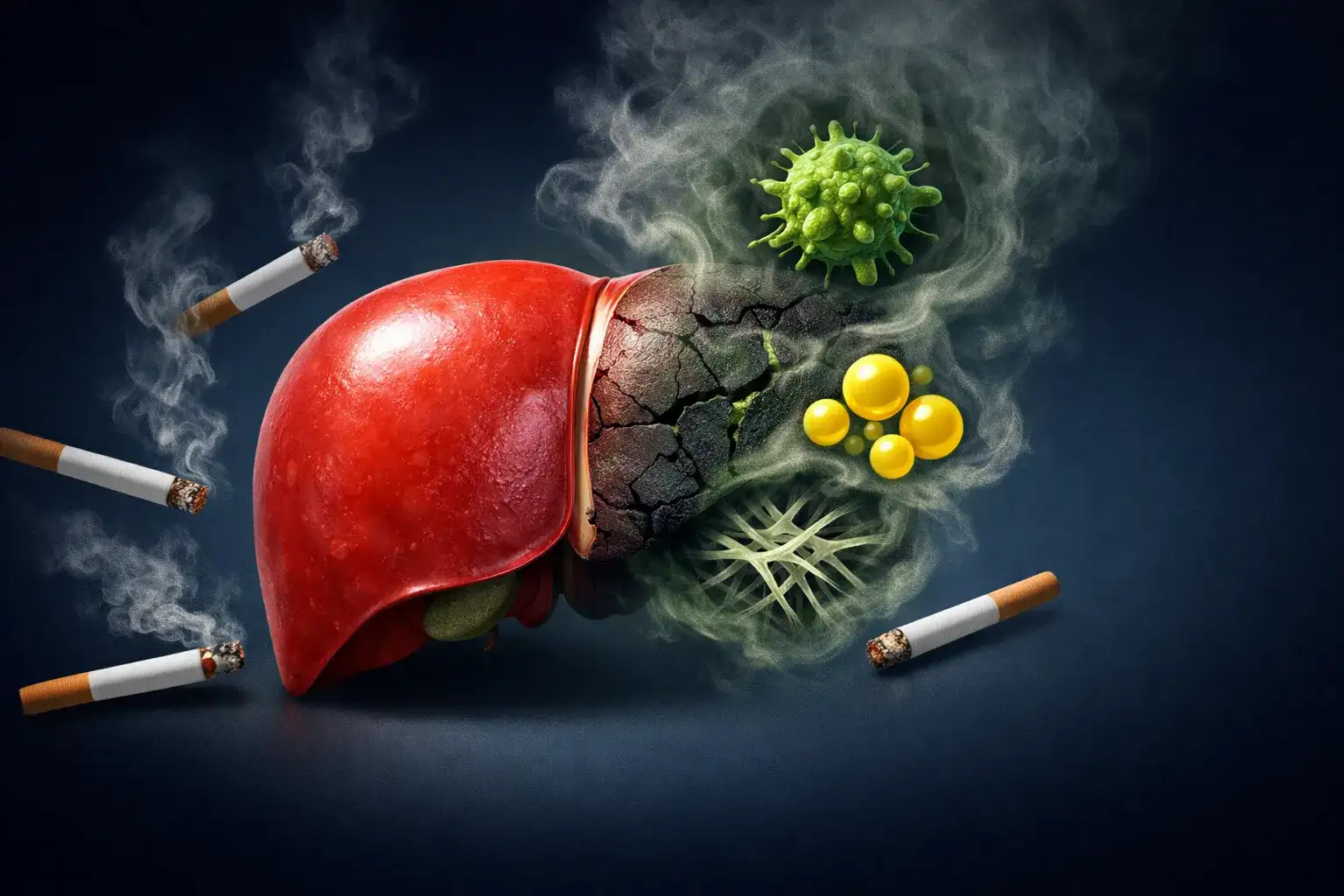
Imagine the most advanced laboratory you can think of. It is a place where thousands of complex reactions happen every second to keep a city safe. Now, picture someone sneaking in to slowly poison the head scientist. They cut the power and pour sludge into the delicate machinery. One day, the whole system just stops.
This is not a scene from a movie. This is what happens inside your body with every cigarette you smoke. Your liver is that master laboratory and chemist. While everyone talks about lungs and heart, your liver is fighting a silent, desperate battle. It fights against the 4,000-plus chemicals in cigarette smoke. As a liver transplant surgeon in Delhi, I have seen the inside of that laboratory in the operating room. The difference between a healthy liver and one damaged by years of toxins is stark. It is often a heartbreaking sight.
Today, I want to move past the simple warning that "smoking is bad." Let me explain the seven precise biochemical wars being waged inside you. We will look at what most articles do not show you. We will see how smoke does not just overload your liver. It sabotages it from within, cell by cell.
Beyond the Filter: What Really Reaches Your Liver?
Most people think of tar and nicotine. But the toxic train that reaches your liver is far more dangerous. When you inhale smoke, chemicals like benzene, formaldehyde, and vinyl chloride enter your bloodstream. Your heart sends this polluted blood directly to the liver first for cleaning.
Think of your liver not as a simple sponge. Do not see it as something that just soaks up poison. Instead, see it as a brilliant scientist. This scientist is forced to handle dangerous material without any protection. Its tools get damaged while it tries to do its job. This sets the stage for the seven key mechanisms of destruction.
1. The Direct Chemical Onslaught: DNA Under Fire
Common Knowledge: "Toxins damage liver cells."
The Deeper Truth: It is a targeted attack on
your genetic blueprint.
Chemicals in smoke, like polycyclic aromatic hydrocarbons (PAHs) and nitrosamines, do not just irritate liver cells. They bind directly to your DNA. This creates bulky, deformed structures called "DNA adducts." It is like throwing gum into the gears of a precise clock.
- Your cell tries to read its genetic instructions. These adducts block the process.
- This leads to permanent mutations when the cell divides.
- This direct genetic damage is the first critical step toward liver cancer. It is not just "stress." It is a chemical altering the very code of life in your liver.
2. Oxidative Stress: Rusting From the Inside Out
Common Knowledge: "Smoking creates free radicals."
The Deeper Truth: It starts a chain
reaction that melts your cells' power plants.
When your liver processes these toxins, it generates free radicals. These are unstable molecules missing an electron. They steal electrons from your healthy cells. This causes damage we call oxidative stress.
But here is what most miss. The primary target is your mitochondria. These are the tiny power plants inside every liver cell.
- Free radicals damage the mitochondrial membrane. This causes it to leak.
- Damaged mitochondria release signals. These signals tell the cell to self-destruct.
- This is not just wear and tear. It is a systematic shutdown of your liver's energy supply. It happens cell by cell. It leads to inflammation and cell death.
3. Hypoxia: Suffocating the Very Cure
Common Knowledge: "Carbon monoxide takes oxygen's place in your blood."
The Deeper Truth: It
also paralyzes the liver's own detox team.
Carbon monoxide (CO) from smoke binds to hemoglobin in your blood. It binds 200 times stronger than oxygen. This starves your liver of oxygen, or causes hypoxia. It cripples the liver's ability to function and repair itself.
But the hidden damage is even more specific. CO also binds to a crucial enzyme system in your liver. This system is called cytochrome P450. It is your body's primary detox crew. When CO disables them:
- Other toxins start to accumulate.
- This creates a toxic backlog. It multiplies the damage from other chemicals.
- Your liver is not only suffocated. It is also disarmed. It cannot clean up the mess.
4. Turning Peacekeepers into Scar Makers
Common Knowledge: "Smoking worsens liver scarring, or fibrosis."
The Deeper Truth: It actively
recruits and arms the cells that build the scar.
Your liver has special cells called hepatic stellate cells (HSCs). Normally, they are peaceful storehouses for Vitamin A. But when bombarded by smoke's chemicals, like acrolein, they change.
They become activated. They morph into aggressive, roving cells. These cells produce huge amounts of collagen. This is the tough, fibrous protein that makes up scar tissue.
- This scar tissue slowly replaces healthy, working liver cells.
- Over years, this leads to cirrhosis. The liver becomes hard, lumpy, and ineffective.
- Smoking does not just allow scarring. It presses the accelerator on this process. This is especially true for people with hepatitis or fatty liver.
5. Immune System Sabotage: Confusing the Defenders
Common Knowledge: "Smoking weakens your immunity."
The Deeper Truth: It does not just weaken
it. It sends the wrong orders. This causes friendly fire.
Your liver is packed with immune cells meant to defend it. Smoking alters this entire system. It:
- Reduces helpful, infection-fighting T-cells.
- Increases inflammatory signals. These signals keep immune cells in a constant state of alarm.
- This leads to chronic inflammation. It is a slow burning fire inside your liver tissue. It damages healthy cells. For patients with hepatitis B or C, this is like pouring gasoline on a viral fire. It speeds up the path to cirrhosis.
6. Metabolic Mayhem: Forcing Your Liver to Hoard Fat
Common Knowledge: "Smoking is linked to fatty liver disease."
The Deeper Truth: It hacks your
liver's metabolism at the hormonal level.
Nicotine and other compounds disrupt your body's insulin signaling. When your liver stops responding properly to insulin, it gets confusing orders. This is called insulin resistance.
- It starts producing more fat from carbohydrates.
- It fails to package and export that fat properly.
- The result? Fat droplets build up inside liver cells. This leads to Non-Alcoholic Fatty Liver Disease (NAFLD). This can happen even without alcohol or a poor diet. It happens purely from smoking's metabolic sabotage.
7. The Two Hit Carcinogenesis: Building Cancer, Step by Step
Common Knowledge: "Smoking increases liver cancer risk."
The Deeper Truth: It provides both
the spark and the fuel for the cancer fire.
Liver cancer often requires a "two hit hypothesis." Smoking delivers both hits with frightening efficiency.
- Hit 1, The Spark: The DNA adducts and mutations from PAHs cause the first genetic damage.
- Hit 2, The Fuel: The chronic inflammation and constant cell turnover create the perfect environment. In this environment, damaged cells grow and multiply out of control.
- Furthermore, toxins in smoke can silence tumor suppressor genes. These are the genes meant to stop cancerous cells.
The Unifying Culprit Most Sites Miss: The NAD+ Crisis
All seven mechanisms share a common thief. This thief is rarely discussed. It steals a vital molecule called Nicotinamide Adenine Dinucleotide (NAD+).
Think of NAD+ as the universal battery currency inside every cell. Your liver uses it for:
- Powering mitochondria.
- Fueling DNA repair crews.
- Running detox enzymes.
- Regulating inflammation.
Smoking forces your liver to spend NAD+ at a terrifying rate. It uses NAD+ to fight all these battles. This depletes its reserves. An NAD+ starved liver is like a bank during a crisis. It cannot pay for essential maintenance, energy, or repairs. This fundamental energy bankruptcy speeds up every single damaging process we have discussed.
Your Liver's Remarkable Resilience: There is Hope
The good news in this grim story is your liver's incredible ability to regenerate. The moment you quit smoking, the chemical bombardment stops.
- Within weeks, inflammation begins to go down.
- Within months, your NAD+ levels can start to recover. This re energizes your cells.
- Your risk of cirrhosis, liver failure, and cancer begins a steady decline.
The path to healing is real. As a liver transplant doctor, my greatest wish is to help people before they ever need to see someone like me in the operating room.
Conclusion: The Power to Stop the War
Your liver is not just another organ. It is your master chemist, your energy regulator, your central detox unit. It is a tireless guardian of your health. The seven mechanisms we explored show that smoking is an act of sabotage against this vital guardian. It attacks on multiple fronts.
The most important takeaway is this: you hold the ceasefire agreement. Every cigarette you do not smoke is a truce in this silent biochemical war. Your liver wants to heal. It is designed to regenerate. Will you give it that chance?
If you are concerned about your liver health, seeking expert advice early is the most powerful step you can take. Early intervention can change everything. For a comprehensive evaluation, you can consult with our team of hepatologists and liver surgeons in Delhi.
Frequently Asked Questions
1. How quickly does liver damage from smoking start?
Damage begins with your
first cigarette, at a cellular level. Oxidative stress and DNA adducts form immediately. The
visible, clinical damage develops over years of smoking.
2. Is vaping or "light" smoking safe for the liver?
No. While the volume of
toxins may be lower, many of the same harmful chemicals are still present. They trigger the same
damaging pathways, just at a slower rate. There is no completely safe threshold.
3. Can the liver fully recover after quitting smoking?
The liver has a
phenomenal capacity for repair. Stopping smoking halts further damage and allows significant
healing. Early changes can reverse. Advanced scarring is permanent, but quitting is crucial to
prevent it from getting worse.
4. Does secondhand smoke affect the liver?
Yes. Studies show that secondhand
smoke increases markers of inflammation and oxidative stress in the liver. It is linked to a
higher risk of developing NAFLD, even in people who do not smoke.