Liver Transplant in Delhi 2026: The Complete Patient and Family Guide
.webp)
Principal Consultant & Unit Head, Liver Transplant & HPB Surgery, Fortis Hospital, Shalimar Bagh, Delhi
For most patients and families, a liver transplant is unfamiliar territory. The terminology is complex, the process is long, and the emotional weight of the situation makes it difficult to absorb information during medical consultations. This guide aims to lay out the full picture clearly: what a liver transplant involves, when it is needed, what the different types are, how Delhi's major hospitals compare, and what the journey looks like from diagnosis to recovery.
Whether you are a patient who has just been told a transplant may be necessary, or a family member trying to understand the process, this guide is written to give you a realistic and practical understanding of what to expect.
When Is a Liver Transplant Needed?
The liver performs over 500 vital functions, including detoxifying the blood, producing proteins for clotting, metabolising nutrients, and producing bile for digestion. When the liver fails to the point where it can no longer sustain life, a transplant becomes the only treatment option.
The most common conditions that lead to a liver transplant in India are:
- End-stage liver disease (ESLD): This is the final stage of chronic liver disease, where scarring (cirrhosis) has progressed to the point that the liver cannot function adequately. Common causes in India include chronic hepatitis B and C, alcohol-related liver disease, and non-alcoholic fatty liver disease (NAFLD/MASLD).
- Acute liver failure (ALF): A rapid and severe loss of liver function, often caused by viral hepatitis, drug toxicity, or autoimmune conditions. ALF requires urgent evaluation for transplant within days to weeks.
- Hepatocellular carcinoma (liver cancer): Selected patients with liver cancer within specific criteria (Milan Criteria) are eligible for transplant, which both removes the cancer and treats the underlying liver disease.
- Metabolic and genetic liver diseases: Conditions like Wilson's disease, hemochromatosis, alpha-1 antitrypsin deficiency, and biliary atresia (in children) may require transplant.
Doctors use a scoring system called the MELD score (Model for End-Stage Liver Disease) to assess the urgency of transplant listing. A MELD score above 15 generally indicates that a transplant is worth pursuing, and a score above 25 suggests significant mortality risk without one.
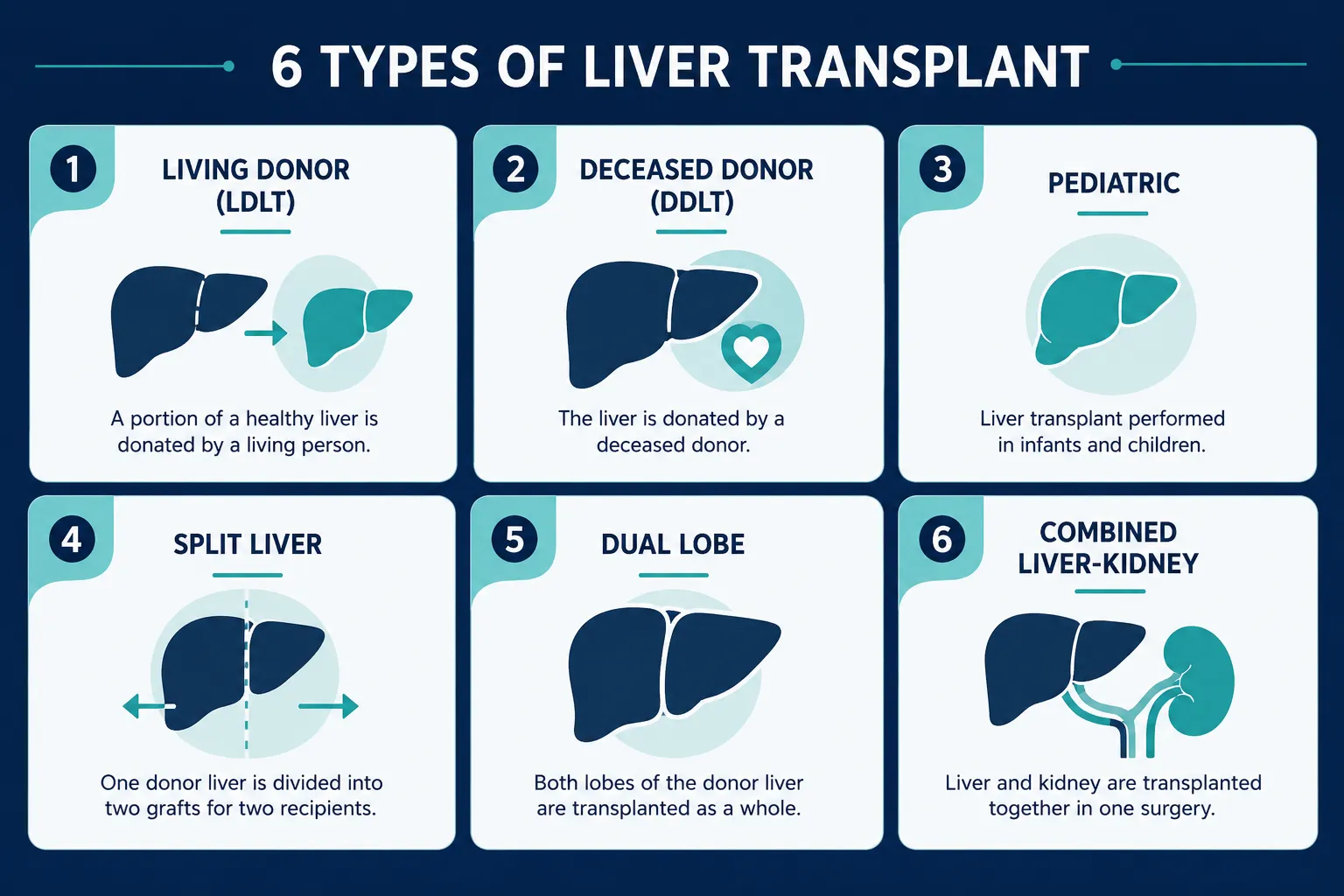
Types of Liver Transplant
Living Donor Liver Transplant (LDLT)
In India, the majority of liver transplants use a living donor. A healthy family member donates a portion of their liver, which is surgically transplanted into the recipient. Since the liver regenerates, both the donor's and recipient's livers grow back to normal size within 6 to 8 weeks. LDLT allows for planned surgery, removes the dependency on deceased donor waiting lists, and typically produces excellent outcomes. It is currently governed by the Transplantation of Human Organs and Tissues Act (THOTA), which mandates that living donors be near relatives.
Deceased Donor Liver Transplant (DDLT)
In a deceased donor transplant, the liver comes from a brain-dead individual who has been declared legally dead and whose family has consented to organ donation. The organ is allocated through the regional or national organ sharing network. Waiting times for deceased donor organs can be long, making DDLT a less predictable pathway in India. However, it is essential for patients who lack a suitable living donor.
Pediatric Liver Transplant
Children can receive a segment of an adult's liver. Pediatric transplants are technically more demanding due to smaller vessel sizes and require a team experienced in pediatric anaesthesia and intensive care. Common indications in children include biliary atresia, Wilson's disease, and metabolic liver disorders.
Split Liver Transplant
A deceased donor's liver is split into two segments, each transplanted into a separate patient. This is typically used to transplant one adult and one pediatric patient from a single donor organ, expanding the reach of each donated liver.
Dual Lobe Liver Transplant
In cases where one living donor cannot provide a sufficient liver volume for a larger adult recipient, two separate living donors each contribute a lobe. Both partial livers are transplanted simultaneously. This is a technically complex procedure performed at select high-volume centres.
Combined Liver-Kidney Transplant
When a patient has both end-stage liver disease and severe kidney failure, a simultaneous liver and kidney transplant may be performed. This is a more complex and longer surgery that requires careful pre-operative planning.
The Pre-Transplant Evaluation Process
Before a patient is listed for transplant, they undergo a comprehensive evaluation to confirm that they are medically fit enough to survive the surgery and benefit from a new liver. This typically involves:
- Blood workup: Complete blood count, liver function tests, kidney function tests, coagulation profile, viral markers (hepatitis B, C, HIV), and blood group typing
- Imaging: CT scan or MRI of the abdomen to assess the liver, biliary system, portal vein, and any evidence of cancer
- Cardiac assessment: ECG, echocardiogram, and in higher-risk patients, a stress test or coronary angiogram
- Pulmonary assessment: Chest X-ray and spirometry to assess lung reserve
- Nutritional and psychological assessment: Malnutrition and psychological readiness are both important predictors of post-transplant outcomes.
- Donor workup (for LDLT): The potential living donor undergoes an independent and comprehensive evaluation,n including blood tests, CT volumetry of the liver, psychiatric clearance, and review by an independent Authorisation Committee as required by THOTA
Once evaluation is complete and the patient is approved for listing, surgery is scheduled. For LDLT cases, scheduling can happen within weeks once donor suitability is confirmed.
What Happens on the Day of Surgery
A liver transplant involves two parallel teams: one for the donor (if a living donor) and one for the recipient. The recipient surgery typically lasts between 6 and 12 hours, depending on complexity. Key stages include:
- Hepatectomy: The diseased liver is removed.
- Vascular reconstruction: The new liver is connected to the recipient's hepatic artery, portal vein, and inferior vena cava.
- Biliary reconstruction: The bile duct is reconstructed to allow normal bile flow.
- Reperfusion: Blood flow is restored to the new liver. The transplant team watches closely for signs of primary graft function at this stage.
The donor surgery for LDLT typically lasts 4 to 6 hours. Donors are usually discharged within 7 to 10 days and return to normal activity within 6 to 8 weeks.
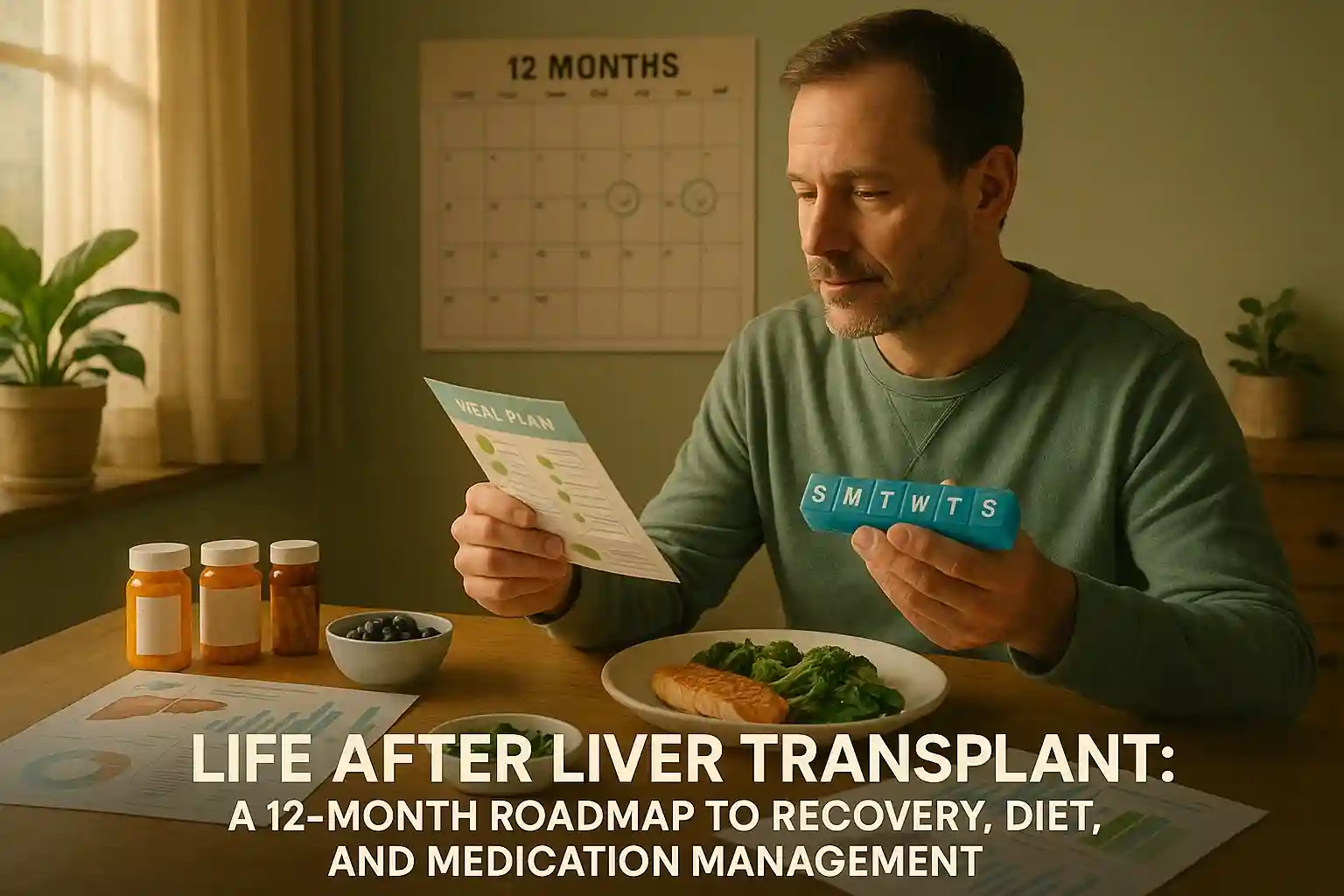
Recovery Timeline After Liver Transplant
Most patients are discharged within 3 to 4 weeks of surgery. Return to full normal activity typically happens within 6 to 12 months.
Immunosuppression: The Lifelong Commitment
After a liver transplant, the patient must take immunosuppressive medications for life. These drugs prevent the body's immune system from attacking the new liver (rejection). Common medications include tacrolimus, mycophenolate mofetil, and steroids, with doses adjusted over time based on blood drug levels.
The ongoing medication cost in India is approximately ₹2 to ₹5 lakh per year, depending on the drug regimen. Non-adherence to immunosuppression is one of the leading causes of late graft failure. This is why post-transplant follow-up and patient education are treated as a core part of the transplant program, not an afterthought.
Choosing a Liver Transplant Hospital in Delhi
Delhi has multiple centres offering liver transplant services, ranging from government hospitals like AIIMS and ILBS to private centres like Fortis, Max, and Apollo. When evaluating hospitals, consider:
- Annual transplant volume: Higher-volume programs have better outcomes data and more experienced teams
- Dedicated liver ICU: Liver transplant patients need specialised post-operative monitoring, not general ICU beds
- Availability of the deceased donor program: Important if no living donor is available
- Pediatric transplant capability: If the patient is a child, confirm that the program has specific pediatric expertise
- Cost and financial planning support: Ask for itemised estimates and check insurance and government scheme coverage
- Waiting time: Government hospitals offer lower costs but significantly longer waiting periods. Private centres with living donor programs can often schedule surgery within weeks.
Frequently Asked Questions
What is the success rate for liver transplants in India?
Top Indian transplant centres report 1-year graft survival rates of 90 to 95 per cent for living donor transplants, which is comparable to international benchmarks. Long-term outcomes depend on post-transplant adherence.
Can children receive a liver transplant in Delhi?
Yes. Pediatric liver transplants for biliary atresia, Wilson's disease, metabolic liver disorders, and acute liver failure are performed at select specialised centres in Delhi. Both living and deceased donor options exist for pediatric patients.
How long is the waiting list for a deceased donor liver in Delhi?
Waiting times depend on the patient's blood group, MELD score, and the availability of deceased donor organs through the regional allocation network. At government hospitals, waits can extend to 12 to 18 months or more. Private centres with active deceased donor programs have shorter functional waiting times.
Can I travel from another state or country for a liver transplant in Delhi?
Yes. Delhi's major transplant centres regularly treat patients from across India and from South Asia, the Middle East, and Africa. Facilities for outstation and international patients, including interpreter services and dedicated coordination, are available at private hospitals.
Take the First Step
If you or a family member has been advised to undergo a liver transplant evaluation, the right time to consult is now. Early evaluation leads to better planning, better outcomes, and far less crisis-driven decision-making.
Book an appointment with Dr Ashish George at Fortis Hospital, Shalimar Bagh. Call +91 93101 39800 or visit liversurgeons.com/contact. You can also book via the Fortis Healthcare website.
Every successful transplant begins with a single consultation.