What Tests Are Needed Before Liver Cancer or HPB Surgery?
.webp)
Principal Consultant & Unit Head, Liver Transplant & HPB Surgery, Fortis Hospital, Shalimar Bagh, Delhi
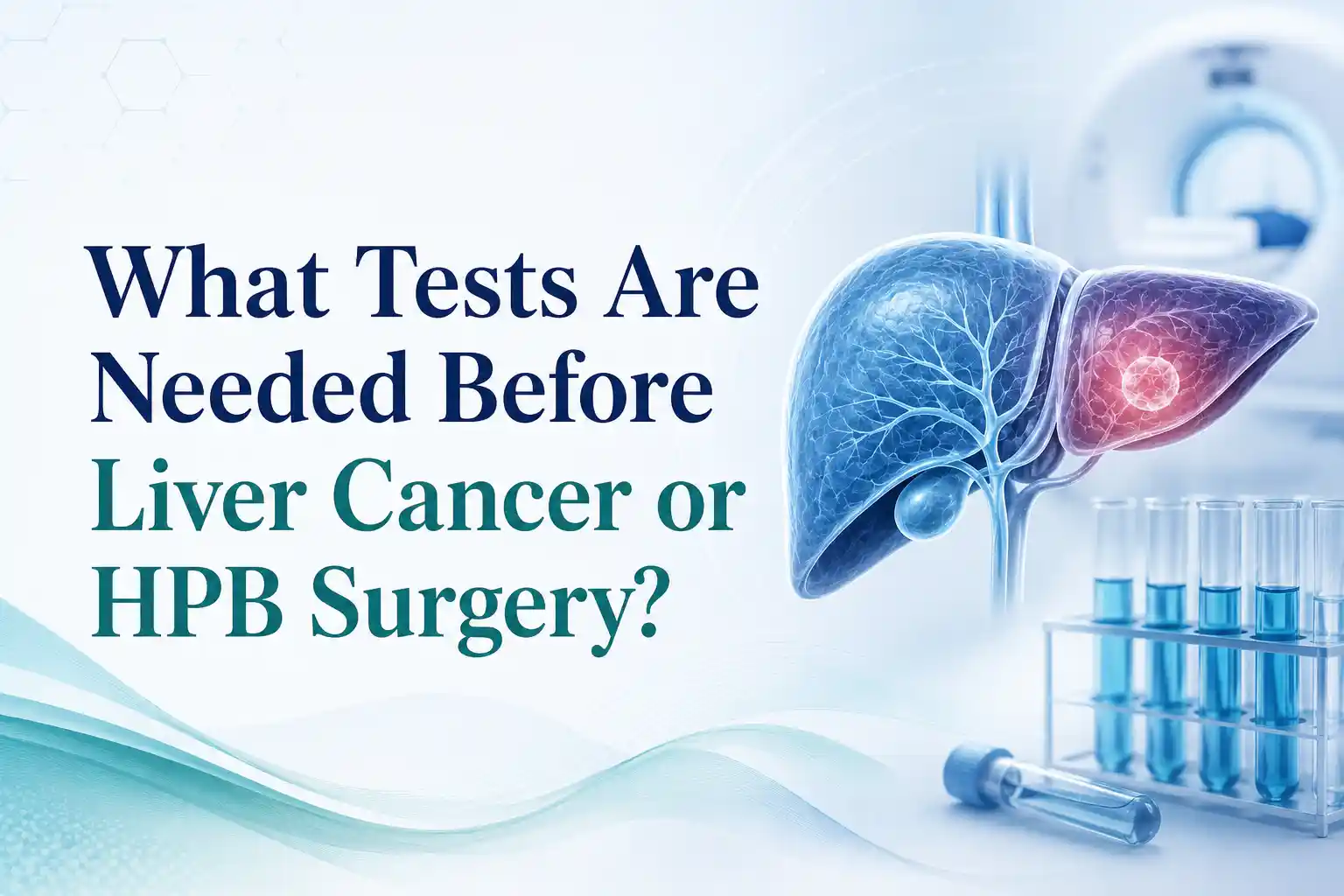
Before liver cancer surgery, pancreatic surgery, bile duct surgery, gallbladder cancer surgery, or any complex HPB procedure, doctors need detailed information about the disease and the patient's overall health. This is why proper testing before surgery is extremely important.
Many patients visit a liver surgeon in Delhi with only one ultrasound report or a few blood tests. However, liver and HPB surgery needs much deeper planning. The liver, pancreas, bile ducts, gallbladder, and major blood vessels are closely connected. A small change in tumor location, liver function, bile duct anatomy, or infection status can change the entire treatment plan.
If you are preparing for liver cancer or HPB surgery, the first step is a complete specialist evaluation. At Liver Surgeons, Delhi, patients can undergo diagnostic review, surgical planning, liver biopsy, FibroScan, imaging assessment, and advanced HPB surgical evaluation in Delhi.
Why Testing Is Needed Before HPB Surgery
HPB surgeries are among the most complex abdominal procedures. Surgery may involve removing part of the liver, pancreas, bile duct, gallbladder, lymph nodes, or surrounding tissues. In some cases, reconstruction is also required.
Before surgery, the surgeon needs to know:
- What exactly is the disease?
- Is it cancerous or benign?
- Has the disease spread?
- Is the liver healthy enough for surgery?
- Are major blood vessels involved?
- Is the bile duct blocked?
- Is there infection?
- Is jaundice affecting liver function?
- Is the patient fit for anesthesia?
- Is transplant better than resection?
- Will chemotherapy be needed before surgery?
Without complete testing, surgery may become riskier.
1. Blood Tests
Blood tests are usually the first step in evaluation. They help the doctor understand liver function, infection status, bleeding risk, kidney function, and general fitness.
Common blood tests include:
- Complete blood count
- Liver function test
- Kidney function test
- INR and coagulation profile
- Serum albumin
- Bilirubin
- Electrolytes
- Blood sugar
- Viral markers for hepatitis B and C
- Blood grouping
- Infection screening
Why Blood Tests Matter
Blood tests help answer critical questions. Is the liver strong enough? Is bilirubin too high? Is the patient at risk of bleeding? Is there infection? Are kidneys working normally? These details directly affect surgical planning.
For example, a patient with high bilirubin due to bile duct obstruction may need drainage before surgery. A patient with low albumin may need nutrition support before major surgery. A patient with abnormal INR may need correction before any invasive procedure.
2. Liver Function Test
A liver function test is not one single test. It includes several values that show how the liver is working.
Important values include:
- SGOT
- SGPT
- Bilirubin
- Alkaline phosphatase
- GGT
- Albumin
- INR
For liver surgery, doctors do not only look at enzyme levels. They also look at the liver's ability to produce proteins and support blood clotting. This helps judge liver reserve.
3. Tumor Markers
Tumor markers are blood tests that may support diagnosis and help in monitoring treatment response. They are not enough to confirm cancer by themselves, but they are useful when combined with scans and clinical findings.
Common tumor markers include:
- AFP for liver cancer
- CA 19-9 for pancreatic and bile duct cancers
- CEA for selected gastrointestinal cancers
High tumor markers may suggest cancer, but normal levels do not always rule it out. The surgeon interprets these reports along with imaging.
4. Ultrasound Abdomen
Ultrasound is often the first imaging test. It is commonly used because it is simple, widely available, and useful for initial screening.
Ultrasound may detect:
- Liver mass
- Gallstones
- Bile duct dilatation
- Fatty liver
- Cirrhosis signs
- Ascites
- Portal vein changes
- Gallbladder swelling
However, ultrasound is usually not enough for final surgical planning. If a tumor or obstruction is suspected, CT scan or MRI is usually needed.
5. Triphasic CT Scan
A triphasic CT scan is one of the most important tests before liver cancer or HPB surgery. It takes images in different contrast phases, helping doctors understand tumor behavior, blood supply, and vascular anatomy.
A triphasic CT scan can help assess:
- Tumor size
- Tumor number
- Tumor location
- Blood vessel involvement
- Liver volume
- Lymph nodes
- Disease spread
- Surgical resectability
For pancreatic cancer, CT scan helps determine whether the tumor is touching or encasing major blood vessels. This decides whether surgery is possible immediately or chemotherapy is needed first.
6. MRI Liver and MRCP
MRI provides detailed images of liver and soft tissues. MRCP is especially useful for bile duct and pancreatic duct evaluation.
MRI or MRCP may be advised for:
- Bile duct cancer
- Pancreatic tumors
- Gallbladder cancer
- Unclear liver lesions
- Bile duct obstruction
- Biliary anatomy mapping
- Small lesions not clearly seen on CT
- Surgical planning before bile duct reconstruction
MRCP helps identify where the bile duct is blocked and whether the blockage is due to stones, stricture, tumor, or injury.
7. PET-CT Scan
PET-CT is not required for every patient, but it may be advised in selected cancer cases. It helps detect whether cancer has spread to distant parts of the body.
PET-CT may be used when:
- Cancer stage is unclear
- There is suspicion of spread
- Surgery is being planned for cancer
- CT or MRI findings need further clarification
- Doctors need to avoid unnecessary major surgery
If PET-CT shows widespread disease, the treatment plan may shift from surgery to chemotherapy, targeted therapy, or palliative care.
8. Liver Biopsy
A liver biopsy involves taking a small tissue sample from the liver for examination under a microscope. It helps confirm diagnosis in selected cases.
A biopsy may be advised for:
- Unclear liver mass
- Suspected cancer
- Autoimmune liver disease
- Unexplained liver dysfunction
- Fibrosis staging
- Post-transplant monitoring
- Unclear imaging findings
Patients can learn more about liver biopsy in Delhi.
Is Biopsy Always Needed?
No. Some liver cancers can be diagnosed based on typical imaging features and blood tests, especially in patients with cirrhosis. Biopsy is advised only when it will help in diagnosis or treatment planning.
9. FibroScan and Liver Elastography
FibroScan is a non-invasive test used to measure liver stiffness and fat content. It helps assess fibrosis and cirrhosis risk.
A FibroScan test in Delhi may be useful for:
- Fatty liver
- Hepatitis B
- Hepatitis C
- Cirrhosis assessment
- Liver reserve planning
- Preoperative evaluation
- Post-transplant monitoring
Before liver surgery, knowing liver stiffness is important because a stiff or cirrhotic liver may not tolerate major resection safely.
Conclusion
Testing before liver cancer or HPB surgery is essential for safe treatment planning. Blood tests, CT scan, MRI, PET-CT, biopsy, FibroScan, endoscopy, and fitness checks help doctors understand the disease and reduce risk.
If you have been advised liver, pancreas, bile duct, or gallbladder surgery, do not proceed without complete specialist evaluation.
Consult Dr. Ashish George and the Liver Surgeons team in Delhi for expert review of your reports and a structured treatment plan for liver cancer, pancreatic cancer, bile duct disease, or advanced HPB surgery.
FAQs
1. Is biopsy always needed before liver cancer surgery?
No. Biopsy is needed only when imaging and blood tests are not enough or when tissue confirmation will change treatment planning.
2. Which scan is best before liver surgery?
Triphasic CT scan and MRI liver protocol are commonly used. The choice depends on the condition and surgeon's planning needs.
3. Why is FibroScan needed before liver surgery?
FibroScan helps assess liver stiffness and fibrosis, which helps doctors understand whether the liver can tolerate surgery.
4. What tests are needed before Whipple surgery?
CT scan, MRI or MRCP, blood tests, CA 19-9, anesthesia fitness, nutrition assessment, and sometimes EUS or biopsy may be required.
5. Can surgery happen immediately after diagnosis?
Sometimes yes, but many patients need jaundice control, infection treatment, nutrition support, or chemotherapy before surgery.