Liver Cancer Caught Early vs Late: Why Timing Changes Everything — A Patient's Guide to HCC Stages and Treatment
.webp)
Principal Consultant & Unit Head, Liver Transplant & HPB Surgery, Fortis Hospital, Shalimar Bagh, Delhi
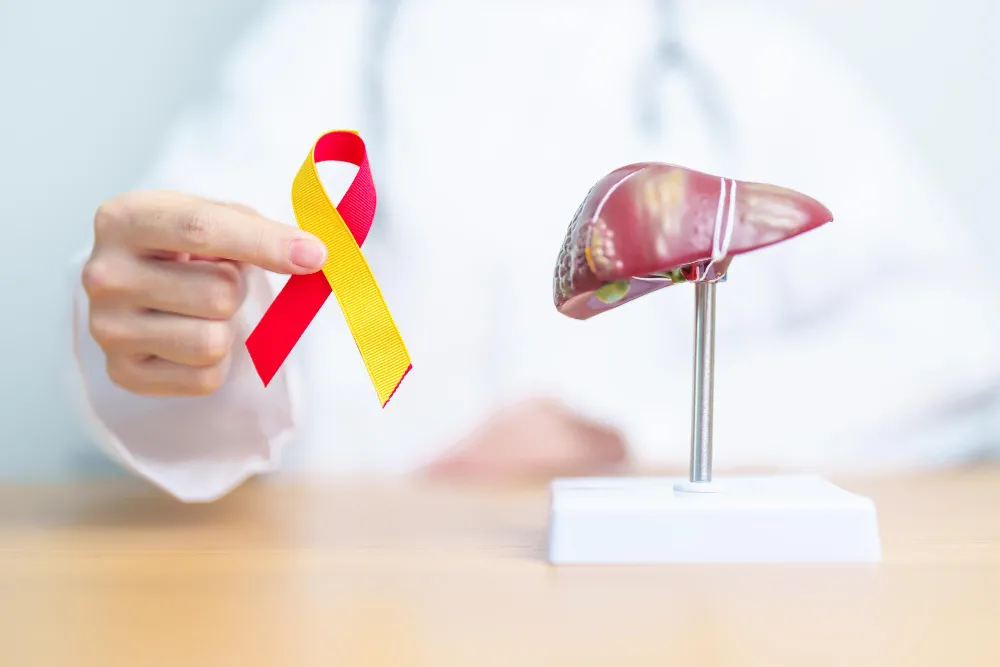
Of all the things a doctor can tell a patient about liver cancer, the one that matters most is this: when it was found. The difference between a liver cancer detected at 2 centimetres and one detected at 8 centimetres is not merely a difference in size. It is the difference between a surgery aimed at cure and a conversation about palliative management.
Liver cancer — most commonly hepatocellular carcinoma (HCC) — is the sixth most common cancer globally and the third leading cause of cancer death. In India, it disproportionately affects people who already have chronic liver disease, particularly those with Hepatitis B, Hepatitis C, or cirrhosis from any cause.
The purpose of this guide is not to frighten patients and families. It is to give them the one thing that changes outcomes more than any drug or surgery: timely, accurate information.
In India, liver cancer has a 5-year survival rate of approximately 10 to 15% overall — but this rises to 50-70% for patients whose tumours are detected and surgically treated at an early stage. (Indian Council of Medical Research Cancer Registry)
Why Liver Cancer Is So Often Diagnosed Late
The liver has no pain receptors on its surface. This means that a tumour growing within liver tissue causes no pain until it is large enough to press on surrounding structures or has caused significant disruption to liver function. By that point, the cancer has often been present for months or years.
Additionally, most people who develop liver cancer already have chronic liver disease — and many of the symptoms of liver cancer overlap with those of underlying cirrhosis. Fatigue, weight loss, and abdominal discomfort are so common in cirrhosis patients that they can easily mask the development of a tumour.
This is why surveillance matters far more than waiting for symptoms.
Studies show that only 25 to 30% of liver cancer patients in India are diagnosed at a resectable (surgically removable) stage, compared to over 50% in high-income countries with established surveillance programmes. (Journal of Clinical and Experimental Hepatology)
The BCLC Staging System — What Stage Means for Treatment
The Barcelona Clinic Liver Cancer (BCLC) staging system is the most widely used framework for guiding liver cancer treatment decisions. It takes into account not just tumour size and spread, but also the underlying liver function — which is critical because most HCC patients have cirrhosis that limits what treatment their liver can withstand.
Key takeaway: The stage table above shows clearly why early detection is not just preferable but transformative. A Stage 0 patient and a Stage C patient may have tumours separated by only a few centimetres — but their treatment options and survival prospects are separated by a vast distance.
Treatment Options Explained — What Families Can Expect
Surgical Resection (Hepatectomy)
Removing the tumour-bearing portion of the liver is the treatment of choice for early-stage HCC in patients with adequate remaining liver function. Dr. Ashish George performs anatomical liver resections — removing defined liver segments based on blood supply — using open, laparoscopic, and robotic-assisted techniques. The liver's regenerative ability means that even major resections are survivable when the remaining liver tissue is healthy.
Recovery from liver resection typically requires 7 to 14 days in hospital and 4 to 6 weeks before a return to normal activity. Minimally invasive techniques significantly reduce post-operative discomfort and recovery time.
Liver Transplantation for HCC
Liver transplantation is uniquely powerful for liver cancer because it simultaneously removes the tumour and the cirrhotic liver in which it developed — eliminating the tissue that would otherwise continue to generate new tumours. This is why transplant offers the best long-term cure rates for HCC within defined criteria.
The Milan Criteria define transplant eligibility for HCC: a single tumour of 5cm or less, or up to 3 tumours each 3cm or less, with no vascular invasion and no spread outside the liver. Patients who meet these criteria achieve 5-year survival rates of 70 to 75% post-transplant.
Tumour Ablation — RFA and Microwave
Ablation destroys tumours using heat energy delivered through a needle inserted directly into the tumour under imaging guidance — without any incision. It is highly effective for tumours of 3cm or less and is used both as a definitive treatment and as a bridge therapy to prevent tumour growth while a patient awaits transplantation. Patients typically return home within 1 to 2 days.
TACE — Transarterial Chemoembolisation
TACE delivers chemotherapy directly to the tumour via the hepatic artery, then blocks the artery to cut off the tumour's blood supply. It is the standard treatment for intermediate-stage HCC with multiple tumours that are not suitable for resection or ablation. It can be repeated and is frequently used to bridge patients toward transplantation.
Who Is at Risk — and Who Must Be Screened
Liver cancer in India does not arise randomly. It develops almost exclusively against a background of pre-existing liver disease. If your family member has any of the following, they require regular surveillance regardless of whether they have any symptoms:
- Liver cirrhosis from any cause — Hepatitis B or C, alcohol, NAFLD, autoimmune — regardless of how stable they appear
- Chronic Hepatitis B infection, even without cirrhosis, particularly with high viral load or a family history of liver cancer
- Hepatitis C with significant fibrosis or cirrhosis, even if they have achieved cure with DAA therapy
- Alcoholic liver disease with established cirrhosis
- Non-alcoholic fatty liver disease with documented fibrosis stage F3 or F4
Surveillance protocol: All patients in the above categories should receive a 6-monthly abdominal ultrasound and serum AFP (Alpha-Fetoprotein) blood test. This simple, inexpensive combination detects the majority of early-stage HCC tumours when they are still treatable with curative intent.
Frequently Asked Questions
Can liver cancer be completely cured?
Yes — for patients diagnosed at BCLC Stage 0 or A, surgical resection or liver transplantation offers genuinely curative outcomes. Five-year survival rates of 50 to 80% are achievable for early-stage disease. This is why surveillance in high-risk patients matters so profoundly.
Is liver cancer always related to cirrhosis?
Not always, but in the majority of cases yes. In India, approximately 80 to 90% of HCC cases develop in patients with underlying chronic liver disease or cirrhosis. The exception is Hepatitis B, which can cause liver cancer even in patients who do not have cirrhosis — which is why all chronic HBV patients need surveillance regardless of their fibrosis stage.
What does a high AFP blood test result mean?
AFP (Alpha-Fetoprotein) is a tumour marker that is elevated in many — but not all — HCC cases. A high AFP in a patient with known liver disease warrants further investigation with imaging. However, AFP can also be elevated in other conditions and can be normal in some HCC cases. It is always interpreted alongside ultrasound findings by a specialist.
Does chemotherapy work for liver cancer?
Traditional systemic chemotherapy has limited effectiveness in HCC. Modern treatment has shifted toward targeted therapies (Sorafenib, Lenvatinib) and immunotherapy combinations (Atezolizumab plus Bevacizumab), which have shown meaningful survival benefits in advanced-stage disease. For early and intermediate stages, local therapies (resection, ablation, TACE) are far more effective than systemic treatment.
Early Detection Saves Lives. Do Not Wait for Symptoms.
Consult Dr. Ashish George for liver cancer screening and specialist HPB surgical care.
Call: +91 93101 39800 | www.liversurgeons.com
Fortis Hospital, Shalimar Bagh, Delhi | info@liversurgeons.com